








The heatwaves recorded in recent weeks across Spain, France and much of the rest of Europe once again highlight a reality that the fruit sector knows only too well: climate change is already transforming production conditions. Exceptionally high temperatures since June, increasingly frequent tropical nights and a gradual reduction in winter chill are directly affecting tree performance, fruit quality and orchard productivity.
“Climate change is no longer a challenge for the future; it is a reality that influences every decision within our breeding programmes,” explains Stéphane Buffat, Founder and Director of Science & Innovation at PSB Producción Vegetal. “Today, it is no longer enough to develop productive varieties with outstanding quality; they must also be capable of maintaining those qualities under increasingly demanding climatic conditions.”
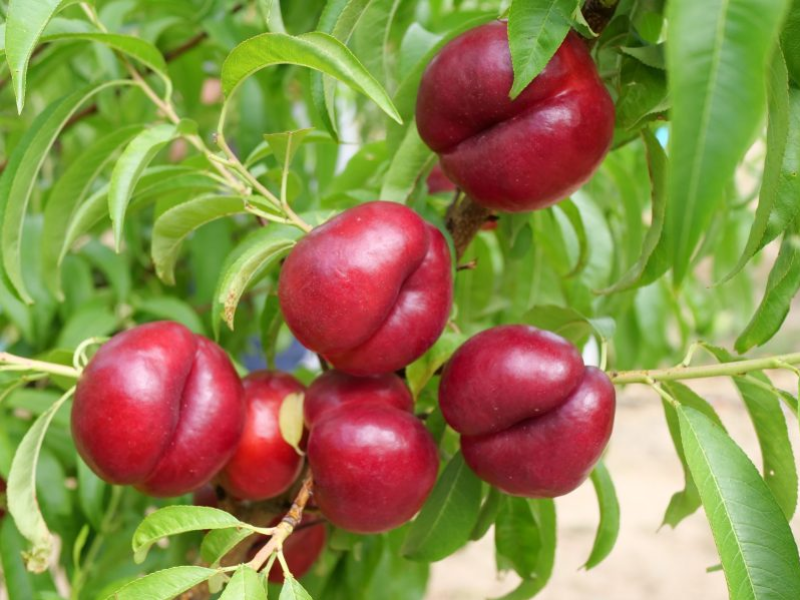
One of the most visible effects is the loss of colour in stone fruit. For more than a decade, the number of summer nights with temperatures above 25°C has steadily increased. The reduced temperature differential between day and night makes it more difficult for fruit to develop proper colour, a key attribute for its commercial value.
“That is why we have introduced new parental lines that enable us to select varieties capable of maintaining excellent colour even during seasons with very warm nights,” Buffat explains.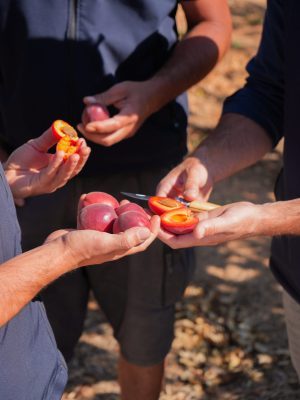
Genetics for the next generation
These genetics are already present in the latest generations of nectarines, peaches, flat peaches and flat nectarines. In apricots, breeding work continues with the same objective. Varieties such as Gaspar, Baltazar and Nelson already show better adaptation to these conditions. In the red apricot segment, where a gradual loss of colour intensity has also been observed, PSB has developed varieties such as Marcelino, capable of retaining virtually 100% of its red colouration even under severe heat stress.
The same breeding strategy is now being applied to other crops such as cherries and plums, where the effects of global warming are becoming increasingly evident.
Another major challenge is the reduction in winter chill during November and December. In certain production areas, PSB has observed a significant decline in the number of chill hours available, a phenomenon that directly affects flower induction and differentiation, particularly in cherry, apricot and plum trees.
RELATED NEWS: PSB appoints Elena Aguarón as CEO to drive global growth in stonefruit breeding
This is compounded by increasingly severe water stress during August and September, together with earlier episodes of extreme heat that accelerate ripening, limit fruit size and subject trees to considerable physiological stress.
“Our work is to stay ahead of these conditions. We are developing varieties with lower chilling requirements, greater tolerance to water stress and better adaptation to high temperatures, without compromising the flavour, productivity and commercial quality demanded by the market,” the executive concludes.
For PSB, climate change is not altering the objective of plant breeding, but rather the selection criteria. Varietal innovation will be an essential tool to help growers maintain the profitability of their orchards in an increasingly challenging climate scenario.