








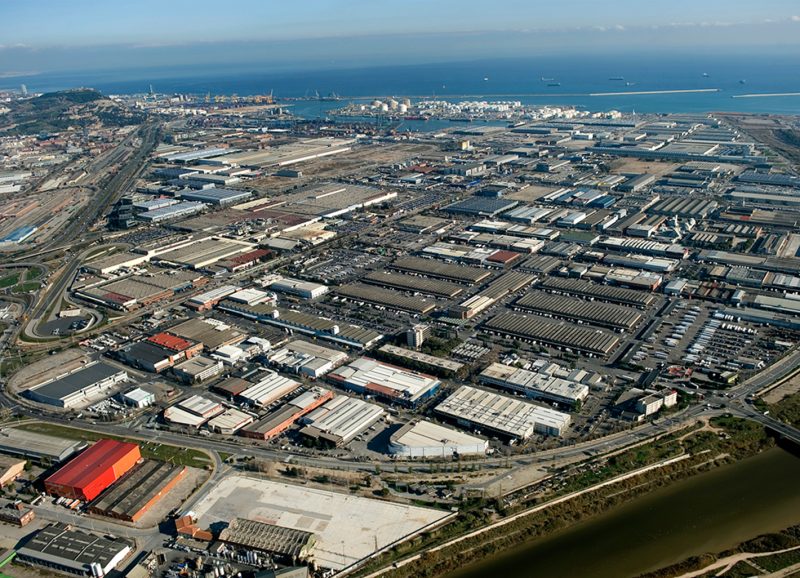
According to Raquel Gil, President of Mercabarna and Deputy Mayor for Economic Promotion, Trade, Markets, Employment, Social Rights, Feminisms and Democratic Memory, “Mercabarna has succeeded in consolidating its economic profitability, while also delivering social benefits and improvements for the surrounding environment.”
Net profit of €10.6 million
In 2025, Mercabarna’s operating revenue amounted to €37.2 million, 5.8% higher than in 2024.
Investment totalled €6 million, while operating expenses reached €25.6 million, representing an increase of 6.9% compared with 2024. This rise in expenditure is mainly explained by the award of two tenders for some of the food hub’s most important services: Security and Surveillance, and Cleaning, Waste Collection and Recycling. Investments were focused on new infrastructure, asset maintenance and digitalisation.
The company recorded a net profit of €10.6 million, a figure 9.3% lower than in 2024.
Growth driven by the fruit and vegetable sector
In 2025, sales volumes among Mercabarna companies reached 2,589,987 tonnes, 1.1% more than in 2024.
Wholesale companies operating in the Central Fruit and Vegetable Market marketed 1,140,033 tonnes, up 5.6% year on year. When the fruit and vegetable companies located in Mercabarna’s Food Activities Area are also included, total sales for the fruit and vegetable sector reached 2,349,541 tonnes, 1.6% above the previous year.
This positions Mercabarna as Spain’s leading fruit and vegetable market.
5% more locally sourced products
Mercabarna continued to promote locally sourced products throughout 2025. During the year, it carried out the communication campaign ‘De Proximidad Mercabarna’ to highlight the areas of the market where Catalan products can be found.
By the end of the year, 179,676 tonnes of local produce had been marketed through Mercabarna’s Central Fruit and Vegetable Market (172,347 tonnes) and Central Fish Market (7,329 tonnes), representing a 5% increase compared with 2024.
In addition, when the fruit and vegetables of Catalan origin sold through the Central Market are added to those distributed from the Complementary Activities Area, the total volume of Catalan fruit and vegetables reaches 320,000 tonnes. This represents almost half of Catalonia’s production that is not exported directly from the production areas.
The Central Fruit and Vegetable Market includes eight local cooperatives, 25 local growers and 14 wholesale companies that also operate their own production fields in Catalonia.
76% of commercial waste recovered
During 2025, Mercabarna managed 24,669 tonnes of waste generated by the commercial activity of wholesale companies located within the site and by retailers visiting the market to purchase products.
Of this waste, 76% was recovered, an improvement of 0.8 percentage points compared with 2024.
Nearly 900 tonnes of food recovered
Mercabarna’s food recovery centre, Foodback, recovered 869 tonnes of fruit and vegetables, 4% more than in 2024.
These products were donated by 88 wholesale companies operating within the food hub and distributed through the Barcelona Food Bank Foundation to 300 organisations and social canteens.
RELATED NEWS: Mercabarna to shift freight to rail
Food recovery prevented the emission of 314 tonnes of CO₂ that would otherwise have been generated during the recovery process if the fruit and vegetables had been converted into compost or biogas.
Foodback is also a pioneering European initiative with significant environmental and social impact, made available by Mercabarna to wholesale distribution companies as part of a joint effort to combat food waste.
Water and energy sustainability
Mercabarna also achieved a 14% reduction in water consumption, prioritising the use of groundwater for cleaning roads and the central markets, while increasing monitoring and maintenance work across the network.
In recent years, Mercabarna has consolidated a downward trend in overall energy consumption, in line with its commitment to efficiency and sustainability. In 2025, total energy use was 4% lower than the previous year.
Contracted electricity consumption fell by 15%, while energy generated through the company’s own photovoltaic facilities increased by 177%, strengthening the role of renewable generation within the organisation’s energy mix.
At present, 100% of the electricity consumed by Mercabarna is certified as originating from renewable sources.
During 2025, as part of the REPower-Mercabarna-Energía project, Mercabarna completed the installation of photovoltaic panels on the roofs of its own buildings: the seven halls of the Central Fruit and Vegetable Market, the Central Fish Market pavilion, Mercabarna-flor, the Biomarket, a multi-storey car park and two multi-service buildings.
Together, these installations provide a total installed capacity of 6.4 MWp.