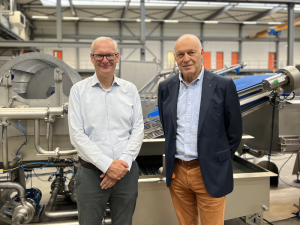








The Prime Minister, Pedro Sánchez, presented the new State Fertiliser Plan in San Martín de la Vega, Madrid, an initiative with which the Government aims to improve the efficiency of these inputs, reduce external dependence and strengthen transparency and the functioning of the value chain.
The announcement comes in a context marked by the sharp increase in fertiliser prices in recent years, first due to the impact of the war in Ukraine and, more recently, because of tensions in the Middle East. According to the Government, more than €600 million in aid has already been granted to producers to offset the rise in these costs.
Sánchez defended the support that his Executive has provided to the primary sector “with actions and not just words”, aware that many farms operate with very tight margins. In this regard, he stressed that the aim is to provide a structural response to temporary challenges and move towards agriculture that is “more sustainable, more efficient, more competitive and less dependent on external supply”.
More than 425,000 beneficiaries
The Prime Minister reported that the first list of 425,000 beneficiaries of aid for the purchase of fertilisers has been published, with a total amount exceeding €600 million.
To implement the plan, the Government has already set up an interministerial working group. Dialogue will subsequently be opened with the competent administrations and sector stakeholders, with the aim of having the initiative ready in the first quarter of 2027.
Sánchez said the plan is “relevant” to ensure that Spain maintains its position as an agri-food powerhouse, in an international context in which the availability, price and autonomy of strategic inputs have become key factors for the sector’s competitiveness.
Costs have soared since the war in Ukraine
The Minister of Agriculture, Fisheries and Food, Luis Planas, recalled that from the start of the war in Ukraine until the end of 2025, the average increase in fertiliser prices stood at 60%. This has been compounded, he explained, by an additional rise of more than 30% this year as a result of the conflict in the Middle East.
Following the outbreak of the war in Ukraine, the Government compensated 241,000 farmers with €300 million to help them cope with additional costs. Now, aid for the purchase of fertilisers amounts to €665 million.
In total, the Executive estimates that more than €1 billion has been allocated to support the primary sector since the start of the conflict in the Middle East four months ago.
Efficiency, innovation and organic fertilisation
Beyond financial aid, Planas defended the need to move towards “more efficient” fertilisation and to reduce the quantities used through technology, research and new agronomic practices.
“We must somehow return to using organic fertilisation in a controlled way to avoid unwanted effects,” said the minister, who also referred to the development of biostimulants as one of the ways forward.
RELATED NEWS: Fertilisers and supply security: circular economy could cut Italy’s import dependence
Planas warned that, despite the agreement between the United States and Iran and the gradual recovery of traffic through the Strait of Hormuz, a rapid return to the previous situation is not expected. For this reason, he defended the need to strengthen the strategic autonomy of Spain and the European Union in fertilisers.
At this point, he considered that the European Commission had “fallen short” with its fertiliser plan, while Spain has opted to promote its own strategy in collaboration with the farming sector and industry.
Precision agriculture and new sources of nutrients
The new plan, aligned with the European Union’s fertiliser action plan, includes measures such as promoting precision agriculture and digital tools to adjust fertiliser doses to the specific needs of each plot.
It also includes strengthening advisory services for farmers, promoting agricultural practices that improve nutrient use efficiency and boosting research into biostimulants and new varieties.
With the aim of reducing external dependence, the plan provides for the promotion of green hydrogen and green ammonia for fertiliser production, as well as the use of biogas, digestates and other by-products.
It also proposes regulatory changes to facilitate the safe use of waste and secondary raw materials, as well as the development of new nutrient sources.
More information and market monitoring
Another of the planned measures is the creation of a national fertiliser market information system, as well as a monitoring or crisis committee to analyse market developments and respond more quickly to potential tensions.
The National Association of Fertiliser Manufacturers (Anffe) has welcomed the initiative and thanked the Government for its support for these inputs, which it considers key to guaranteeing the country’s food sovereignty and strategic autonomy.
Anffe also highlighted the importance of optimising fertiliser use in the field and focusing on innovation to improve the use of soil nutrients. The association said it will submit its ideas and proposals to the Ministry of Agriculture, Fisheries and Food to contribute to the development of the plan’s specific measures.