








Tomato producer organisations from Spain, France, Italy, Portugal and Poland have joined forces to launch WE TOMATO EUROPE, a joint initiative aimed at defending EU production against growing competition from third-country imports and calling on European institutions to ensure a level playing field.
The campaign seeks to mobilise growers, businesses, consumers and policymakers around a manifesto highlighting the strategic importance of European tomato production for food security, employment and economic activity across agricultural regions.
To broaden its reach, the organisations have launched the WE TOMATO EUROPE platform, featuring information about the initiative, communication materials and a manifesto open to endorsement by individuals and organisations.
A promotional video in Spanish and English has also been produced for distribution through social media and other digital channels.
EU–Morocco trade agreement at the centre of demands
One of the campaign’s main objectives is to call for a review of the trading conditions affecting European tomato producers, particularly regarding imports from Morocco.
The participating organisations argue that EU growers face unequal competitive conditions, as they must comply with strict labour, environmental and phytosanitary requirements that, they claim, are not always matched by equivalent standards for imported products.
The manifesto therefore calls for full compliance with the rulings of the Court of Justice of the European Union concerning Western Sahara, alongside a review of the EU’s trade framework with Morocco.
In particular, the organisations urge the European Parliament to reject the proposed amendment to the EU–Morocco Agreement when the Council seeks its consent.
They also advocate the use of safeguard clauses when imports cause serious market disruption, together with stronger phytosanitary checks at EU borders.
Greater transparency on tomato origin
Clear country-of-origin identification is another central demand of WE TOMATO EUROPE.
The organisations are calling for transparent and accurate labelling to ensure consumers can identify the actual origin of tomatoes sold on the European market.
They also want greater reciprocity in the labour, environmental and phytosanitary standards applied to imported products, arguing that regulatory differences can undermine the competitiveness of European farms.
RELATED NEWS: European tomato sector faces rising costs and increased competition from third countries
The manifesto also sets out proposals to strengthen the sector through increased investment in innovation, sustainability, water and energy efficiency, and varietal improvement.
The participating organisations believe the European Union should recognise tomato production as a strategic activity for European food sovereignty and avoid regulatory changes that could weaken the competitiveness of EU growers.
A European campaign to build wider support
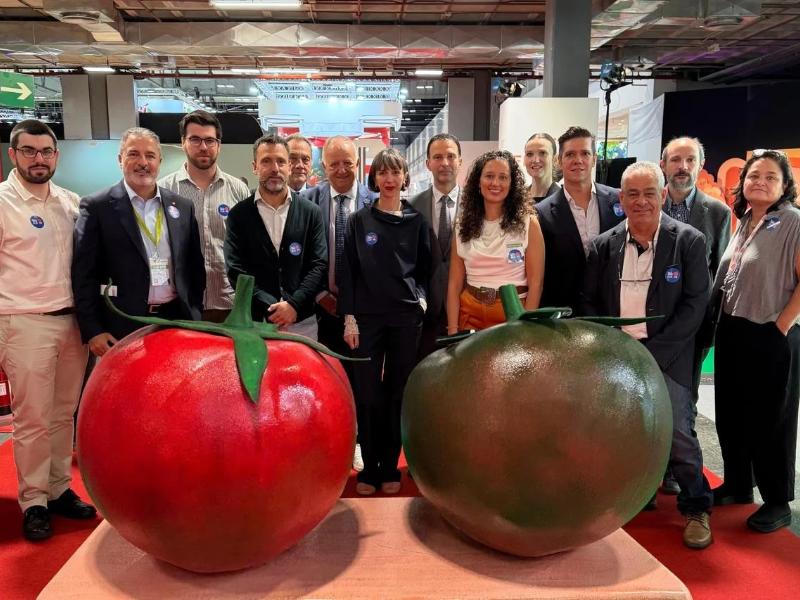
The initiative builds on the work of the European Tomato Group, whose representatives agreed during the latest edition of Fruit Attraction to intensify their joint communication and awareness-raising activities.
Through WE TOMATO EUROPE, the organisations aim to take their demands beyond the agricultural sector and engage consumers, associations and European policymakers.
Their objective is to secure broader public and institutional support for a production model that they say combines high standards of quality, food safety, sustainability and traceability.
By bringing together tomato-producing countries across Europe, the campaign seeks to strengthen the sector’s collective voice in discussions on international trade, market access and the future competitiveness of European horticulture.