







At the same time, the company continues to advance in robotics, efficient water management, biological control and solar energy to meet the sector’s new challenges.
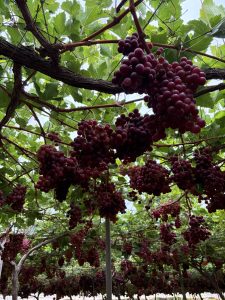
Paloma has been producing table grapes for almost 30 years and was one of the first companies to promote seedless grapes in Spain. For more than two decades, 100% of its production has been seedless grapes, a category that has transformed consumer habits and continues to shape the direction of the market.
Rather than diversifying into niche products, Paloma has chosen to maintain a clear strategy: a production window running from 15 June to 31 October. Each year, the company increases the share of white grapes in its portfolio to achieve a better balance in its offering, which has traditionally been dominated by red grape varieties.
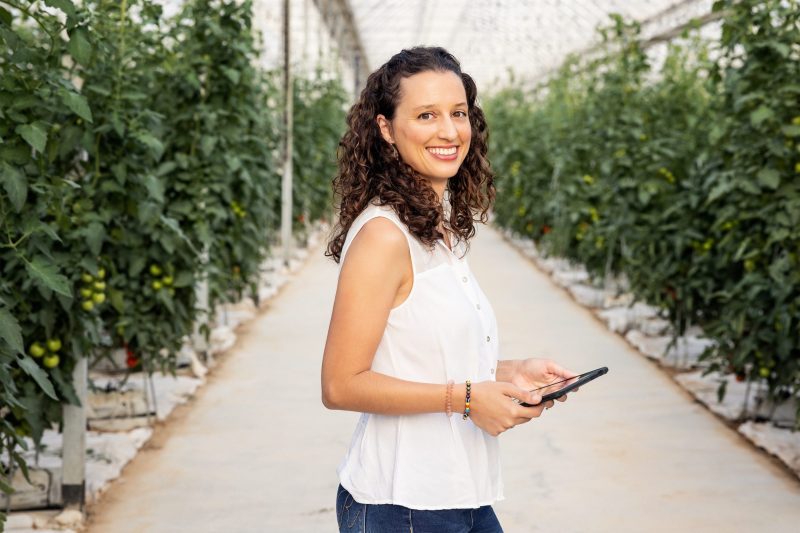
“We remain focused on supplying the market with attractive grapes offering good post-harvest performance, excellent flavour, colour and, above all, texture,” explains Ana Hernández, the company’s Innovation and New Development Manager.
Today’s consumers are looking for grapes that are firm to the bite, with the crisp texture that has become one of the category’s key commercial attributes. Crunchy grapes with excellent flavour and colour are among consumers’ main demands.
The impact of climate change
One of the industry’s greatest challenges is climate change. Rising temperatures not only increase the crop’s water requirements but also encourage the emergence of new pests and diseases. In grapes, heat also affects colour development.
The higher the temperatures, the more difficult it becomes for red and black grapes to develop their characteristic colour properly.
Robotics
Grupo Paloma is introducing new robotic and automated systems for packing, weight control and performance monitoring, all aimed at improving production efficiency.
The Murcian company has been using soil moisture and electrical conductivity sensors for more than a decade to manage irrigation in its vineyards. This is now complemented by the use of lysimeters, which collect soil drainage and analyse nutrient content.
The system is further enhanced by Smart Water Points, monitoring stations installed in homogeneous vineyard blocks. These incorporate several sensors positioned at different depths—typically three, depending on root depth. Data are monitored in real time through an application, providing precise information on soil moisture and electrical conductivity at each level.
RELATED NEWS: Grupo Paloma looks beyond nectarines
The company also uses technology to forecast grape yields. Through image analysis, it performs bunch counting and berry size measurement, enabling more accurate crop estimates and improved harvest planning.
Another key area of work is biological control. Paloma is conducting more intensive trials in vineyards to reduce the use of plant protection products against certain pests by using natural enemies.
The company has installed solar panels and lithium batteries at its packing facilities to reduce conventional energy consumption and CO₂ emissions. It currently has more than one megawatt of photovoltaic capacity and a two-megawatt lithium battery at each of its two packhouses, allowing it to generate around 70% of the energy used in its facilities from solar power.