







Poland has introduced a temporary ban on imports of fruits and vegetables containing residues of specific pesticides prohibited in the European Union, joining France in a coordinated effort to push the European Commission towards stricter EU-wide measures.
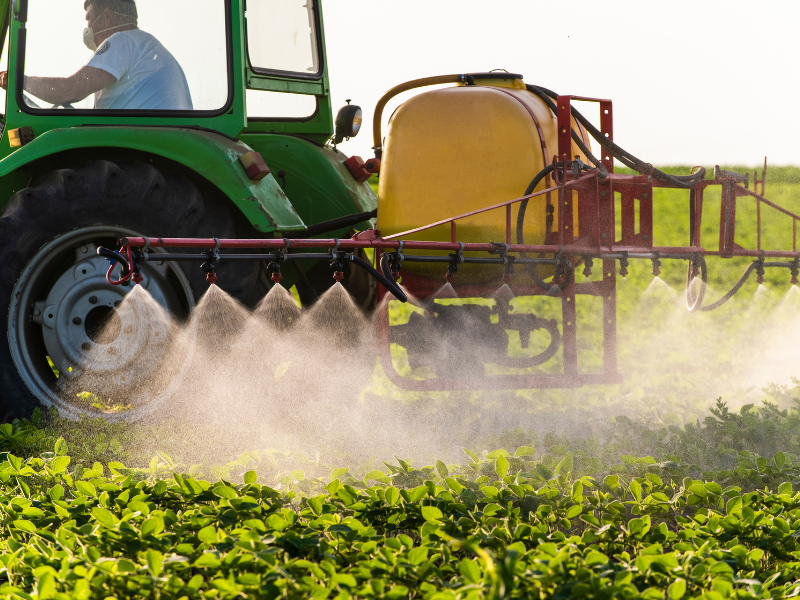
The regulation, signed by Agriculture Minister Stefan Krajewski and Health Minister Jolanta Sobierańska-Grenda, targets products containing traces of fungicides such as thiophanate-methyl, carbendazim and benomyl, as well as the herbicide glufosinate. EU institutions are already in the process of banning residues of several of these substances.
Targeted restrictions, not a blanket ban
The Polish measure applies selectively to certain products, including imported tropical fruits such as mangoes and papayas, which are not produced domestically. However, it does not extend to all imports, reflecting a targeted approach similar to that adopted by France earlier this year.
For instance, restrictions linked to glufosinate do not broadly affect cereals used in animal feed but are limited to specific categories such as potatoes.
Protecting farmers amid trade tensions
The move is presented as a response to what Polish authorities see as unfair competition from third countries, particularly in a context marked by the provisional entry into force of the EU-Mercosur trade agreement.
However, former EU agriculture commissioner Janusz Wojciechowski downplayed the measure’s impact, noting that affected products could still enter the EU through other member states, potentially undermining Polish exports within the single market.
Industry concerns over market fragmentation
The decision has also drawn criticism from industry groups. CropLife Europe warned that unilateral national measures risk undermining the integrity of the EU single market and creating uncertainty for supply chains.
“Where national restrictions are introduced without a clear risk-based justification, it jeopardises the Single Market and creates uncertainty for operators,” a spokesperson said.
A political signal to Brussels
Both the Polish and French measures are set to remain in place for one year, suggesting they are intended more as political signals than long-term policy shifts.
In recent months, the European Commission has committed to extending restrictions on hazardous pesticides in imported products. In its Vision for the Future of Agriculture, EU Agriculture Commissioner Christophe Hansen pledged to ensure that substances banned within the EU would not re-enter the market through imports.
RELATED NEWS: Europe joins forces to develop green pesticides against crop-threatening pests
Health Commissioner Olivér Várhelyi has reiterated this commitment, although concerns remain over the potential impact on trade. The Commission is currently awaiting the results of a study on the issue, expected later this year.
As the debate intensifies, the balance between protecting EU farmers, ensuring food safety and maintaining open trade remains at the centre of the discussion. Poland’s move adds further pressure on Brussels to define a clear and unified approach at EU level.