









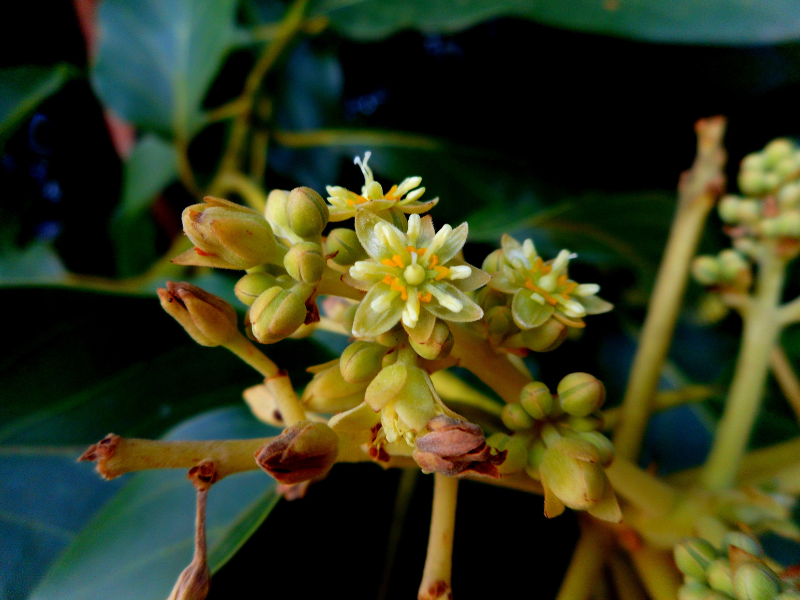
A study published in the scientific journal Fruit Research, with support from the Agricultural Research Service of the United States Department of Agriculture (USDA-ARS), has located for the first time the molecular basis behind the complex flowering pattern of avocado (Persea americana).
The research points to a gene called PaDSPD as the main regulator of this behaviour, opening the door to faster and more efficient varietal selection.
Floral synchrony, a biological challenge for the crop
The avocado flower is hermaphroditic, but it does not activate its reproductive organs at the same time. To encourage cross-pollination and avoid self-fertilisation, the tree uses a mechanism known as diurnal synchronous protogynous dichogamy.
Under this system, each flower first opens in the female phase, when it is receptive to pollen, and later reopens in the male phase, when it releases pollen.
This behaviour is divided into two main patterns:
| Flowering type | Genetic condition | Floral opening pattern |
|---|---|---|
| Type A | Heterozygous | Morning, female phase → afternoon of the following day, male phase |
| Type B | Homozygous | Afternoon, female phase → following morning, male phase |
Until now, coordinating the presence of both types in commercial orchards required years of field observation to verify compatibility and flowering schedules for each tree.
The genetic finding: PaDSPD
After analysing 153 genetic materials and several breeding populations, the research team identified a 20-kilobase region on chromosome 10 where all significant molecular markers converged on a single gene: PaDSPD.
This gene encodes a MYB-type transcription factor, a protein involved in regulating gene expression.
RELATED NEWS: WAO highlights the growth potential of avocados in Europe
The study also observed a 2:1 inheritance ratio, which raises the hypothesis that a specific homozygous combination could be unviable or lethal. This point will still require confirmation through functional trials.
Impact on the industry and breeding programmes
The main value of the discovery lies in the development of DNA markers capable of accurately predicting whether a plant will be Type A or Type B from the seedling stage.
As avocado trees grown from seed take several years to reach reproductive maturity, this biotechnological tool could allow breeders to:
- Drastically reduce evaluation times in nurseries and field trials.
- Design targeted crosses with greater precision.
For the avocado industry, the identification of PaDSPD represents a significant step towards more efficient breeding, better orchard planning and improved management of pollination in commercial production.