









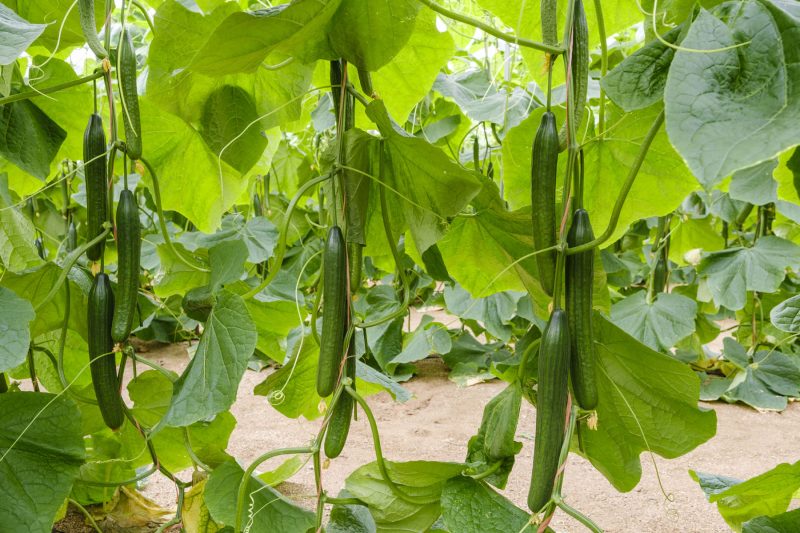
Syngenta could move its LC222313 cucumber variety into the commercial phase in 2027. For now, however, the company will keep it in the pre-commercial stage for another year after confirming that its performance improves when grown outside the peak summer period, the production window for which it was originally introduced.
The company has therefore repositioned the variety, recommending two new transplanting windows: 15 August to 15 September for the autumn cycle, and 15 February to 15 May for the spring cycle.
Within these new production windows, LC222313 reaches its full potential by delivering improved agronomic performance. According to Víctor García, Portfolio Lead Cucurbits at Syngenta, the company expects to confirm these results this season through larger-scale trials.
Among the variety’s main strengths is its comprehensive resistance package against New Delhi, powdery mildew, CGMMV, vein yellowing and yellowing, with particularly strong resistance to yellowing. This package helps maintain a healthy, dark-green plant throughout the entire production cycle.
From an agronomic perspective, LC222313 has an open plant architecture with small leaves, allowing higher planting densities during the spring cycle. The fruits are distinguished by their excellent commercial quality, featuring well-defined ribs, no bottlenecking, attractive colour and good post-harvest performance.
Diversifying into the mini segment
Looking ahead to next season, Syngenta is preparing an important addition to its cucumber portfolio. The company’s strategy is to diversify beyond its traditional focus on Dutch cucumbers by entering the mini cucumber segment.
“Until now, we have focused on Dutch cucumbers, and we are now incorporating the mini cucumber segment.”
RELATED NEWS: Syngenta presents next-generation clubroot resistance
To achieve this, Syngenta will bring to Spain part of a “highly competitive” breeding programme that is already well established in Turkey and Jordan, adapting its materials to the growing conditions of Almería and the Costa de Granada.
The company has already completed the first stage of the project, identifying varieties from its international programme that best match local production requirements. It is now entering the next phase, carrying out field trials under Spanish growing conditions.
At the same time, Syngenta continues its breeding efforts to develop materials with resistance to CABYV, responding to the increasing incidence of this virus in cucumber crops.