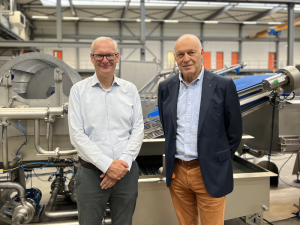










Cecilio Fernández, Junior Product Promoter – Cucumber & Courgette at Sakata, speaks to Fruit Today Magazine about the company’s courgette varieties and the strategy behind its ambition to strengthen its position in the Almería market.
What characteristics does Sakata prioritise when developing new varieties?
Our breeding criteria focus on achieving high marketable yields, minimising unmarketable fruit, while developing open, well-balanced plants that are easy to manage. Reduced leaf area makes harvesting easier and improves the effectiveness of crop protection treatments.
We also look for upright plants with short internodes, reducing the need for repeated trellising. Finally, from the plant perspective, it is essential to include the basic resistance package demanded by growers (IR: Px, ToLCNDV).
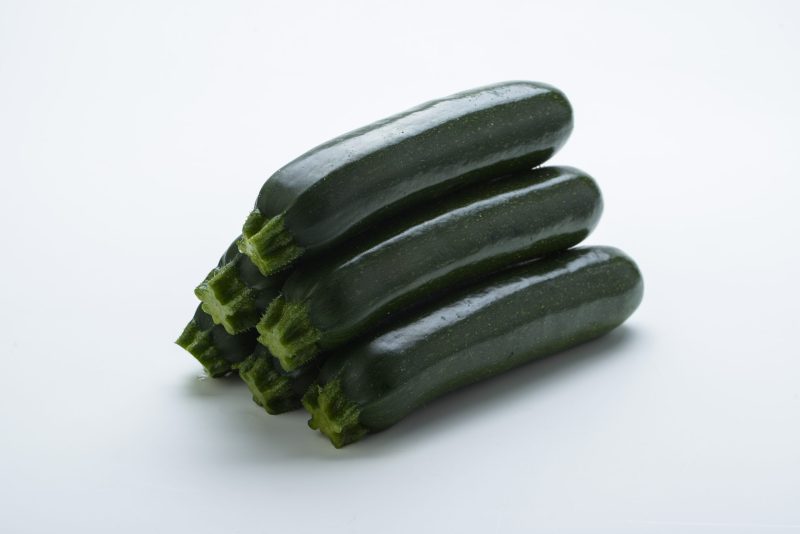
When assessing fruit quality, we aim to meet the expectations of the end consumer by producing fruits that are very dark, glossy, straight, blemish-free, with a small pistil scar and excellent post-harvest performance. This helps growers market their production more easily, while enabling marketers to satisfy supermarket requirements.
What new products has Sakata introduced this season?

This season we have launched KAIROH, which complements KAI for the early production cycle and offers intermediate resistance to ToLCNDV.
We recommend transplanting it from 15 July to 10 August. KAIROH performs exceptionally well under high-temperature conditions and is intended for growers looking to complete a short production cycle before switching to a different variety for the winter season.
In addition, KAIROH is also positioned for the late spring cycle, with transplanting recommended from mid-February until the end of March.
Which varieties are the flagships of your portfolio?
Our leading variety is KAI, representing the perfect match between a market need and the solution we have developed. Commercially, it has delivered excellent results and is becoming the benchmark early courgette variety in Almería for several reasons.
It combines intermediate resistance to ToLCNDV, which was initially a major added value and has now become an essential requirement, together with resistance to powdery mildew.
KAI has raised productivity standards for the early cycle and, at the same time, significantly reduces labour requirements. Plants require considerably fewer trellising operations than growers were accustomed to with previous varieties.
How are resistance packages evolving in your latest breeding materials?
Aphid-transmitted viruses have become one of the key priorities for breeding companies such as Sakata.
Their impact is particularly significant in eastern Almería, where the proportion of organic production is higher than in conventional farming.
RELATED NEWS: Sakata consolidates its Brassicas Winter Days as a benchmark forum
At Sakata, we are working to deliver agronomically profitable varieties with resistance packages that closely match growers’ needs, expanding our original proposal based on intermediate resistance to New Delhi and powdery mildew.
Are you focusing on any specific production area?
Our focus is on dark green greenhouse courgettes, and Almería is our main market in Iberia.
Within the province, our objective is to cover the entire production calendar, and we have already established a strong position in the spring–summer production cycles.