











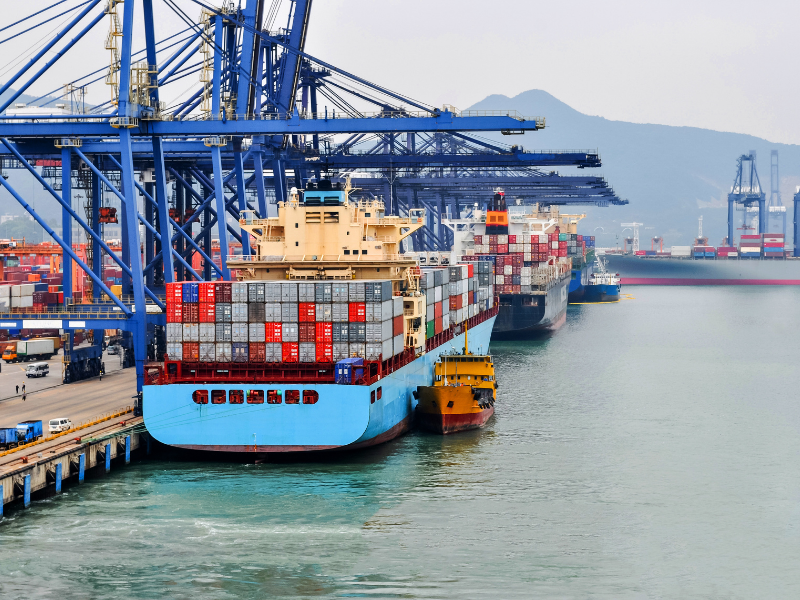
The latest disruption, caused by Typhoon Saudel, forced operations to be suspended at strategic terminals including Shanghai and Ningbo-Zhoushan. This is the third shutdown of its kind in just three months, following the previous impact of Typhoons Bavi and Dolphin.
According to a report published by Supply Chain Digital, around 4.3 million TEU are currently tied up at different points across the global maritime network, equivalent to approximately 12.6% of the world’s container fleet capacity.
More than half of this volume is concentrated in northern Asia, particularly in Chinese waters, where terminals such as Yangshan and Waigaoqiao have had to reduce or temporarily suspend operations.
Delays build up from one storm to the next
The succession of severe weather events is making it increasingly difficult for port activity to recover. In some areas, a new storm has arrived before the logistics system has been able to clear the backlog caused by the previous one.
In Zhejiang province, where Ningbo is located, this has resulted in prolonged waiting times for numerous vessels and a build-up of cargo awaiting entry or departure.
Congestion is not solely the result of adverse weather conditions. Maritime industry specialists also point to the high utilisation of port and logistics capacity, which leaves limited room to absorb unexpected shutdowns.
Although terminals continue to invest in infrastructure, capacity growth does not always keep pace with transport demand. When facilities are operating close to their limits, even a temporary interruption can lead to delays lasting several weeks.
Shipping lines alter port calls and routes
The effects are beginning to spread beyond Shanghai and Ningbo. Some shipping lines have chosen to cancel or alter scheduled port calls to avoid lengthy waits, while delays are also increasing at ports such as Shenzhen and Hong Kong.
The congestion is placing additional pressure on other parts of the international logistics network, forcing importers and exporters to deal with cargo rescheduling, cancelled sailings and potential additional logistics costs.
RELATED NEWS: New 21-day China–UK shipping route to open via the Arctic
For companies that depend on maritime transport, developments over the coming weeks will be particularly important, as the typhoon season could still cause further disruption at some of Asia’s main port hubs.
A supply chain with little room for disruption
The situation once again highlights the vulnerability of a supply chain that has been designed over the years to maximise efficiency and reduce costs.
High utilisation rates across vessels, terminals and infrastructure help optimise costs under normal conditions, but they also reduce the system’s ability to respond when extreme weather events or other disruptions occur.
The accumulation of port closures in China shows how an incident affecting some of the world’s largest ports can quickly spread across the wider maritime network and disrupt international import and export schedules.