










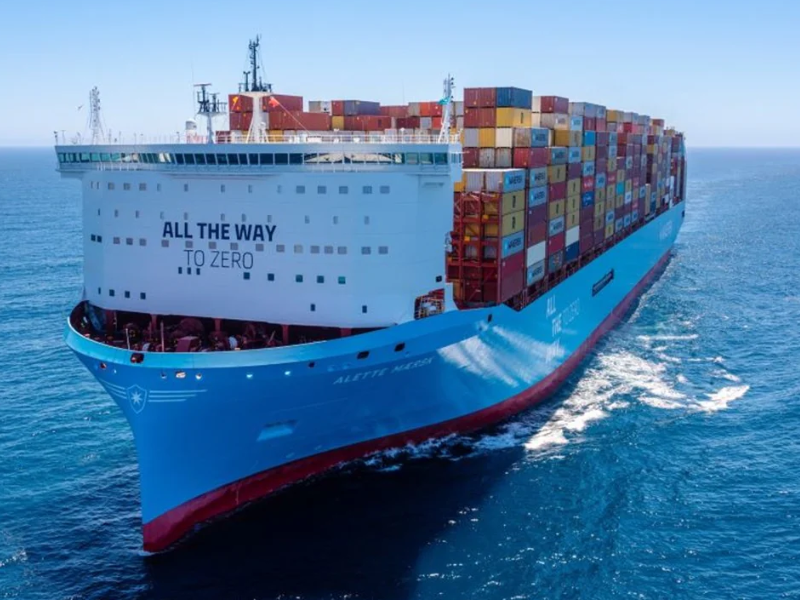
A.P. Moller-Maersk has announced the resumption of operations in the Red Sea for one of its key commercial services, in a move that points to growing, although still cautious, confidence in the security of this maritime corridor.
The Danish company confirmed that its WAF6 service, which connects the Middle East with the Mediterranean and West Africa, will once again transit through the Suez Canal. According to Maersk, the change represents “another step towards a gradual return to the trans-Suez corridor”.
The decision comes after more than a year and a half of major disruption on one of the world’s most important trade routes. Most major shipping lines, including Maersk, were forced to divert their fleets around the Cape of Good Hope, at the southern tip of Africa, following attacks by Houthi militias from Yemen.
This diversion added thousands of nautical miles and between 10 and 15 days of sailing time to Asia-Europe routes, increasing costs and creating further pressure on international supply chains.
A gradual but cautious return
The return of the WAF6 service follows a similar announcement by Maersk last week, when the company confirmed the resumption of its service from the Middle East to the East Coast of the United States, also via the Suez Canal.
The shipping industry is closely watching these movements as a possible sign of stabilisation in the region. However, the return remains gradual and cautious, with most main Asia-Europe routes still avoiding the Red Sea until stronger security guarantees are in place.
Impact on Spanish logistics
The normalisation of traffic through the Suez Canal is highly relevant for the Spanish economy, as many supply chains and export operations depend on the efficiency of this route.
Ports such as Algeciras, Valencia and Barcelona, key logistics hubs for trade between Asia and Europe, were affected during the crisis by a reduction in transhipment traffic and higher logistics costs.
RELATED NEWS: Maersk introduces global emergency surcharge amid rising fuel costs
The return of services such as Maersk’s WAF6 could help improve delivery times and potentially reduce freight costs, benefiting Spanish importers and exporters operating in international markets.
Suez remains a strategic route
The Suez Canal remains a strategic infrastructure for global trade. Maersk’s partial return to this route may open the door to a progressive normalisation of maritime traffic, although the outlook continues to depend on the security situation in the Red Sea.
For now, the Danish shipping company’s decision confirms a change in trend, but not a full return to pre-crisis conditions. The sector will continue to monitor the next moves by the major shipping lines and their impact on costs, transit times and international logistics planning.