










Weather conditions, quality, origin, fruit size and customer profiles all shape the pace of daily sales. From this perspective, Aida Escandell, Sales Representative at Frutas Escandell, describes a season in which the company has once again demonstrated its ability to adapt in an increasingly dynamic market.
“At Mercabarna, every season is measured in real time,” says Escandell.
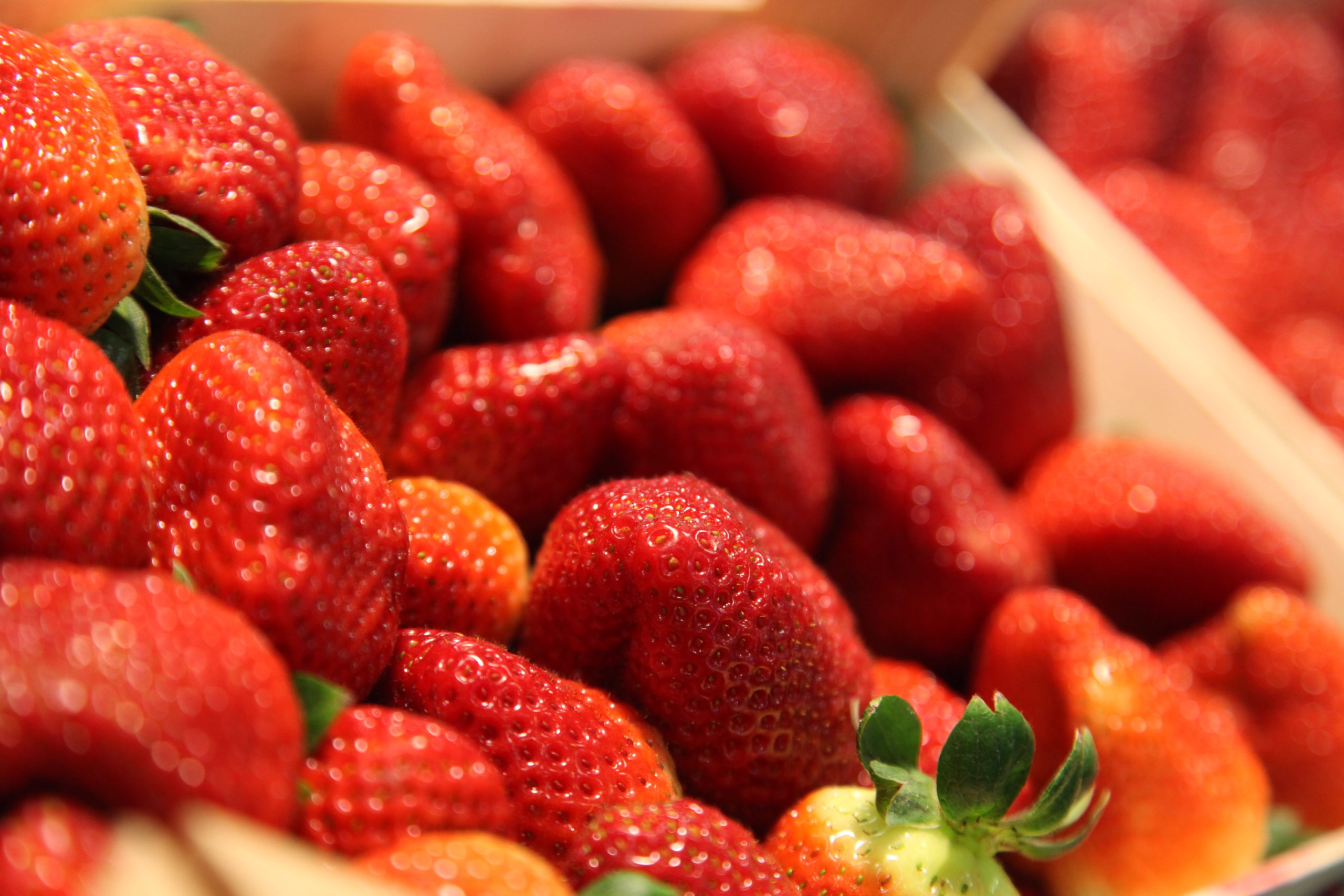
The company remains highly specialised in strawberries during the winter months, a product that demands speed, expertise and an excellent understanding of market dynamics. This season, however, proved particularly challenging. Heavy rainfall at origin affected fruit quality and, above all, its ability to withstand transport.
“Strawberries suffered because there was so much rain,” Escandell explains, “although the overall outcome was not negative.”
Lower availability helped sustain prices and, despite occasional quality issues, the campaign performed reasonably well.
“Because volumes were lower, prices held up,” she says.
The main challenge was the fruit’s fragility.
“When the fruit arrived in a more delicate condition, it had to be marketed quickly, giving priority to the domestic market over exports.”
After the most difficult period, strawberry quality improved considerably and the season lasted longer than in previous years.
“Every season is different, and each one has its own story.”
Summer means melons and watermelons
With the arrival of summer, Frutas Escandell shifts much of its focus to melons and watermelons, two categories that are particularly sensitive to temperature. This year, the hot weather has clearly boosted consumption.
The company markets well-known brands such as Caparrós and Fashion for watermelons, alongside Líder de Villaconejos melons. Escandell particularly highlights the quality of Caparrós and the strong consumer recognition enjoyed by the Fashion brand.
Although striped watermelon is highly appreciated for its eating quality, demand is clearly concentrated on black watermelon.
As for melons, Escandell gives a positive assessment of the campaign and highlights suppliers capable of delivering consistent quality, such as Líder de Villaconejos.
Changing buyer profiles
The Catalan company serves a highly diverse customer base, including Pakistani, Chinese and Moroccan communities, as well as domestic buyers and traders purchasing produce for export.
Escandell avoids broad generalisations, stressing that “there is everything” within every customer group. Nevertheless, she acknowledges that a significant part of the market has become increasingly price-sensitive, with some buyers prioritising volume and cost over eating quality.
“This reality requires wholesalers to work with different quality categories and adapt their offering to each customer’s needs.”
According to Escandell, buyers supplying the domestic market generally demand higher-quality produce, while other customer profiles tend to focus more on competitive pricing. Even so, she insists that the market cannot be viewed in simplistic terms: some customers seek economical products, while others continue to value quality, differentiation and consistency.
RELATED NEWS: Escandell prioritises the cold chain in the renovation of its stalls
The company’s exports are mainly destined for France, thanks to its geographical proximity, but also for Italy and several Eastern European countries, including Romania and Hungary.
“We ship a great deal to France because it’s just next door. There have always been plenty of Italian buyers,” Escandell explains.
International buyers turn to Mercabarna whenever domestic production is insufficient or when purchasing in Spain proves more competitive than sourcing locally.
This pattern can be observed across different categories. In strawberries, for example, the commercial window depends on each country’s production calendar. Once Italy begins harvesting its own crop, market dynamics change. In vegetables such as aubergines, the Italian market plays a particularly important role due to its significantly higher consumption than in Spain.
Cherries and stemless cherries
Alongside strawberries, melons and watermelons, Escandell also discusses the cherry and stemless cherry campaign, which was likewise affected by heavy rainfall, interruptions in production and price pressure.
She points out that stemless cherries have a different commercial profile, being sold mainly on the domestic market, whereas export markets predominantly demand cherries with stems.