







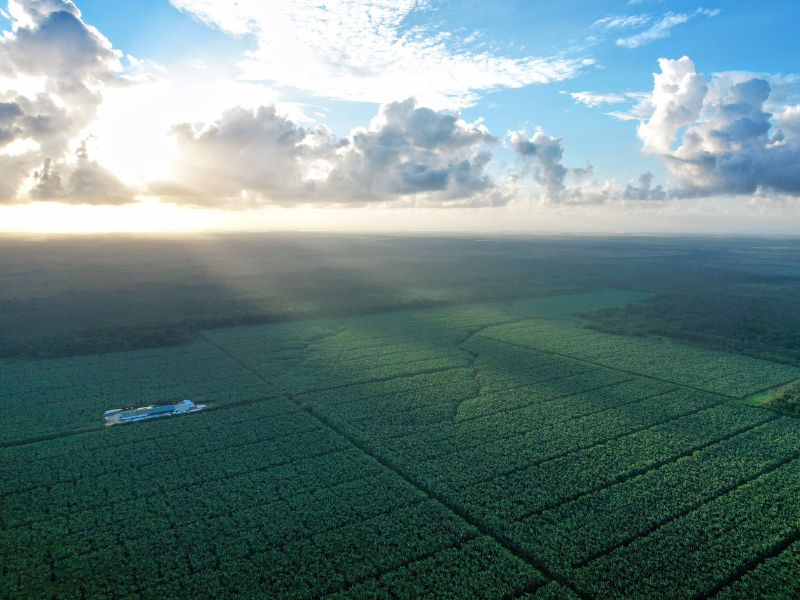
The initiative is designed to strengthen the long-term resilience and sustainability of tropical fruit production through a science-based, grower-centred approach focused on soil health, biodiversity, water management, reduced agrochemical dependency and climate adaptation.
Progress will be monitored through a Measurement, Reporting and Verification system covering five key impact areas, allowing the company to track measurable outcomes across its operations.
A roadmap for banana and pineapple production
Developed together with growers and agricultural experts, the framework takes into account the specific challenges of banana and pineapple production and seeks to combine environmental improvement with productivity and fruit quality.
Fyffes aims to implement the framework across 100% of its owned banana and pineapple farms by 2030.
By 2035, the company also plans to bring around 40% of fruit volume from key supplier operations under regenerative agriculture practices through training, capacity-building and knowledge sharing.
Building more resilient supply chains
The company says the initiative responds to increasing pressure on tropical fruit production from climate change, extreme weather events, water stress and evolving sustainability requirements.
By improving soil functionality, water retention, biodiversity and overall ecosystem health, regenerative practices are intended to make production systems more resilient while maintaining long-term yields and quality.
The framework is also designed to provide benefits for retailers, wholesalers and foodservice operators by improving supply-chain security, transparency and access to measurable sustainability data.
Soil, water and biodiversity at the centre
Sheila Morrison, Chief Supply Officer at Fyffes, said the future of the banana and pineapple industries will depend on the ability to build greater resilience into farming systems.
“The future success of the banana and pineapple industries depends on our ability to build resilience into the farming systems that support them,” Morrison said.
RELATED NEWS: A new Kantar study confirms Fyffes’ strong position in Ireland
She added that the initiative goes beyond environmental stewardship, as it also seeks to support more reliable supply chains capable of withstanding climate-related pressures while continuing to deliver high-quality fruit.
Scaling up existing initiatives
Fyffes has already started implementing regenerative agriculture practices across its own operations, building on existing programmes related to soil management, biodiversity enhancement and water stewardship.
The new framework provides a common structure to scale these initiatives, validate their results and share successful practices more widely across the company’s supplier network.
Fyffes is also working with some customers on joint regenerative agriculture projects and, in certain countries, through Fairtrade programmes where premiums have been invested in regenerative initiatives.
The framework forms part of the company’s wider sustainability strategy and its objective of strengthening the future of tropical fruit production through practical and measurable actions that benefit growers, customers, communities and the environment.