







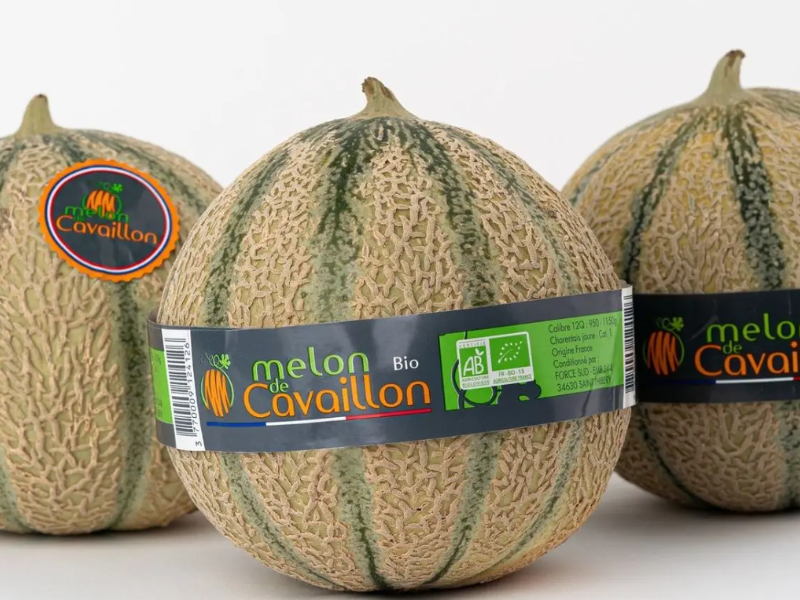
The Cavaillon melon season is proving positive so far, with hot summer weather helping to drive both fruit quality and consumer demand. Although the heatwaves at the start of the summer raised concerns in several agricultural sectors, they have had a favourable impact on melons.
Production volumes experienced a slight dip earlier in the season due to adverse weather in spring, but the situation has now stabilised. The campaign is expected to be satisfactory, although its final economic balance will depend on the evolution of production costs.
A crop well adapted to high temperatures
Unlike other crops, melons cope particularly well with high temperatures. According to Léa Gerin, chair of the Cavaillon Melon Growers’ Association, this type of weather is familiar to producers in the South.
“In the South, we are used to this kind of weather. Melons thrive in the heat,” she explains.
Growers did, however, adapt their working practices during the hottest weeks of the summer. Harvesting was mainly carried out in the morning, with work stopping around midday to avoid activity during the hottest hours of the day.
While the heat did not affect fruit quality, irrigation management became a priority. “Thanks to the high temperatures, we now have a fine harvest of very sweet melons. But it is important to ensure that the plants are dense enough to provide shade, and to maintain good soil moisture to keep water in the ground,” Gerin says.
Summer weather drives consumption
The heat has also acted as a major commercial driver. Melons are highly dependent on weather conditions, and hot, sunny days tend to stimulate consumption.
“Melons are a very weather-dependent crop. When the weather is fine and hot, everyone wants to eat them,” Gerin notes.
As a result, demand has risen sharply in recent weeks. The sector did experience a temporary shortage at the end of June, but this was not caused by the heatwave. Instead, it was linked to spring weather conditions, as rain disrupted planting and reduced bee activity, limiting pollination.
Since then, supply has returned to normal. “We are back to regular, balanced volumes. For us, the season is going rather well,” she adds.
Cavaillon PGI maintains its own market position
The Cavaillon PGI melon occupies a distinct position within the traditional melon market. According to the association, these melons do not follow the same price dynamics as standard melons, due to specific production techniques and strict specifications.
“We do not really follow the prices of standard melons. We use specific production techniques to produce high-quality fruit with a high sugar content, while adhering to strict specifications,” Gerin explains.
RELATED NEW: Size and convenience: reshaping the melon and watermelon of the future
This quality strategy also involves rigorous selection at the packing station. Only the finest fruit is marketed under the PGI, reinforcing the product’s premium positioning.
“A great deal of sorting goes into ensuring that only the finest melons are selected. We really are in a league of our own,” she says.
Sales continue to grow
The strategy is delivering results. Sales volumes of Cavaillon PGI melons are increasing by around 500 tonnes each year, supported by the growing reputation of the brand.
Retailers are also giving the product greater visibility, stocking larger volumes and highlighting the melons more prominently on shelves.
A promising season, but costs remain decisive
In the current context of strong demand, the value of PGI melons has remained stable. Prices have been satisfactory, although it is still too early to draw final conclusions on the campaign’s economic outcome.
Production costs remain the main concern. “Operating costs have risen sharply, and we will have to wait until the end of the year to know whether this season actually is a success,” Gerin says.
The harvest is expected to continue until mid- or late September, with producers hoping that the current momentum in consumption will continue through to the end of the season.