







Since 2020, the company has maintained an ambitious investment plan to replace conventional greenhouses with high-tech facilities. The Murcia-based company is a major tomato specialist, but within its extensive portfolio there is one product to which it devotes particular attention. Sugardrop, a high-flavour pear cherry tomato with a distinctive drop shape, has become one of the company’s most distinctive products and, at the same time, one of the best examples of the technological transformation taking place across its production model.
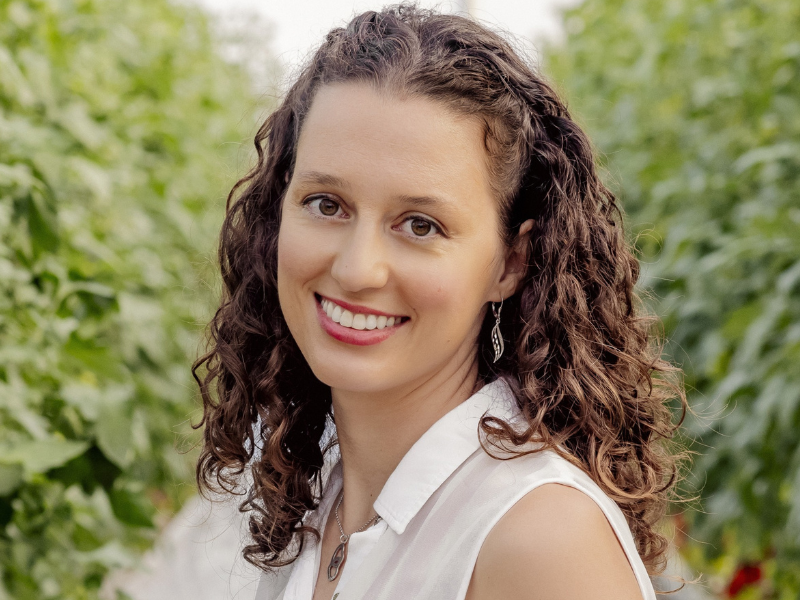
The story began approximately 17 years ago. According to Ana Hernández, Agronomy Director at Grupo Paloma, the company worked directly with the breeder to select a variety that initially presented certain agronomic challenges but clearly stood out for one quality: its flavour.
“We saw that it had a distinctive flavour as well as a different shape, and we decided to invest in its development,” Hernández explains. This marked the beginning of a learning process that enabled the company to gain an increasingly thorough understanding of the plant’s behaviour, fine-tune its crop management and gradually turn it into a sustainable and profitable crop. Particularly over the past decade, Sugardrop has gained importance as the market has increasingly recognised its characteristics and demand has grown.
A drop-shaped tomato with an identity of its own
Visually, Sugardrop is easily recognisable. It is a pear cherry tomato ending in a pronounced point that gives it its characteristic drop shape. It also has a compact truss, but it is in terms of eating quality that Paloma sees its main point of differentiation.
Its flavour comes from a pronounced balance between sweetness and acidity, a combination the company has sought to preserve since the earliest selections. It is therefore positioned as a premium tomato intended primarily for fresh consumption, where these characteristics can be fully appreciated without any processing.
For Paloma, this is not simply another product in its range. It is a variety that the company has developed since the earliest stages of selection and around which it has built highly specific agronomic expertise. “It is the variety we are most attached to and to which we devote the most resources for its development,” Hernández says. And it is precisely these agronomic demands that explain much of the strategy pursued in recent years.
A tomato that requires a different approach to production
According to the Agronomy Director, Sugardrop is not a tomato that can be grown in just any production structure or using conventional crop management.
All of Grupo Paloma’s Sugardrop tomatoes are currently grown in high-tech greenhouses, facilities designed to provide the plants with much more controlled and stable conditions.
Indeed, the commercial growth of the variety has progressed in parallel with the modernisation of the company’s production facilities.
Since 2020, Grupo Paloma has maintained an ambitious investment plan to progressively transform its conventional greenhouses and increase the proportion of high-tech structures. The company already has numerous multi-span greenhouses and, over the past six years, has stepped up the construction of new facilities specifically designed for more demanding crops.
“To develop and grow this tomato, we have to cultivate it in high-tech greenhouses, provide it with the best possible conditions and achieve the highest quality,” Hernández explains.
The relationship between product and technology is therefore direct. Sugardrop requires tall multi-span greenhouses, good ventilation, thermal screens and even heating, all of which help mitigate external conditions and enable much more precise control of the environment in which the plant develops.
RELATED NEWS: Paloma strengthens its commitment to proven varieties
This capability is particularly important during periods of high temperatures. Thanks to these structures, Grupo Paloma can carry out extremely early plantings, even in July, something Hernández directly links to the level of climate control achieved inside the greenhouses.
“Everything is grown hydroponically, where we control fertilisation on a daily basis, as well as the conductivity the tomato needs in order to achieve that flavour,” the Agronomy Director explains.
This level of precision demonstrates the extent to which final quality depends on more than genetics alone. The variety provides a certain potential, but consistently expressing that potential requires the right facilities, technical expertise and highly precise crop management.
The truss also requires specific attention. Paloma carries out pruning to adjust the number of fruits and achieve the appropriate sizes. Truss length also varies depending on the time of year: trusses are shorter during winter and can become longer during periods of greater light intensity and higher temperatures.
Marketing of the product begins approximately in mid-September and continues until June, providing a season of almost ten months.
Maintaining this continuity is one of the major challenges for a variety with these characteristics. Environmental conditions change radically between the beginning of the cycle, winter and late spring, making it necessary to continuously adapt crop management.