






This transformation has been driven by a shift towards subacid nectarines with outstanding eating quality, excellent travel performance and a market presence as early as week 18.
Over the past decade, the company has steadily carved out its own space in stone fruit, particularly in the early nectarine segment, where earliness is no longer the only commercial argument. David Franco, Commercial Director of Grupo Paloma, explains that “the real leap forward is not simply entering the season earlier, but doing so with quality fruit.”
In recent years, the company has undertaken a deep varietal renewal programme focused on subacid materials with improved organoleptic performance, greater firmness and shelf life suitable for reaching European destinations with full guarantees.
From earliness to flavour
The nectarine campaign begins around week 17, with strong growth in the following weeks and a harvest peak between weeks 19 and 20. Production is concentrated mainly in the Águilas area (Murcia), very close to the coast, where the microclimate naturally advances the calendar. The company also operates farms in Lorca and Blanca, areas with greater thermal variation that extend availability until approximately 5–10 June.
Franco insists on a key idea: “the objective is not to produce early fruit at any cost. Over the last five years, between 70% and 75% of the nectarine area has been renewed, focusing on new subacid varieties that have changed perceptions of early Murcian fruit. We can now make the transition from winter to spring with colour, good Brix levels, texture and truly remarkable flavour quality.”
Fruit grown under netting
The company currently manages around 250 hectares of nectarine, with an estimated production of 5.5 million kilos. All fruit is grown under netting, not as a tool to force earliness, but as a protection system against adverse weather conditions in order to preserve crop quality.
The early location of Águilas allows Grupo Paloma to reach nearby markets such as Spain, Italy and France first. As the season progresses and the fruit gains firmness, the commercial radius expands towards the United Kingdom, Germany and Scandinavia. Varietal improvement has been the decisive factor in enabling earlier shipments to these destinations.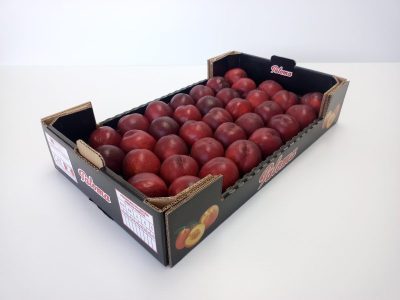
According to the executive, the new generation of varieties has made it possible to gain one or two weeks in the European calendar, with fruit already showing optimal firmness, flavour and shelf life in weeks 18 and 19.
For now, nectarine remains the core of the group’s stone fruit business. However, new typologies are already being tested in trial fields, including peach and flat nectarine, always following the same principle: early materials with superior flavour standards.
Grapes from June onwards
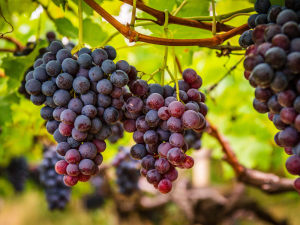
The stone fruit campaign links almost directly with the grape season. Once nectarine harvest finishes, the group begins harvesting early grapes in the Mazarrón area, also near the coast, starting with red grapes from 15–20 June and supplying through to the end of October — and even the first days of November — thanks to harvesting schedules and cold storage programmes.
This crop will account for around 7 million kilos. Added to this are approximately 4 million kilos of pomegranate, another 5 million kilos of nectarine and 40 million kilos of tomato, a product that continues to occupy a central place in the company’s identity.
The company’s emblem: tomato
Almost 30% of the area dedicated to this vegetable crop is allocated to specialty, mid-high segment and premium varieties, with lower yields but greater commercial differentiation. Among them, Sugar Drop stands out, an exclusive Paloma variety positioned in a high-quality niche with lower productive performance.
RELATED NEWS: Europe increases its stone fruit production
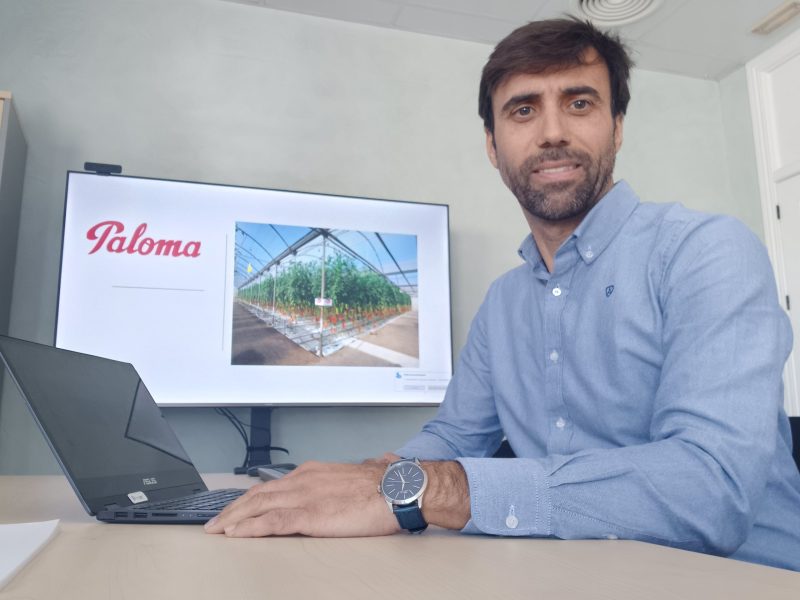
To support this strategy, the company has developed a production structure based on high-tech greenhouses, featuring multispan structures, heating systems, thermal screens, ventilation and advanced crop management systems. Franco sums it up clearly: “the company has a production structure that is difficult to match in Spain.”
Sustainability as a corporate culture
Sustainability is another of the company’s pillars. It is not presented as a simple commercial argument, but as a working philosophy integrated into daily management. Grupo Paloma implements policies aimed at reducing plant protection product use, optimising irrigation, lowering water consumption, improving energy efficiency and measuring environmental impact.
The company was a pioneer in water footprint and carbon footprint certification, an area in which it began working as early as 2016. In addition, its new farms are designed with biodiversity plans and protocols focused on responsible agricultural production.
For the company, climate change is one of the major future challenges. As a result, a significant part of current investments is directed towards more resilient production structures, new greenhouses, climate control technologies and artificial intelligence tools applied to agriculture. The company has spent years allocating a significant share of its resources — nearly 10% — to mitigating the impact of climate volatility on crops.