



The European Commission’s Agriculture Committee has presented the study “Generational change in agriculture: comparative analysis of businesses run by young farmers in selected EU countries”. The report addresses generational renewal without mentioning the growing impact that organic farming is having as a clear driver of attraction, especially among younger generations.
According to Evelyne Alcázar, coordinator of Ecovalia and director of Ecovalia’s Brussels Office, “this report warns about the severe ageing of the agricultural sector and the lack of generational renewal. However, it does not provide data on which farming models are most attractive to young people.” She adds that “in a country such as Spain, where the average age in the agricultural sector is particularly high at 61.4 years, the data from Ecovalia’s 2026 annual report show that there is a higher percentage of young people opting for organic production. Almost 40% of young farmers work under quality standards, and one in every two of them does so under the organic label (Euroleaf). This percentage is even higher among young women, exceeding 53% compared with 47.6% among young men.”
A strong commitment from young people
Spain has experienced a real expansion of the business network over the last five years in terms of organic business activities, with growth of 25%. This reflects the sector’s maturity and has led to the creation of 122,100 direct jobs, 4.9% more than in 2023.
The organic production model shows that both women and young farmers have a greater presence in the organic sector compared with conventional agriculture. In fact, newly incorporated young farmers show a stronger affinity for organic farming, attracted by its sustainability and the lower initial investment requirements.
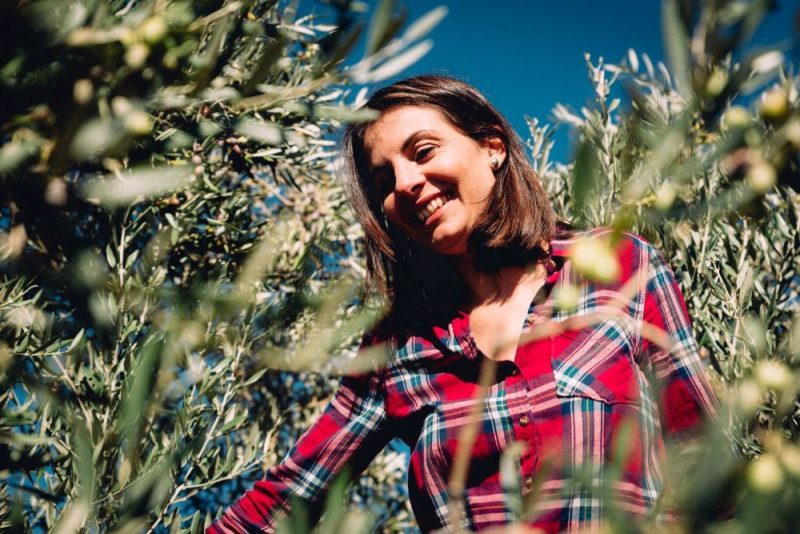
It is a reality that many young people and women are becoming a key driving force in the organic sector, standing out for their greater relative presence than in conventional farming. Women manage around 32% of organic farms and play a key role in the ecological transition by promoting low-impact practices and biodiversity preservation. Young people, meanwhile, bring technological innovation, digitalisation and climate resilience.
Spain, a leader
Spain leads organic production in Europe, with more than 3 million certified hectares (12.3% of utilised agricultural area), maintaining its position as the leading organic producer.
RELATED NEWS: Valencian Community’s organic sector approaches €1 billion
The domestic market continues to grow, with organic consumption exceeding €3.2 billion and an average national per capita expenditure of €66. Household consumption recovery is reflected in a 7.5% year-on-year increase.
Organic production is increasingly present in shopping baskets, with two out of every three households choosing organic products and prioritising quality over cost. Consumers are therefore giving a central role to guarantees, traceability and the values associated with organic certification.