






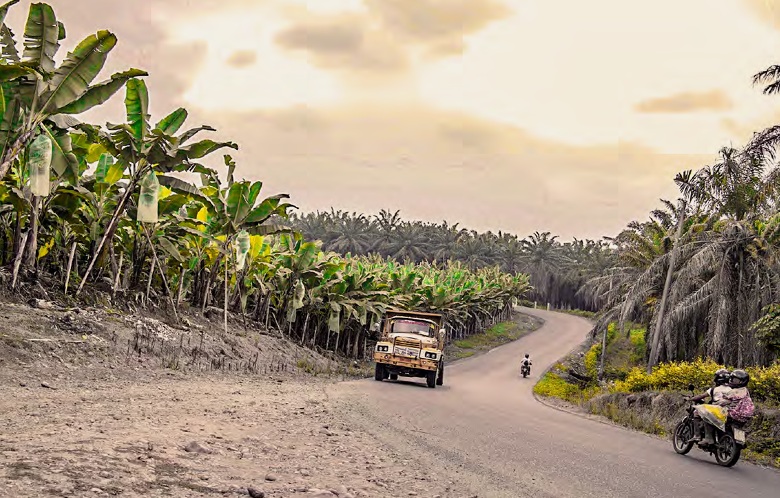
Oxfam International has released its latest report, Paid Up? Living Wage Efforts in Banana Supply Chains of Dutch and German Supermarkets, shedding light on labour conditions in banana production linked to European supply chains. The study is based on more than 1,600 interviews with plantation workers in Ecuador and Costa Rica.
The report focuses on two of the main banana-exporting countries to the European Union, which account for a significant share of imports. Ecuador represents 31% of EU banana imports, while Costa Rica accounts for 20%, with both origins also supplying the Spanish market.
Wage gaps and labour precarity
In Costa Rica, monthly earnings for plantation workers range between $677 and $844 (€576–€718), well below the estimated living wage of $1,030, according to the Anker methodology. This represents a wage gap of around 34%.
In Ecuador, the report indicates that the legal minimum wage is only reached through excessive overtime. Around 85% of workers employed by suppliers to European retailers report working unpaid overtime. In Costa Rica, 42% of workers earn below the legal minimum wage.
RELATED NEWS: International Banana Congress focuses on sector challenges
The study also highlights precarious working conditions. In Ecuador, only 14% of workers surveyed have a written contract. Gender inequality is another key issue: women earn just 56% of a living wage per hour, represent 80% of the lowest-paid group and work, on average, eight hours more per week than men for lower pay.
Price pressures linked to European markets
Oxfam links these conditions to pricing dynamics in the European retail market. In 2024, Latin American exporters protested against falling prices per box, driven by low-price promotions in European supermarkets.
Limited progress on social commitments
While EU trade agreements with banana-exporting countries include commitments to labour rights and social protections—such as the EU-Central America Association Agreement and the EU-Colombia-Ecuador-Peru Trade Agreement—progress on these issues remains limited in practice, according to the report.
Impact on European producers
The situation also adds pressure on European banana producers, particularly in regions such as the Canary Islands, which account for over 80% of EU banana production. Producers have increasingly criticised what they see as uneven standards, calling for stricter enforcement of social and environmental requirements on imports.