








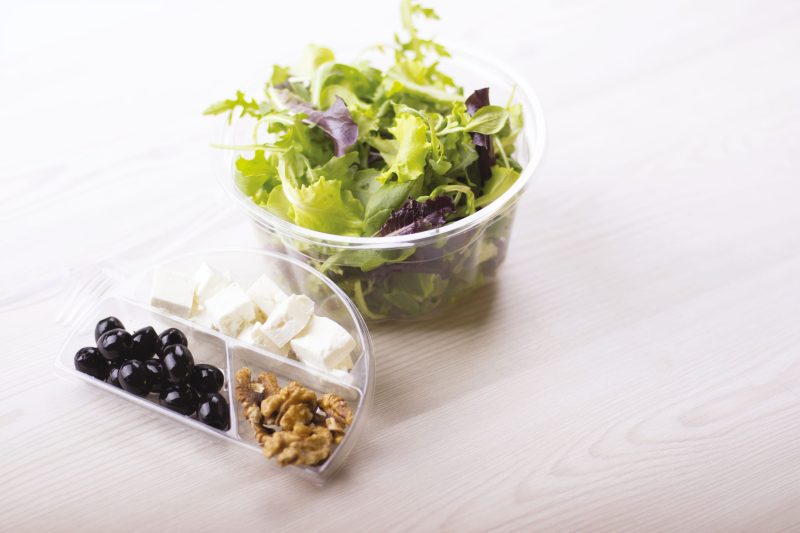
The growth of the fresh cut and ready-to-eat segments is redefining the role of fruit and vegetable packaging. In this context, ILIP, a company within the ILPA Group specialising in thermoformed packaging for fresh food, considers this segment a strategic area positioned between fresh produce packaging and food service.
“This is a high-value-added segment, driven by demand for ready-to-eat and on-the-go products,” explains Roberto Zanichelli, Business Development and Marketing Director at ILIP. “Packaging plays a decisive role in preserving shelf life, reducing food waste and ensuring a consumer experience that matches the producer’s promise.”
In the fresh cut and ready-to-eat sectors, functionality remains the primary selection criterion. Packaging must guarantee product protection, food safety and continuity on automated processing lines. Heat-sealability, compatibility with modified atmosphere packaging and efficiency throughout packing operations are essential requirements.
Alongside functionality, sustainability has become a structural necessity. The objective is to reduce material usage and improve recyclability without compromising performance. This is the approach behind ILIP’s R-PET solutions, which incorporate an average of 81% recycled material, supported by tray-to-tray processes that transform post-consumer trays into new packaging.
EU regulation accelerates R&D
The European regulatory framework for packaging is accelerating innovation towards more circular models, while also introducing new complexities related to investment requirements and adaptation timelines.
ILIP has chosen to anticipate these changes by relying on an integrated recycled PET supply chain that guarantees traceability, quality and continuity of supply.
RELATED NEWS: Packaging for fresh fruit and vegetables: performance, sustainability and new demands
Today, purchasing decisions in the fresh cut and ready-to-eat categories are based on a balance between functionality, sustainability and cost. Performance remains a prerequisite, while sustainability has become a permanent component of technical specifications, and cost is increasingly assessed in terms of overall efficiency.
Over the coming years, the sector is expected to evolve towards more efficient solutions: less material, greater recyclability and higher levels of recycled content, within an increasingly fit-for-purpose approach.