









Green Motion Avocados —promoted by the University of California, Riverside (UCR) and Spain’s Eurosemillas— is not only the largest avocado breeding project, but also brings together the largest known network of experimental fields to accelerate the development of a new generation of avocado varieties and rootstocks that will soon reach the market.
An international network to accelerate avocado breeding
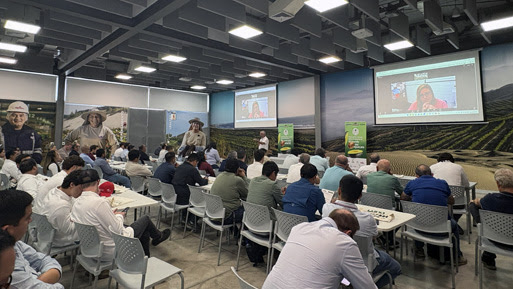
This was demonstrated during the 2nd Seminar organised by the platform, held last June in Trujillo, Peru. The event brought together 60 growers, representatives of leading companies in the sector and nurseries from countries in both the northern and southern hemispheres that are part of this alliance.
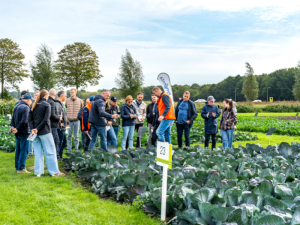
Over two days of presentations, discussions and visits to plantations, participants exchanged experiences on the cultivation of these Hass-type varieties and rootstock selections, which are currently only available to members of the platform.
In one or two years, following the launch of Luna —the first variety promoted by Green Motion— three more varieties are expected to follow. These new avocados, together with the five rootstocks currently being tested, will make it possible to expand growing areas, extend the harvest calendar and further develop intensive production systems with a lower water footprint. Two of these rootstocks are also expected to be commercialised in the near future.
Leading companies from 14 countries
Representatives of all the Peruvian companies that are part of the alliance took part in the meeting: Mission Produce —USA/Peru—, Talsa, Viru SA and Vivero los Viñedos SAC. The event also included a visit to Mission Produce’s local packing facilities in Chao. The Californian multinational is one of the world’s leading producers and marketers of subtropical fruit and was one of the first companies to support the project.
In total, the alliance includes 20 leading production and/or marketing companies, some of them nurseries, from 14 countries: Chile, Mexico, Israel, Australia/New Zealand, India, Turkey, Spain, Portugal, South Africa, Colombia and Ecuador.
They include Viveros Hijuelas SA, Jorge Schmidt y CL, Avo Oro Verde, Jaliscavo, Meshek Banai Ltd, NuLeaf IP Pty Limited, IG Deccan PVT. Ltd, Nasel Tarim, Trops SAT, Grupo Empresarial La Caña, Viveros Blanco, Persea Growers, ZZ2, Stargrow, Profrutales SAS and Ecuagroimport SA.
During the seminar, Trops, ZZ2 and Grupo Hijuelas shared results and progress from their respective trial fields.
Results tested in both hemispheres
“The trials carried out by UCR are now being complemented by experiences shared in areas across eight countries in the northern hemisphere and six in the southern hemisphere, with very different harvest calendars, climates, cultural practices and soil conditions. Never before has a selection of varieties and rootstocks been tested so thoroughly. The promising results shown by the breeder in California are now a verifiable reality in many other locations,” said Javier Cano, director of Green Motion Avocados.
Cano also expressed his “gratitude” to all members of the platform for their “collaboration in this project and participation in this meeting”.
Three new Hass-type varieties
During the meeting, the agronomic performance of the three varieties expected to be launched, probably between 2027 and 2028, was presented.
Two of these avocados could extend the Hass season by several months, with fruit of similar characteristics. The UCR V01 selection is later, while UCR V02 is earlier.
RELATED NEWS: Peru hits record avocado exports and targets 1Mt by 2030
Work is also underway on a third selection, UCR V03, with smaller-sized fruit, conceived as a “one-bite” avocado, with exceptional flavour and potential interest as a gourmet product.
Luna and the potential of intensive plantations
Another objective of the seminar was to present different formulas for increasing productivity through intensive or semi-intensive approaches.
In this regard, experiences and planting designs applied over recent years with Luna were shared. Luna trees, with type B flowering, have a very vertical growth habit, a characteristic that facilitates this type of management.
In addition, the variety produces fruit indistinguishable from Hass, and the prolonged overlap in flowering between the two varieties was confirmed in both the northern and southern hemispheres, which multiplies orchard productivity.
Rootstocks against salinity, active lime and Phytophthora
The seminar also reviewed the performance of the five rootstock selections obtained by UCR. Of these, trials with two rootstocks are at a more advanced stage.
The first is UCR R01, of particular interest due to its semi-dwarfing character, making it suitable for intensive plantations. It is also resistant to Phytophthora, shows favourable performance under conditions of chlorides, salinity and alkalinity, has low alternate bearing and offers good productivity.
The second is UCR R02, a medium-vigour rootstock, also resistant to Phytophthora, with moderate alternate bearing and productivity comparable to Dusa. Its most distinctive feature is its ability to adapt better to highly saline conditions.
According to the latest data released by UCR, the tolerance of UCR R02 to salinity and active lime has even been shown to be higher than that of West Indian rootstocks developed in Israel.