








The Serbian berry industry has long been recognised as one of Europe’s major horticultural success stories. Built on generations of growing expertise, the country has earned an international reputation for producing high-quality raspberries, while also developing increasingly important blackberry and blueberry sectors.
During a recent visit to Serbia, the GPG team met with its long-standing partners, Zeleni Hit, to review commercial plantings, discuss market trends and explore the future direction of berry production in the region.
Working alongside Neša Momirović, Smiljana Momirović, Nevena Batić and Milica Momirović, the discussions focused on how modern genetics and evolving production systems are helping growers respond to changing market demands while maintaining the high standards for which Serbian fruit is known.
Building on a strong berry tradition
Serbia’s berry sector has traditionally been centred on raspberries for the IQF and processed fruit industries, supplying premium fruit to customers across Europe and beyond. These markets continue to play an essential role and remain a cornerstone of the country’s production.
At the same time, the industry is evolving. Domestic consumption of fresh berries is increasing, while growers are identifying new opportunities in premium fresh-market programmes.
This transition is generating demand for varieties that combine excellent fruit quality, consistency, shelf life and productivity, while also meeting the requirements of modern retail supply chains.
Modern genetics for modern production
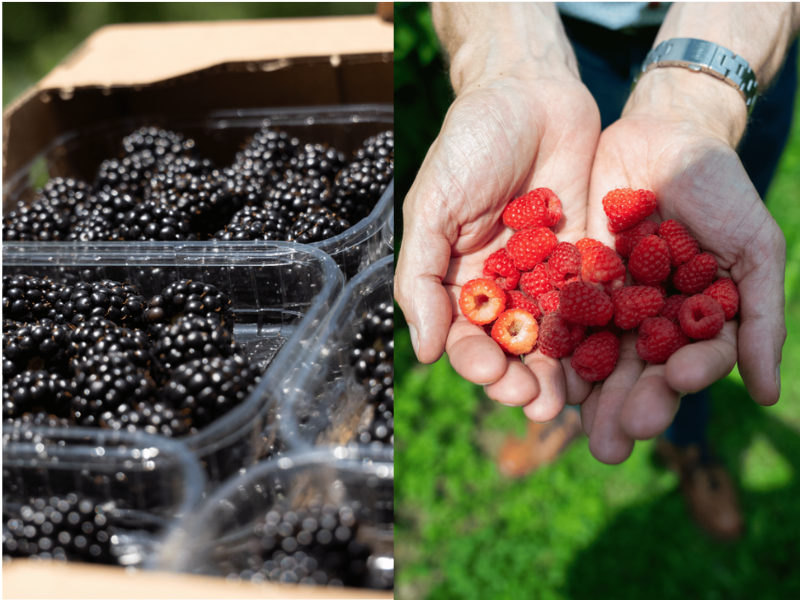
During the visit, commercial plantings of Glen Mor, Glen Dee and Skye raspberries, together with Natchez and Von blackberries, demonstrated the value of genetics developed to meet current production and market needs.
Discussions also addressed the future development of Serbia’s blueberry sector, including the potential of Pinnacle and promising new selections from the Oregon Blueberry breeding programme.
As consumer demand for blueberries continues to grow across Europe, growers are increasingly looking for varieties capable of delivering fruit quality, reliability and commercial performance.
Responding to climate change
Like many berry-producing regions around the world, Serbia is experiencing the effects of changing climatic conditions. Growers report that winters are becoming milder, with fewer accumulated chilling hours than in previous decades.
These changes reinforce the importance of continued investment in plant breeding. Modern breeding programmes are developing cultivars capable of maintaining productivity, fruit quality and consistency under evolving environmental conditions, helping growers prepare for future challenges.
RELATED NEWS: Global Plant Genetics celebrates 10 years of growth
Alongside new genetics, production systems are also advancing. Investment in substrate production, tunnels, protected cropping and improved agronomic practices is enabling growers to increase consistency, improve labour efficiency and optimise fruit quality.
Partnerships to drive progress
GPG believes that the future of the berry industry will be built through collaboration between breeders, nurseries and growers. Strong local partnerships are essential to ensure that new genetics are supported by technical expertise and adapted to local production environments.
The company’s ongoing relationship with Zeleni Hit reflects this approach. By combining international breeding programmes with local knowledge and technical excellence, both partners aim to support the development of profitable and sustainable berry production across Serbia.
As the industry continues to evolve, Serbia remains well positioned to build on its horticultural heritage. With progressive growers, innovative production systems and access to world-class genetics, the next chapter of Serbian berry production is already taking shape.