






How did the fruit and vegetable market perform over the past year?
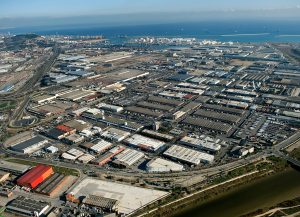
Mercabarna’s fruit and vegetable sector continues to grow. In 2025, wholesalers operating at the Central Fruit and Vegetable Market marketed 1,140,033 tonnes, an increase of 5.6% compared with the previous year. When the fruit and vegetable companies located in Mercabarna’s Complementary Activities Zone (ZAC) are included, total sales reached 2,349,541 tonnes, 1.6% more than in the previous year, consolidating Mercabarna’s position as Spain’s leading wholesale market.
The average price of products increased by 12% compared with the previous year. This was mainly due to rising production costs and lower availability of several high-volume products caused by adverse weather conditions. In many cases, growers also sought to align production more closely with demand in response to sharply increasing production costs, leaving some fields uncultivated.
During the first six months of 2026, cumulative trading volumes at the Market fell by 0.74% compared with the same period in 2025, while the average price increased by 8%. This was largely driven by adverse weather conditions—such as severe storms (DANAs) and sudden temperature fluctuations in production areas—which reduced supply at origin. These factors were compounded by already high production costs, which continued to rise following the Strait of Hormuz conflict.
As a result, demand for some products that traditionally generate high sales volumes has weakened, as consumers are either unable or unwilling to pay higher prices and have switched to more affordable alternatives.
Consequently, growers and wholesalers have often had to contain prices, as demand was beginning to soften. Looking ahead, we expect volumes to recover over the coming months, as happened in 2025.
Is there any product that deserves particular mention?
In 2026, adverse weather conditions have significantly reduced supply at various points throughout the year, particularly across the vegetable category. By the end of May, however, the situation had begun to normalise.
As of 30 June, the cumulative average price of products marketed stood 9.03% above the level recorded in 2025.
Have there been any new operators entering the market? Have there been any mergers?
The Market currently hosts 120 wholesale companies occupying 440 sales units, together with eight agricultural cooperatives. Occupancy is at full capacity, with no vacant units available.
Between 2025 and the first half of 2026, several sales units changed hands. They were acquired by a company specialising in mushrooms, a group of cooperatives from southern Spain, a wholesaler that already operated a warehouse in Mercabarna’s Complementary Activities Zone (ZAC), and another wholesaler that already had units in other market halls. Demand from companies wishing to establish themselves within the Market remains strong.
Within the ZAC, four wholesalers already established in Mercabarna have purchased additional warehouses to expand their operations.
In addition, Transgourmet Ibérica opened a new cash & carry outlet together with a logistics platform to provide sales, fresh-cut product preparation and distribution services for foodservice professionals.
There is also continued demand from new companies. We expect to accommodate them over the short and medium term as further land becomes available through the redevelopment of areas included in the new urban development plan.
Mercabarna handles a significant volume of imports and exports. How have these evolved over the past year?
Imports continue to account for 25% of the total volume marketed, while the remaining 75% comes from Spanish production areas, mainly Andalusia and the rest of the Mediterranean coast.
Of those imports, 16% originate from the European Union, particularly neighbouring countries with which Spain also maintains strong export flows, such as France, the Netherlands and Belgium. The remaining 9% comes from the Southern Hemisphere—including bananas, pineapples and other exotic or counter-seasonal products—as well as Morocco, Turkey and other Mediterranean countries when Spanish production is unable to meet market demand.
RELATED NEWS: Sustainability and profitability shape Mercabarna’s management
Exports account for between 30% and 40% of the Market’s total sales volume and are mainly destined for markets across Europe and North African countries.
How do you see the future of Mercabarna’s fruit and vegetable sector, and what challenges or objectives will shape its development in the coming years?
Mercabarna’s management team is currently defining the 2027–2030 Strategic Plan. We will continue promoting the overall sustainability of the Mercabarna ecosystem, both as an organisation and across the companies operating within the site, with which we are already working closely.
At the same time, we will continue advancing digital transformation and strengthening the business community, with the aim of consolidating the food hub as a benchmark for sustainability, innovation and talent attraction.