




At the same time, the company is recording growth in piel de sapo melon exports to Europe, where yellow melon and Sweetheart are also gaining ground, including in the domestic market.
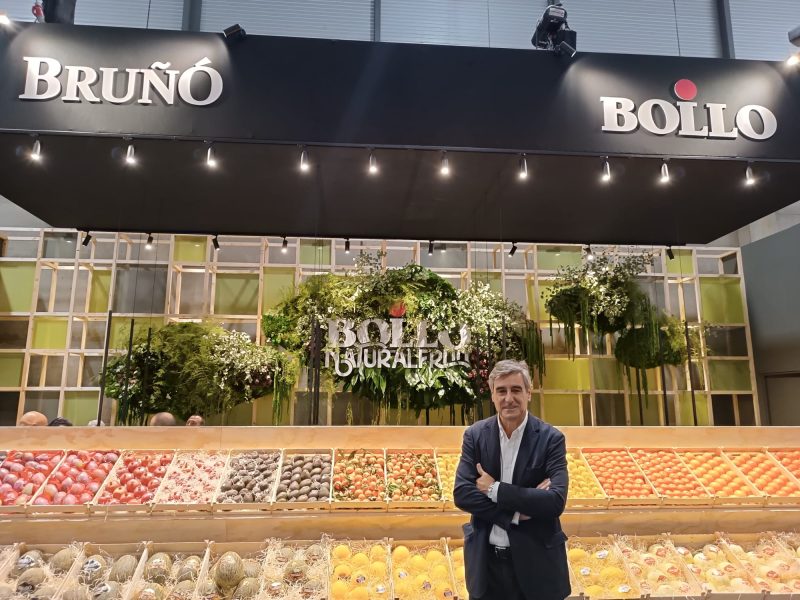
What product volumes (melon and watermelon) does Bollo estimate across its different production areas?
Our global volume forecast for the current campaign is 80 million kilos of melon and 20 million kilos of watermelon. We begin production in Almería, followed by Murcia, before ending the summer season in Castilla-La Mancha. We also produce in Western Andalusia to ensure the consistent presence of Bollo and Bruñó melon and watermelon throughout the campaign.
To achieve this, our technicians and field managers, together with growers, carry out excellent planning and evaluation work for plantations and crops across the various production areas and varieties.
We are finishing the American import campaigns. Could you assess how the winter season unfolded?
Volumes were very good between October and December. In January and February, there was a significant slowdown caused by successive cold waves during the winter. However, activity recovered in March and April, reaching more than satisfactory volumes.
Regarding watermelon, Spain seems to favour large sizes that are later cut in supermarkets, whereas Europe tends to prefer smaller watermelons. How do you view this dichotomy?
It is true that there is a clear dichotomy and, in my opinion, it is perfectly explained by differences in consumption habits between Spain and other European countries.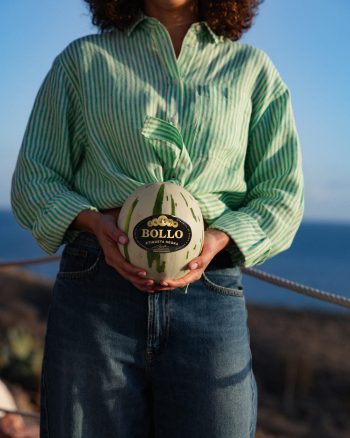
In Spain, consumers still highly value large watermelons, associating them with better household yield and shared consumption occasions. In contrast, in many European markets consumption tends to be more individual or oriented towards smaller households, where ease of handling, immediate consumption and food waste reduction are prioritised.
That said, in recent years we have also noticed in Spain that convenience stores and express retail formats — associated with faster shopping and smaller purchases — are increasingly shifting demand towards smaller watermelons, around 4–5 kilos.
In terms of typologies, which melon categories are gaining or losing ground?
Piel de sapo melon remains the favourite among Spanish consumers and maintains fairly stable consumption in our country.
Meanwhile, in European markets we are seeing a clearly upward trend, with progressively growing demand for piel de sapo melon, increasingly appreciated for its organoleptic qualities.
At the same time, we are also seeing other varieties gaining ground, especially yellow melon and Sweetheart, whose consumption is increasing across both Spain and other European markets.
As has already happened with other products, melon and watermelon are now entering the fresh cut category. At what stage of development are you currently?
Fresh cut has enormous potential for all fruit categories, including melon and watermelon.
RELATED NEWS: Bollo Natural Fruit strengthens its diversification strategy
In this regard, we are working to offer the best developments and strengthen our position within this segment as well. Bollo and Bruñó melon and watermelon are always a guarantee of flavour and quality. Based on this principle, we will continue working, now also through these new formats that provide convenience and make fruit easier to consume on a daily basis.
Which are the main markets for Bollo Natural Fruit? What percentage does the domestic market represent?
We supply practically all of Europe, with markets such as France and Germany standing out among others. Outside Europe, Canada and Brazil are particularly important.
However, for us, Spain remains the most relevant destination.
You continue to invest strongly in branding, which obviously requires promotion. Are you currently planning any specific actions?
During the summer campaign, we will continue strengthening the bond with our target audience through “Stay with the good”, already consolidated as Bollo’s brand claim.
It is an idea connected to a very simple reality: in life, we choose to keep the best of every experience we live, and fruit consumption is no exception. That is why we invite consumers to stay with the good things in life — and in fruit.
This communication line will be reinforced through various trade actions at point of sale, aimed at improving conversion and strengthening our brand awareness, which, as you know, is linked to a new visual identity.