








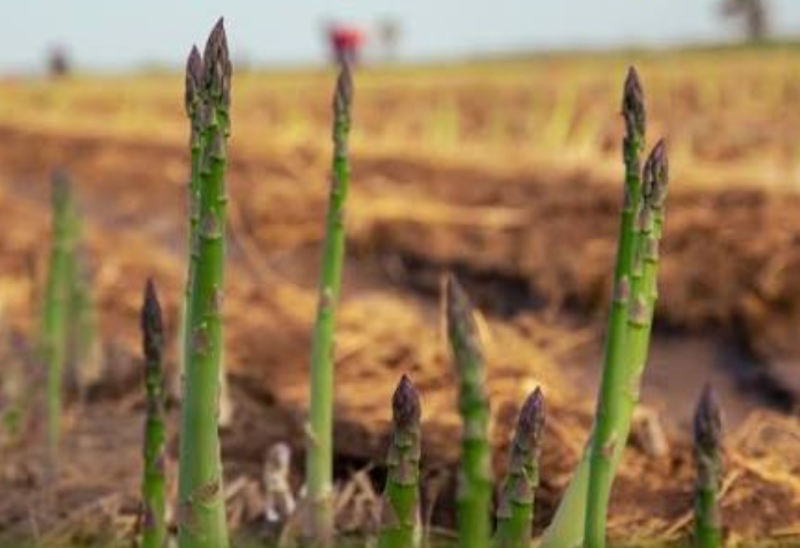
Fresh Peruvian asparagus reached 63,600 tonnes of exports in 2026 up to epidemiological week 41, consolidating Peru as the world’s second-largest asparagus exporter, with a presence in 33 destination markets.
Against a backdrop of sector growth and the need to maintain access to international markets, the Peruvian Asparagus and Vegetable Institute (IPEH) highlights the importance of incorporating growers, packers and exporters into SENASA’s Traceability System for Guides (SIS). Traceability throughout the export chain is therefore presented as a key element in ensuring compliance with the phytosanitary requirements imposed by different destination markets.
The United States accounts for 73% of shipments
The United States, Spain and the United Kingdom account for almost 90% of fresh Peruvian asparagus exports. The United States represents 73% of shipments, followed by Spain at 10% and the United Kingdom at 7%.
Production is mainly concentrated in La Libertad and Ica, two of the country’s main growing regions. In total, 74 companies export fresh Peruvian asparagus.
In terms of logistics, sea freight accounts for 62% of shipments, while 37% is transported by air and the remaining 1% by land.
Traceability as a strategic decision
For IPEH, joining the Traceability System for Guides (SIS) is a strategic decision for asparagus growers and exporting companies seeking to maintain their presence in international markets.
Completing the relevant records and keeping information updated with SENASA helps strengthen traceability throughout the export chain and supports compliance with the phytosanitary requirements imposed by destination markets.
The sector faces significant challenges in restoring and maintaining its international competitiveness. Among them, IPEH points out that Peruvian asparagus has been subject to mandatory fumigation for more than 25 years to enter the United States, while more stringent requirements and inspections have been introduced in Europe.
In this context, the organisation considers that restoring the competitiveness of Peruvian asparagus requires the commitment and coordinated action of growers, exporters, importers and authorities.
RELATED NEWS: Asparagus and Berries Days Unite for a Global Event
The role of importers
Importers also play an important role in strengthening traceability. IPEH is encouraging them to promote the incorporation of their suppliers into SENASA’s SIS and to understand the journey of Peruvian asparagus from origin to destination.
This involvement helps strengthen confidence in the export chain and encourages stakeholders to work together to ensure greater product traceability.
A sector committed to traceability
With 63,600 tonnes of fresh asparagus exported up to week 41 of 2026, Peru maintains a prominent position in the international trade of the product. For IPEH, consolidating this position also requires strengthening traceability systems and ensuring compliance with the phytosanitary requirements of destination markets.
The incorporation of all links in the supply chain into SENASA’s SIS is therefore presented as a tool to safeguard market access and address the competitiveness challenges facing Peruvian asparagus.