







According to Antonio Tuccillo, director of Agrimpex Farming, a company based in Campania, the current difficulties are also linked to changes in the procedures and conditions for importing garlic from China into Brazil.
“This change has facilitated the entry of Chinese garlic into the Brazilian market and has had global repercussions, disrupting the trade balance established over the years,” Tuccillo explains.
Oversupply weighs on the European market
In Italy, where market trends are largely in line with the wider European situation, persistently low prices and limited interest from traders, buyers and consumers are mainly due to the broad availability of garlic from different origins.
Spanish garlic from the previous season is still present on the market, while Argentinian garlic has arrived at particularly low prices not seen for decades. Added to this is Egyptian garlic, currently available for less than €1/kg.
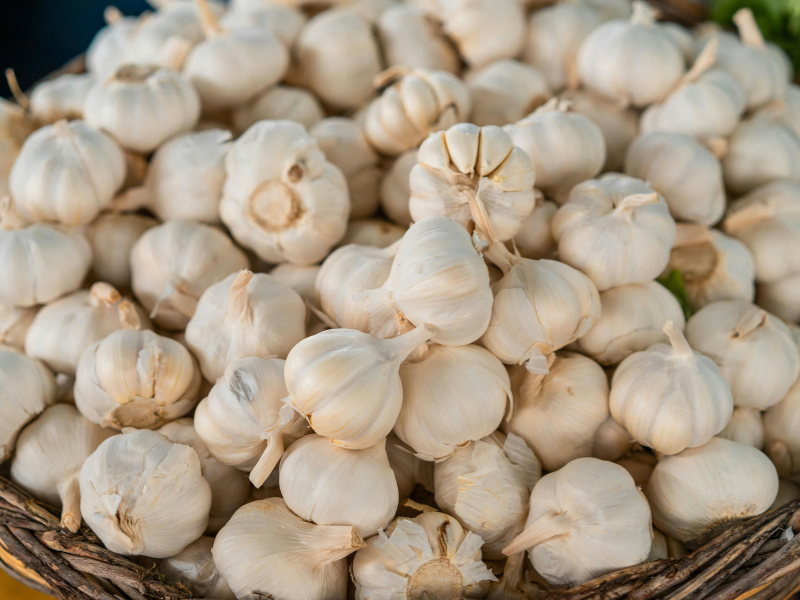
However, according to Tuccillo, mature and dried Egyptian garlic is not particularly popular with Italian and European consumers. The product often shows significant irregularity in the cloves, which can be numerous and vary considerably in size within the same bulb. The situation is different for fresh, or green, garlic, which is used as a vegetable alongside other vegetables and seasonings.
Italian garlic remains the preferred choice
The most appreciated product in Italy remains domestic garlic, with early harvests from Campania followed by later production from the Rovigo and Piacenza areas. Cultivars such as Rosso di Sulmona and Rosso di Nubia, from Paceco in Trapani, also retain a strong regional identity.
Alongside Italian production, consumers continue to show a clear preference for Spanish garlic, which is considered similar to domestic varieties. However, the limited availability of Italian production makes imports from other countries necessary.
Large stocks remain unsold
Throughout the year, significant volumes have been imported from Argentina and, above all, from Egypt, mainly due to low prices.
“The arrival of large quantities of Egyptian dried garlic has been encouraged by its low price. Some imports were made without taking consumer preferences into account, with the result that around 90% of the imported product remains unsold in fruit and vegetable markets and commercial warehouses across various parts of the country,” Tuccillo says.
RELATED NEWS: The European garlic sector calls for urgent measures
The presence of substantial stocks of Spanish garlic from the previous season, combined with increased imports from Argentina, had already complicated the market situation. The arrival of large quantities of Egyptian garlic has further worsened the scenario, causing a sharp decline in market interest.
Unfavourable outlook for the coming months
The outlook for the coming months remains challenging. According to Tuccillo, consumption is expected to be delayed by between two and three months, as the market will first need to absorb at least part of the existing stock.
Only once inventories have been reduced, or if the product deteriorates to the point where it is no longer suitable for sale, will there be room for domestic and European garlic, which has already entered the harvesting phase, followed by processing and storage.
“If the situation continues without changes to the rules and market conditions, the garlic sector could continue to face difficulties. In this context, it may become necessary to reduce production to avoid significant economic losses throughout the production chain,” Tuccillo concludes.
Analysis by Antonio Tuccillo, director of Agrimpex Farming.