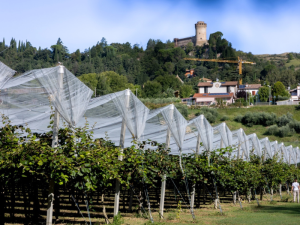












Global table grape supply is moving away from the relatively predictable pattern that governed the succession of seasons for many years. The arrival of new varieties, the development of tropical and subtropical vineyards and the use of agronomic techniques capable of bringing harvests forward or delaying them —including protected cultivation, plastic covers and netting— are blurring the boundaries between production windows.
Competition is now taking place both between regions within the same country and between origins that previously occupied different points in the calendar. Sicily, for example, is emerging year after year as an increasingly early Italian origin.
The result is a far more fragmented and complex supply map. Spain, Italy, California, Chile and South Africa, which for decades occupied clearly defined positions, are now facing growing pressure from countries such as Egypt, Brazil, Peru, India, China, Australia, Turkey and Uzbekistan.
Egypt moves into the Spanish and Italian window
Egypt is one of the clearest examples of this transformation. Its table grape industry is not new, but its production calendar has changed substantially.
Traditionally, the country concentrated its exports between late May, June and early July, shortly before the Mediterranean campaigns reached their main volumes.
The introduction of mid-season and late varieties, together with their cultivation in unheated greenhouses, has allowed Egypt to extend harvesting throughout July and well into August. Egyptian grapes are therefore no longer limited to an early window, but now overlap directly with production from Murcia and the opening stages of the Italian season.
The arrival of varieties widely recognised by retailers, such as Ruby Rush™, Ivory™, Sweet Globe™ and Autumn Crisp™, is intensifying this pressure.
This overlap also occurs during months when fruit consumption tends to lose momentum because of the summer holidays and when significant European volumes accumulate. The result is greater pressure on prices and a narrowing of the commercial windows previously enjoyed by Spain and Italy.
“This forces us to consider technical strategies capable of supporting commercial options, ranging from short storage periods of two to three weeks to long-term storage of 60 days or more from September onwards. This is already happening in California and with grapes travelling from Chile and Peru to destinations involving 45 to 65 days of sea transit,” explains table grape specialist Oscar Salgado.
Brazil produces throughout the year
Brazil demonstrates the extent to which tropical agriculture is transforming the sector.
In Petrolina, in the São Francisco Valley, table grapes are grown alongside crops such as mangoes, bananas and coconuts, and can be harvested 52 weeks a year.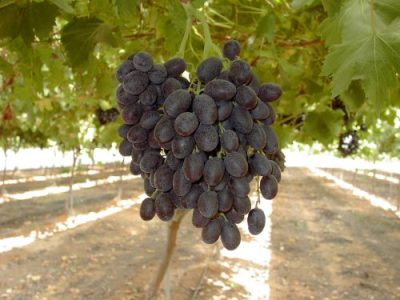
Although export activity is more significant during the second half of the year, when rainfall is lower or absent, this year-round production capacity allows Brazilian companies to adjust their programmes to market requirements and take advantage of different commercial opportunities.
Their main destinations are Europe and the United Kingdom, although Brazilian movements also influence other international suppliers.
When Brazil increases its presence between August and November, its supply can overlap with production from California. This forces operators to move programmes, alter dates and search for alternative markets. In addition, current tariff conditions are pushing a greater share of Brazilian supply towards the European Union.
Brazil therefore symbolises one of the major changes in the business: production no longer depends exclusively on traditional seasons, but also on the technical capacity to manage crops under tropical conditions.
Peru multiplies its windows from Piura and Ica
Peru is possibly the country that has made the greatest use of the combination of genetics, climatic diversity, investment and export orientation.
Its production does not follow a single season, as conditions vary considerably between the north and south of the country.
In Piura, the tropical production area north of Lima, harvesting can begin very early, from late May or June. Varieties such as Red Globe are grown there for markets in Central America and countries where seeded grapes still retain significant demand.
The region allows faster production cycles and technically offers the possibility of obtaining two harvests, although northern production remains relatively limited for the time being. This strategy also carries considerable risk when rainfall occurs.
Further south, Ica has consolidated its position as a particularly stable subtropical region. It does not offer the same freedom of timing as a fully tropical area, but it provides significant flexibility when programming production.
This capacity allows Peru to exert pressure during the final weeks of the Spanish and Italian seasons and then connect with the supply windows of Chile and South Africa.
Peru competes with northern hemisphere producers at the beginning of its calendar and with southern hemisphere suppliers during the central months of its season.
Sicily changes the balance within Italy
The reshaping of the production map is also occurring within individual countries, as seen in Peru with Ica and Piura.
In Italy, the growth of early production in Sicily is changing the traditional prominence of the production areas in Apulia.
Higher-altitude Sicilian areas have developed earlier programmes and introduced new varieties, enabling the island, for the time being, to compete more strongly in the domestic market.
Post-harvest management becomes a competitive tool
With the expansion of new origins, proximity to the European market no longer guarantees a decisive advantage for Spain and Italy.
The ability to preserve fruit, reduce or flatten production peaks and extend marketing in an orderly manner has become a fundamental competitive factor.
A strategy based on short storage periods during peak production could help regulate market releases, avoid excessive concentration of volume and better defend prices. It could also make it easier to prepare bi-colour or tri-colour packs.
Later in the season, longer storage periods could be considered, replicating the transit times routinely handled by southern hemisphere suppliers.
Russia reshapes regional trade flows
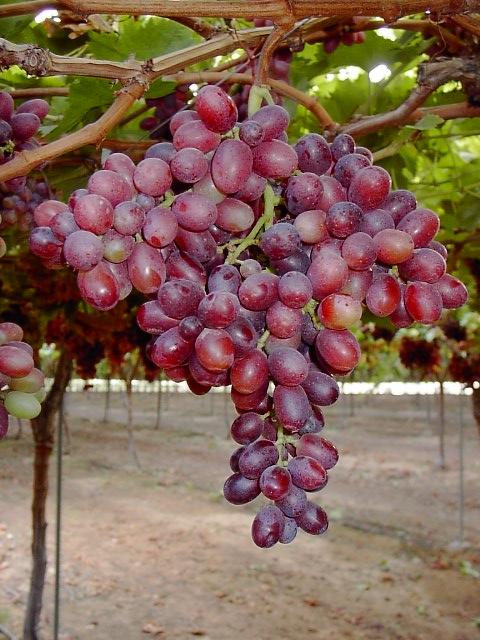
Central Asian countries are also acquiring a more relevant profile.
Uzbekistan and Afghanistan have a long-standing production tradition, and the trade restrictions between Russia and Europe since 2014 have encouraged these countries to increase their supply to the Russian market.
In Uzbekistan, projects have been developed in table grapes and other fruit crops to improve production, packing and exports. This growth is also increasing competition with Turkey, another traditional supplier to Russia.
When the Russian market absorbs larger volumes of Uzbek grapes or fruit from other former Soviet republics, Turkish operators must strengthen their presence in alternative destinations.
“Not everything goes into raisin production,” Salgado points out.
Part of this fruit is redirected towards Europe, particularly Germany, where there is a significant population of Turkish origin.
India emerges as a major potential competitor
India is one of the countries with the greatest capacity to alter the market over the coming years.
During the 1970s, the country developed some of the double-pruning techniques that were later adopted and refined in Brazil and subsequently expanded on a large scale in Peru.
Its main distinguishing feature is that, despite being located in the northern hemisphere, it harvests during a window similar to that of southern hemisphere countries.
It can therefore overlap directly with production from Ica in Peru, Chile south of Santiago and the Berg River and Hex River Valley regions of South Africa.
Until now, India has exported a relatively small share of its production, generally between 5% and 9%, depending on the season. However, it has a large production area and is introducing more modern genetics.
If it improves quality, presentation, post-harvest condition and the consistency of its supply programmes, India could become a competitor of enormous scale.
“Since 2024, attacks by the Houthis near the Bab el-Mandeb Strait have increased transit times to Rotterdam from 18–22 days to around 45 days, reducing India’s competitiveness in meeting programmes. Freight costs have risen by almost 100%, and this has affected fruit condition,” Salgado explains.
Southern hemisphere supply is far from uniform
Southern hemisphere supply cannot be analysed as a single, homogeneous season either.
South Africa, Peru, Chile and Australia overlap at different times and compete for different destinations.
South Africa remains strongly oriented towards Europe, with its most significant volumes beginning to arrive from late December. Its direct overlap with Spanish and Italian production is therefore more limited than that of Egypt, Brazil and Peru, although it competes intensely with other southern hemisphere suppliers.
RELATED NEWS: Global table grape exports exceed $10 billion in 2025
Australia, meanwhile, has traditionally focused on its domestic market and then on Asian destinations such as South Korea and Thailand. China has lost importance as a destination because of the growth of domestic Chinese production.
However, expanding Australian output is forcing the sector to search for new markets.
This growth brings Australia into direct competition in Asia with Peru, Chile and South Africa.
The climatic diversity of the Australian coastline and the existence of subtropical zones also make it possible to extend the production calendar considerably, from roughly the second half of the year into the Australian spring, although these regions remain at a very early stage of development.
China becomes both a producer and exporter
China represents another major unknown.
Its enormous production was geared primarily towards domestic consumption for many years, but the local market is no longer always able to absorb all the available volume.
As a result, Chinese grapes are increasing their presence in Southeast Asia, with varieties such as Shine Muscat and quality levels that are becoming increasingly competitive.
“China is now at the same level as Peru in export terms, or may even have slightly overtaken it, making it the world’s largest table grape exporter —a position held by Chile until only a few years ago,” Salgado concludes.