







Producing quality table grapes is no longer enough: the real challenge is to turn product value into profitability for agricultural businesses. Against this backdrop, marked by rising production costs and difficulties in finding labour — with bunches remaining on the vines due to a lack of workers, an issue that has featured prominently in recent protests by farmers in Apulia — the region is preparing to host LUV 2026, the second edition of the international table grape trade fair, taking place from 20 to 22 October at Nuova Fiera del Levante in Bari.
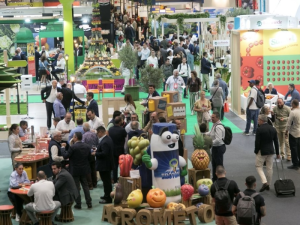
With exhibitors from 19 countries and 15,000 square metres of exhibition space, the event aims to strengthen its role as an international platform for exchange and business development within a strategic sector for Italian agriculture. Following its debut in 2024, LUV is expanding its international reach: for the 2026 edition, the number of buyers is expected to be four times higher than at the first event, with professionals coming from across Europe, Chile, Japan, China, India, Thailand and the Arabian Peninsula.
“This year we wanted to expand the space dedicated to exhibition stands. The aim is to guarantee a comprehensive offer to everyone taking part in LUV. Surpassing the 2024 figures was my personal goal, but once we achieved it, it became a collective source of satisfaction and pride,” explains Francesco Menelao, Sales Manager at LUV Fiera.
Key challenges
The event comes at a particularly significant moment for the sector, as the industry faces an increasingly important challenge: not only producing efficiently, but also protecting business competitiveness and the economic sustainability of production. LUV will also host the Fruitnet Grape Congress, with an international programme focused on market dynamics, research, post-harvest, marketing and the standards demanded by modern retail and northern European supermarkets.
“LUV represents a valuable opportunity to showcase the strength of Apulian agriculture and our region’s leadership in table grapes, connecting businesses, research and institutions,” said Francesco Paolicelli, Regional Councillor for Agriculture and Rural Development. At a challenging time for the sector, he highlighted the need to strengthen collaboration throughout the supply chain and promote an innovative Mediterranean vision of table grapes capable of anticipating new challenges and generating sustainable development for local territories.
A trade fair focused on business and the future of the sector
LUV 2026 will provide a meeting point for doing business, connecting with new buyers and suppliers, discovering the latest technologies for table grape production and preservation, and exchanging views with the main players in a strategic sector for Italian agriculture.
The fair will also explore the product from other perspectives, featuring varieties that are less commonly found in supermarkets, content on health and nutrition, and new gastronomic proposals, from grape-based cocktails to desserts prepared by hospitality school students. The programme will also include initiatives highlighting the social value of agriculture and how assets confiscated from the mafia can be transformed into resources, opportunities for regeneration and drivers of territorial development.
A survey conducted by Uvadatavola.com, which will be presented on the opening day, provides an overview of the challenges and expectations facing the sector. The study is based on 227 responses collected between 19 November 2025 and 15 April 2026, mainly in Apulia and Sicily, and highlights a gap between the assessment of production and overall levels of satisfaction.
The findings once again place a strategic issue at the centre of the table grape sector’s future: the ability to turn good production results into adequate returns for businesses, which are facing rising costs and increasingly competitive markets.
Varietal innovation, quality, packaging and technology are key levers, but competitiveness also depends on the ability to control costs, organise supply and increase the value of the product in international markets.
Apulia accounts for 65% of Italian production
LUV’s mission is to connect Italy’s production leadership with the dynamics of an increasingly global market. Apulia accounts for around 65% of national table grape production, while Sicily represents the remaining 35%, making both regions strategic for a supply chain that is looking beyond Italy’s borders and must respond to changing consumer habits, international competition, rising production costs and increasingly demanding quality and sustainability requirements.
“We want to turn LUV into the European capital of table grapes and a benchmark for the entire Mediterranean basin, also involving producing countries such as Spain, Egypt and Türkiye,” explains Mirko Sgaramella, Project Manager at LUV Fiera and coordinator of Fruit Communication, the company leading the project.
According to Sgaramella, the objective is not to homogenise a sector that has grown precisely thanks to the entrepreneurial capabilities of its different operators, but to create the conditions for these businesses to meet, build relationships and grow.
Italy sends around 90% of its table grape exports to European markets, with Germany, France and Poland among its main destinations. In this context, innovation, diversification of supply and the development of strong commercial relationships are crucial to consolidating existing positions and opening up new opportunities.
LUV was created precisely to facilitate this dialogue, connecting producing regions, businesses, technologies and markets.
Ferdinando Natali, Regional Manager South at UniCredit, stresses that Italian table grapes represent a story of specialisation, a pursuit of quality and international openness. The development of the sector has been accompanied by investment in innovation, sustainability and organisation, while maintaining strong links with local territories and a production tradition that remains one of the distinctive elements of Made in Italy.
A strongly international programme
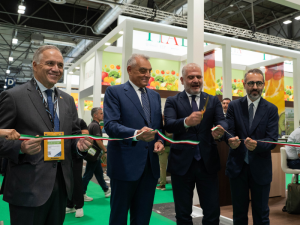
The official opening will take place on Tuesday 20 October at 10:00 am, with the traditional ribbon-cutting ceremony and institutional addresses. This day will begin with a debate on synergies between Italy’s leading sector organisations and the need for a united approach to strengthen competitiveness in international markets.
The round table “A sector working together”, moderated by journalist Domenico Castellaneta, director of Telenorba, will feature Giacomo Suglia, president of APEO; Massimiliano Del Core, president of the Italian Table Grape Commission (CUT); and Vincenzo Di Piazza, representing the Sicilian Table Grape Association, alongside representatives from producer organisations and the financial sector, including Mauro Gadaleta of UniCredit.
Table Grape Conference 2026 will be one of the main elements of the professional programme, bringing international voices and experiences to Bari. Participants will include Josefina Mena of Moyca, the Spanish company specialising in table grape production and marketing, who will contribute to the discussion on Mediterranean production and export prospects.
The programme will also address developments in packaging, with Nuria Pizan of NUR Brands, from Germany, as well as new technologies for product preservation and management, with specialist companies such as Unitec and SmartPac.
The international debate will also extend to modern retail strategies and changing consumer habits. Retailers and operators expected to take part include Megamark, Coop, Veronamercato, Unicomm, Gruppo Arena, Marks & Spencer and Dole Italia.
A delegation from Thailand will also attend the fair on Tuesday 20 October to explore new export opportunities. The meeting will provide an opportunity to examine ways of opening access for Italian table grapes to the Thai market and expanding the sector’s commercial prospects.
Selex, one of Italy’s leading food retail groups, will also be present, with banners including Famila, A&O and Cash&Carry.
Research, innovation and sustainability
Alongside business, LUV will place research and innovation at the heart of its programme, with two parallel spaces.
The LUV Auditorium will host sessions on economic and commercial issues, international markets, retail and the Fruitnet Grape Congress, with simultaneous Italian-English translation.
Meanwhile, the LUV Agorà will focus on technical and scientific topics, including new varieties, genetics, precision viticulture and the application of artificial intelligence and remote sensing to vineyard management.
Academic contributions will include presentations by Alessandro Vivaldi of the University of Bari and Rosario Di Lorenzo of the University of Palermo. The programme will also cover crop protection, water resource management, climate change, traceability and certification — issues that directly affect companies’ ability to combine productivity, quality and sustainability.
Innovation will therefore be addressed not only from the perspective of the product, but across the entire production and commercial process, from vineyard management through to product preservation and distribution in international markets.
B2B meetings and company visits
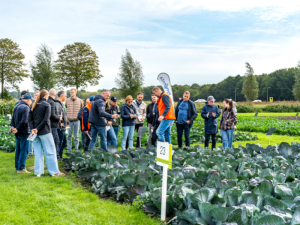
The fair will also feature B2B meetings between buyers and commercial operators, as well as guided visits to some of the leading companies in the region. The aim is to give international professionals a closer look at Apulia’s production reality and the capabilities of its table grape sector.
Direct contact between supply and demand, together with the opportunity to see companies and their production processes first-hand, is intended to encourage new partnerships and strengthen the position of Italian table grapes in their key markets.
For three days, Bari will become a meeting point for agriculture, technology, research and international trade, with the aim of strengthening dialogue between Mediterranean producing regions and destination markets. The sector’s challenge is not simply to produce quality table grapes, but to create the conditions needed for that quality to continue generating value for businesses and territories.
LUV Fiera is organised by Fruit Communication, with the support of Nuova Fiera del Levante, APEO, CUT – Italian Table Grape Commission and the Sicilian Table Grape Association. UniCredit is the main sponsor. The fair is supported by the Apulia Region, through its Department of Agriculture and Rural Development, and the Bari Chamber of Commerce. Institutional partners also include the Municipality of Bari and the Metropolitan City of Bari, as well as SG Marketing and Coldiretti Puglia.
RELATED NEWS: LUV Fiera connects Italian table grapes with international buyers
Giorgio Mancino, Commercial Director of Fruitnet, considers LUV to be more than a showcase: it is a platform from which to anticipate the direction in which the supply chain is moving. In his view, the fair connects the sector’s key players, anticipates global table grape trends and creates new business opportunities in domestic and international markets.
Meanwhile, Pietro Piccioni, Vice President of the Bari Chamber of Commerce, highlights the need for the fair to address the sector’s structural difficulties and reassess commercial models in a changing market.
Giacomo Suglia, President of APEO, underlines the economic and social importance of table grapes for Italy and highlights the country’s European leadership and capacity for innovation, particularly in seedless varieties. Vincenzo Di Piazza, President of the Sicilian Table Grape Association, points out that the profound varietal and agronomic transformation currently taking place in the sector makes the exchange of experience between different supply-chain operators particularly important.
FREE ADMISSION WITH PRIOR REGISTRATION
Programme: Table Grape Conference
Registration: LUV Fiera – Participate