





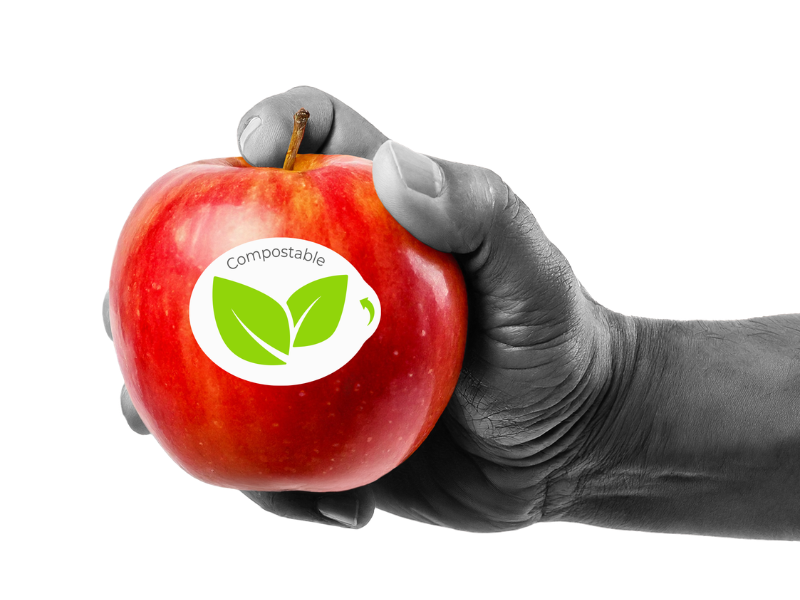
Global fresh produce labelling specialist Sinclair is focusing on one of the fresh produce industry’s upcoming packaging challenges: helping consumers understand exactly how compostable fruit labels should be disposed of.
With the Packaging and Packaging Waste Regulation (PPWR) already applicable across the EU and the requirement for individual fruit and vegetable labels to be compostable from February 2028, the company is developing clearer end-of-life messages for labels, with the aim of turning compostability from a simple packaging claim into a practical consumer action.
Independent research supports Sinclair’s own observations from its global customer base. A 2023 study in the United States found that up to 49% of consumers struggle to distinguish between “compostable” and “biodegradable” claims. Meanwhile, a UK consumer study showed that the number of households correctly disposing of compostable packaging increased fivefold when they received clear and consistent labelling and instructions.
For Sinclair, these findings have provided a clear incentive to act. The company developed T55, a fruit label with dual certification as both industrially compostable and home compostable, which is currently used by more than 400 customers worldwide. Sinclair is also researching how to make end-of-life instructions for compostable fruit labels clearer.
RELATED NEWS: ClemenGold® and Sinclair: A partnership driving sustainability
Direct messages such as “Place in the compost bin” remove uncertainty by telling consumers what to do at the exact moment they decide how to dispose of the label.
For fruit labels, this objective presents a specific communication challenge. Labels are deliberately small — often forming part of a packaging reduction strategy — meaning that any disposal information must be visible and clear, without compromising essential information for consumers, brands and retailers.