








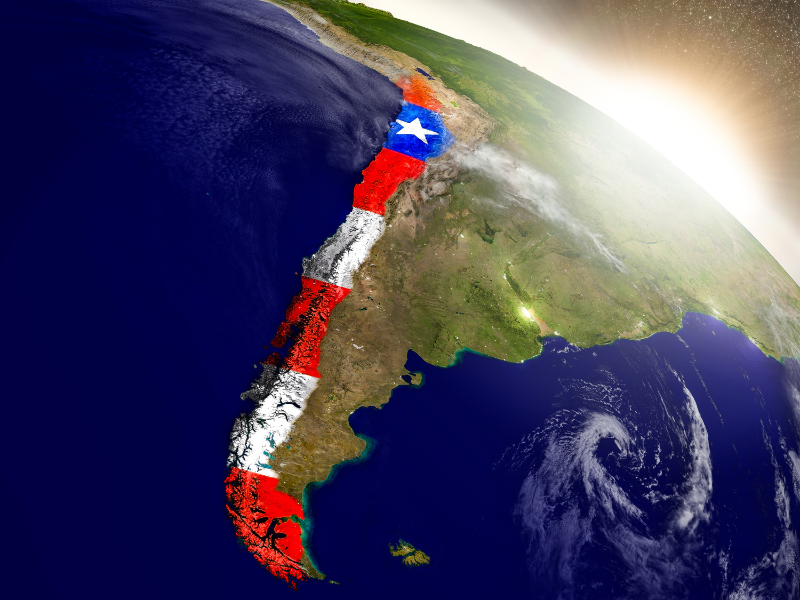
U.S. tariffs on Chilean agricultural exports could result in US$800 million in losses over the next four years, according to Antonio Walker, president of Chile’s National Agricultural Society (SNA).
Speaking at the 2026 National Agricultural Meeting (Enagro), Walker warned that the tariffs are affecting several key agricultural commodities, including citrus fruit and grapes, as well as poultry and other products.
“We are concerned about the tariff situation with the United States, which affects our poultry, citrus fruits, grapes, and other products. These tariffs will cost our farmers $800 million over the next four years,” Walker said.
Chile has complied with its Free Trade Agreement with the United States, according to the SNA president, although he acknowledged that returning to zero tariffs will be difficult. Negotiations are continuing on a product-by-product basis.
Diversifying export markets
Against this backdrop, Walker called for greater diversification of Chile’s agricultural export markets to reduce the sector’s exposure to trade uncertainty.
He identified India, Southeast Asia, the Middle East, North Africa and inland China among the destinations offering potential opportunities for Chilean agricultural products.
RELATED NEWS: Chile aims to double kiwi production by 2030 and expand into Asian markets
Walker noted that some fruit sectors and traditional crops continue to face challenging conditions, while the nut sector is performing more positively.
Rising costs add to trade uncertainty
The tariff situation comes as Chilean agricultural businesses continue to face higher operating costs. Energy, fertilizers, agrochemicals and logistics are all putting additional pressure on producers and exporters.
According to Walker, the combination of rising production costs and uncertainty surrounding international trade is making it increasingly important for Chile to strengthen its presence in alternative markets and reduce its dependence on individual destinations.
The SNA considers market diversification a key tool for maintaining the competitiveness of Chilean agriculture as exporters face a more complex international trading environment.