









Lemon trees became one of the most popular crops around fifteen years ago, leading to a rapid expansion in surface area, which reached 39,750 hectares in 2010.
Spain, now the world’s second-largest lemon producer after Argentina and the leading exporter of fresh lemons, has 54,055 hectares of lemon groves, of which 28,442 are in the Region of Murcia, 15,884 in the Valencian Community and 8,821 in Andalusia, according to the Ministry of Agriculture, Fisheries and Food (MAPA).
Harvesting has now finished with excellent results, both for the early Fino lemons and for the later Verna variety, which reached record prices in what the director of the interprofessional organisation Ailimpo, José Antonio García, described as “a campaign to remember”.
Record prices drive the campaign
According to current estimates, the campaign will close with production of between 1.08 and 1.10 million tonnes — compared with the September forecast of 1.02 million tonnes — with “reference prices for growers averaging between 50 and 55 cents per kilo for Fino and 90 cents per kilo for Verna”.
In García’s view, the campaign has been marked by four key factors: Turkey reduced its sales to the European Union by 50% due to frost; fruit quality has been “exceptional, the best in the last ten years”; consumption remains very active in Europe, “with spectacular increases over the past five or six years”; and the sector has managed to “pass on the rise in costs to customers”.
The president of Asaja Alicante, José Vicente Andreu, who described the campaign as “historic”, said the price of Fino had increased by 30%, while Verna had reached €1.20/kg at origin, “a record price”. The same applies to the 46 cents/kg paid for consignments destined for the juice industry.
An unexpected virus and uprooting as the only solution
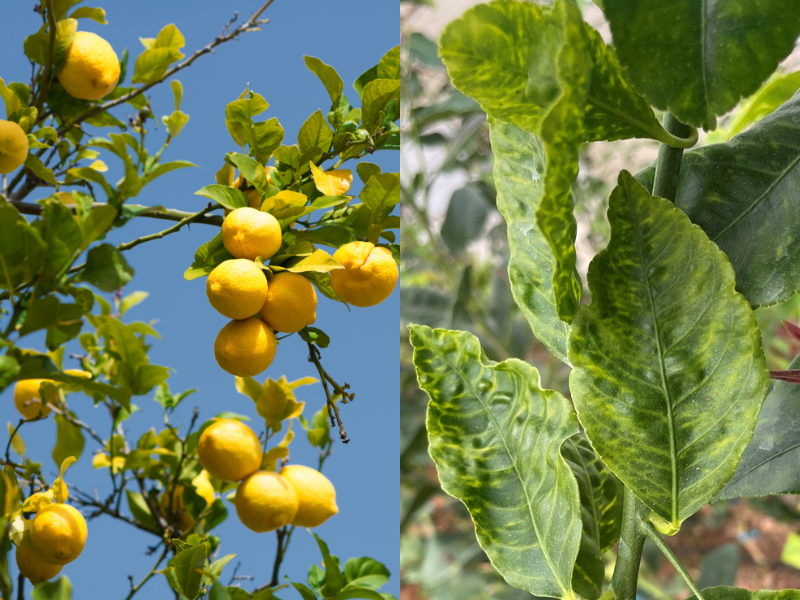
Andreu recalled that an information session was held in Elche in early March, during which a plant health engineer from the Valencian Community showed slides of plots affected by yellow vein clearing in Turkey. The virus, which has no cure, is also present in China, Italy and California.
“A grower raised his hand when he saw the slide showing the leaves of an affected lemon tree and said: I have that in my orchard. At that moment, there was panic in the room,” he said. The following day, plant health technicians took samples and confirmed the diagnosis.
Ailimpo’s director said that the presence of yellow vein clearing has now been confirmed in one- or two-year-old lemon trees on at least 12 farms in Alicante and another five in Murcia.
The situation is causing “considerable concern” in the sector, “because the virus was not present in Spain” and must have arrived “through infected material from nurseries” where young plants are purchased, he said.
Andreu pointed to nurseries in Castellón and southern Tarragona as the origin of the outbreak, “despite the fact that the plants come certified with their plant health guarantee seal”. He estimated that the sector planted around 9 million trees between 2024 and 2025, many of which could be infected.
RELATED NEWS: Nine out of ten lemons consumed in Europe are Spanish this season
The Association of Nurseries of Tarragona told Efeagro that “all citrus plant reproductive material leaving nursery facilities is subjected, prior to shipment, to virological analyses” in accordance with current regulations.
García, Andreu and the head of agriculture and water at UPA Murcia, Antonio Moreno, agree that the solution lies in surveying infected young lemon trees, subsequently uprooting them and disinfecting the area. They are calling on regional governments to allocate funds to compensate affected growers.
While the Valencian Department of Agriculture has already published an order requiring the uprooting of infected plants and is preparing another order on compensation, the sector criticises the Region of Murcia — Spain’s main lemon-producing area — for having approved only a resolution declaring the presence of the virus.
“The trees must be uprooted and burned,” said Andreu, because “what we fear is that the virus will spread from young plantations to adult ones,” García added. If that happens, “its expansion could be exponential,” Moreno warned.