










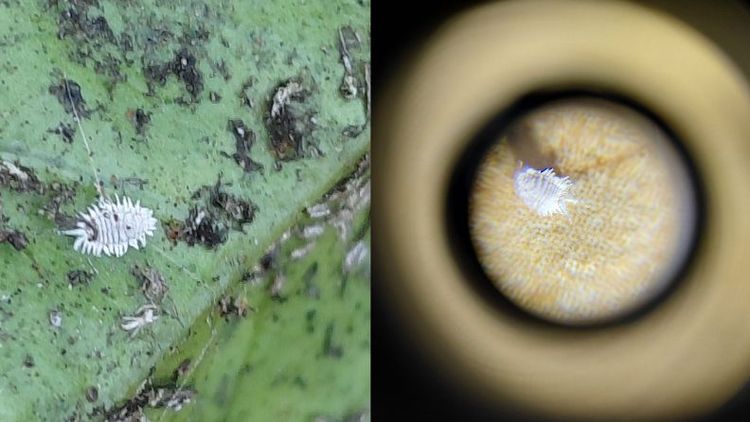
Although this pest does not cause damage as severe as the South African mealybug, its gradual expansion means that active monitoring is required in producing areas. The difficulty of distinguishing it with the naked eye from other mealybugs makes early detection essential to prevent outbreaks from becoming established.
A pest that requires monitoring
The oleander mealybug can settle in citrus trees and spread from one plot to another, especially through the movement of harvesting crates, machinery, plant material or plants. For this reason, technicians recommend reinforcing hygiene in all processes linked to harvesting and handling.
One of the signs that may indicate its presence is the deformation or pinching of young leaves, a symptom that can appear even when pest populations are still low. At more advanced stages, it can also affect fruit, causing deformation or commercial depreciation.
Mandarin, lemon and orange under close watch
In Spain, this pest is mainly being observed in mandarin, lemon and orange trees. Its presence is a particular concern because the Mediterranean coast concentrates a large part of Europe’s citrus production and offers favourable conditions for the development of this type of insect.
The pest may also be favoured by the presence of ants, which protect colonies and facilitate their spread. For this reason, ant control and frequent monitoring of shoots, young fruit and protected areas of the tree are important measures within the surveillance strategy.
Prevention before treatment
Experts insist that the best response is to act preventively. Cleaning crates, machinery and tools between plots is one of the most important measures to reduce the risk of spread.
It is also recommended to inspect trees during sprouting periods, maintain good ventilation through appropriate pruning and strengthen the role of biological control, especially in orchards where integrated pest management strategies are being applied.
RELATED NEWS: Anecoop: a citrus season marked by early complications
In case of suspicion, growers are advised to report the possible presence of the pest to the Plant Health Services of their respective autonomous community. This information is essential to update the distribution map and improve the response to new outbreaks.
An alert to act in time
The oleander mealybug is not currently considered a quarantine pest in the European Union, but it is under monitoring. Its spread across Spain’s citrus-growing belt highlights the need to strengthen surveillance and coordination between growers, technicians, public administrations and research centres.
The priority now is to prevent this pest from becoming established in the main citrus-producing areas. To achieve this, it will be essential to combine early detection, field hygiene, biological control and rapid communication of detected outbreaks.
Experience with other recent pests shows that acting early can make the difference between a localised problem and a widespread threat for the entire citrus sector.