







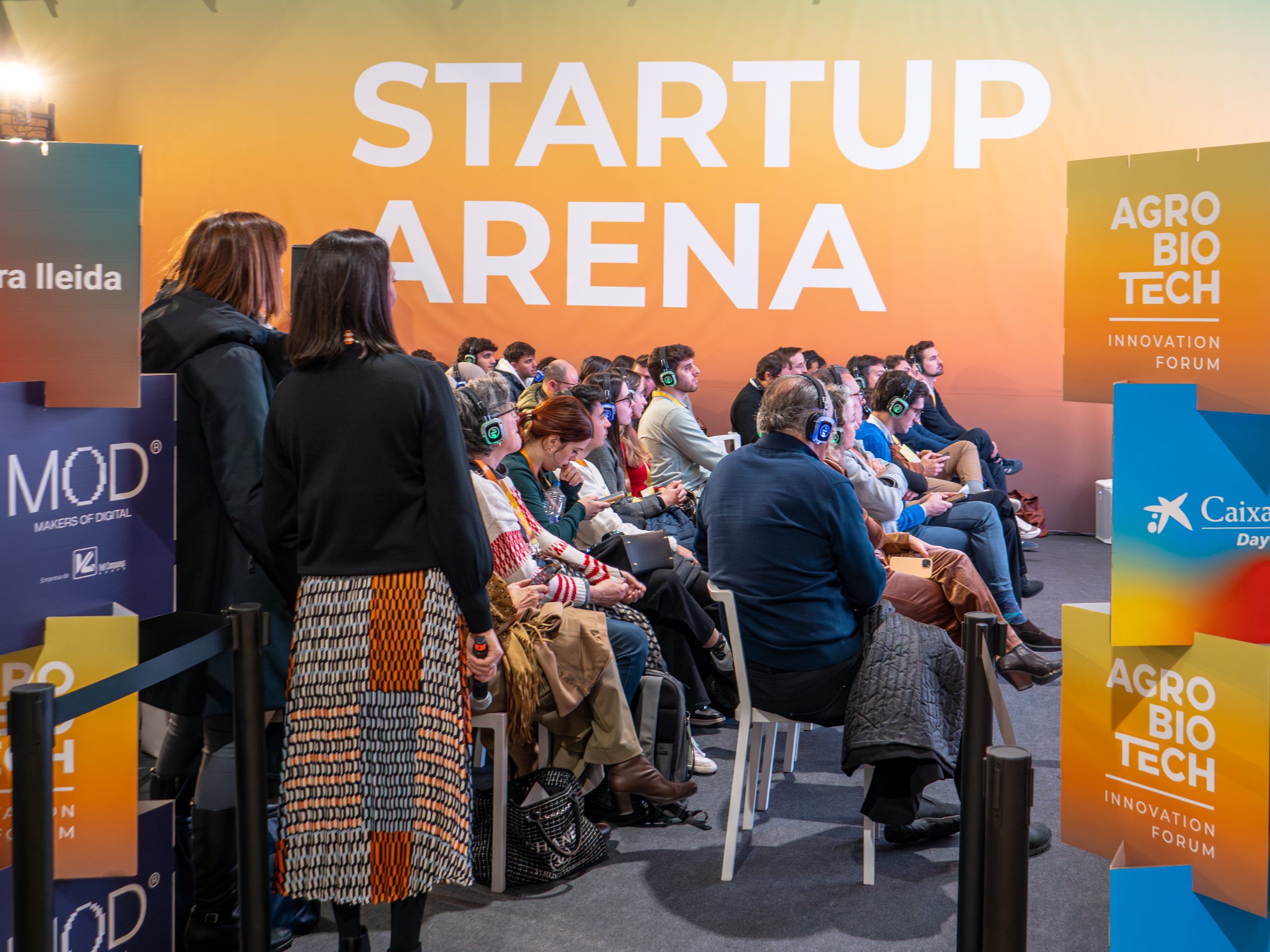
Following a successful 2025 edition, which brought together more than 250 companies and 14,000 professionals, the 2026 forum adopts the theme “Optimising production without compromising the planet”. Once again, it will bring together companies, professionals, research centres, public authorities, start-ups and stakeholders from the primary sector to promote technology transfer, sustainability and competitiveness across agriculture, livestock production and the bioeconomy, while highlighting the agri-food sector as one of the key economic drivers of Lleida.
For Lleida and Aragón, two regions with a strong presence in stone fruit production, this approach is particularly relevant. Fruit production increasingly requires careful planning, precision, efficient use of water and agricultural inputs, the ability to respond quickly to unforeseen challenges, and tools capable of maintaining product quality. In this context, the forum provides a meeting point to explore new solutions, exchange experiences and accelerate technology transfer to orchards and packhouses.
What’s on the agenda
The programme will be structured around three thematic pillars.
Bioeconomy pillar will explore circularity as a means of transforming waste and by-products into new raw materials while advancing towards more efficient production models.
The Agriculture pillar, under the theme “Control and performance in an unpredictable field”, will focus on management tools, predictive models, real-time data, precision management of water, soil and crop health, crop monitoring, artificial intelligence, robotics and autonomous systems.
Meanwhile, the Livestock pillar will address animal health, biosecurity, traceability and environmental management.
RELATED NEWS: Climate change is redefining breeding objectives
Agricultural robotics will not be presented as an isolated technology, but rather as part of a broader discussion on how advanced solutions can be integrated into farming operations in a practical and economically viable way.
For the fruit sector, robotics, machine vision, sensors and autonomous systems can help monitor orchards, perform targeted interventions, optimise repetitive tasks, improve resource efficiency and generate valuable data to support decision-making. The challenge lies in building confidence, demonstrating practical benefits, overcoming adoption barriers and developing economic models that facilitate their widespread implementation within commercial production.
In addition to its three main pillars, the forum will also address three cross-cutting themes: sustainable intensification, technology transfer through real-life case studies, and the adoption and scalability of new solutions across different territories.
This approach is designed to move beyond vision and concept, focusing instead on the practical implementation of innovation.
The Agrobiotech Innovation Forum aims to present a forward-looking vision of the primary sector: a sector that remains fundamental to the economy, capable of continuous evolution and central to building a more efficient, resilient and sustainable society.