






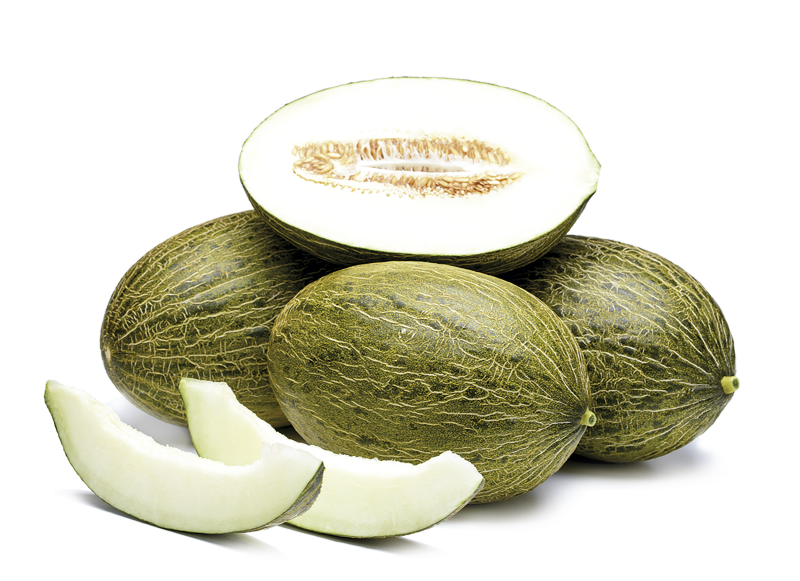
In recent years, Syngenta has positioned itself as the sales leader in the early piel de sapo melon segment with Bobal and Graciano, explains Víctor García, Portfolio Lead Cucurbits Iberia.
Bobal was the company’s latest launch and continues to achieve strong results. “Its performance and market acceptance have been excellent. It has performed very well in Almería and Murcia.”
This season, the company is adding Requena (MP7758), a new commercial launch with resistance to New Delhi, mainly targeted at Portugal. In the neighbouring country, climatic conditions favour its performance and it is being very well received by Portuguese growers. Intended for plantings from mid-April to mid-May, it offers a size profile ideal for the Portuguese market and includes resistances to New Delhi, powdery mildew and aphid.
In Spain, the variety is positioned for outdoor plantings from mid-April until 5–10 May. Within the portfolio, Requena (MP7758) extends the Bobal programme and completes the range with a full resistance package for the mid-cycle segment. García highlights its vigour and rusticity, making it ideal for this planting window, together with its flavour and fruit characteristics.
A new branded generation
Having conquered the early segment, Syngenta’s next objective is the mid-cycle outdoor segment in Castilla-La Mancha. The company currently has varieties under trial for May and June transplants. This “new generation” targets the same segment as Sancho, with 3–3.5 kg melons that are more brand-oriented.
Some of these materials will be showcased this summer in pre-commercial large-scale trials during the company’s open days in Campo de Cartagena.
“We want to recover the positioning we historically had with Sancho through a new generation that incorporates our new piel de sapo genetics.”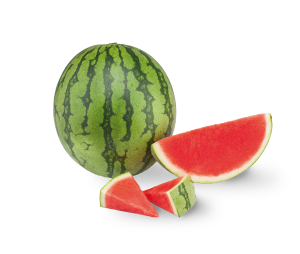
Alongside this line, the company also has pre-commercial materials from other melon typologies currently under evaluation that will be presented during the event.
Introduction in Charentais
In the Charentais segment, the latest launch currently undergoing large-scale trials is Bisantin* (MC27827), intended for the mid-cycle in Murcia (transplants from 5–25 March).
“The main Charentais growers in France and Spain already have it planted on large farms.”
Its main strengths are excellent fruit uniformity and external appearance, with highly attractive netting that clearly marks the sutures. In addition, it delivers the traditional Charentais flavour highly appreciated by French consumers.
Launching a microseed line in watermelon
There are also important developments in watermelon with the creation of a new line of mini pollinators featuring microseeds. The inaugural variety currently under trial is WDMO23-7293*, a round Crimson type.
It stands out for both yield and pollination capacity, increasing seedless watermelon production. “We have conducted trials both to evaluate it as a monocrop — primarily in organic production, but also in conventional farming — and to analyse its pollination capacity. We have confirmed that it is very well adapted as a pollinator,” explains García, who highlights another important aspect:
“We wanted pollination to be highly aligned with Red Jasper and Jamaica, and we managed to ensure that both the seedless variety and the pollinator can be harvested at the same time because they ripen on the same dates.”
This WDMO23-7293* variety, currently in large-scale trial phase, also offers excellent postharvest performance, with strong flesh preservation and shelf life, making it ideal for export. In addition, the volume of microseeds is not significant. “It is pleasant to eat.”
RELATED NEWS: New Syngenta Technology Center reduces breeding timelines and strengthens food security
In white seedless watermelon, Ágata has consolidated its position as a benchmark variety to complement Red Jasper in outdoor cultivation and is increasing sales in La Mancha, Murcia, Seville and Portugal.
Ágata stands out for plant rusticity and strong tolerance under difficult conditions, maintaining vegetative development until the end of the cycle. Its high yield ensures grower profitability.
From a commercial perspective, its juiciness, flesh firmness and rind thickness provide dual suitability. Furthermore, its flavour, in line with Syngenta’s high standards, encourages repeat consumer purchases.
The company continues to advance with pre-commercial materials in white and ultra-firm watermelon that are currently under evaluation with major growers.
*Varieties in large-scale trial phase.