







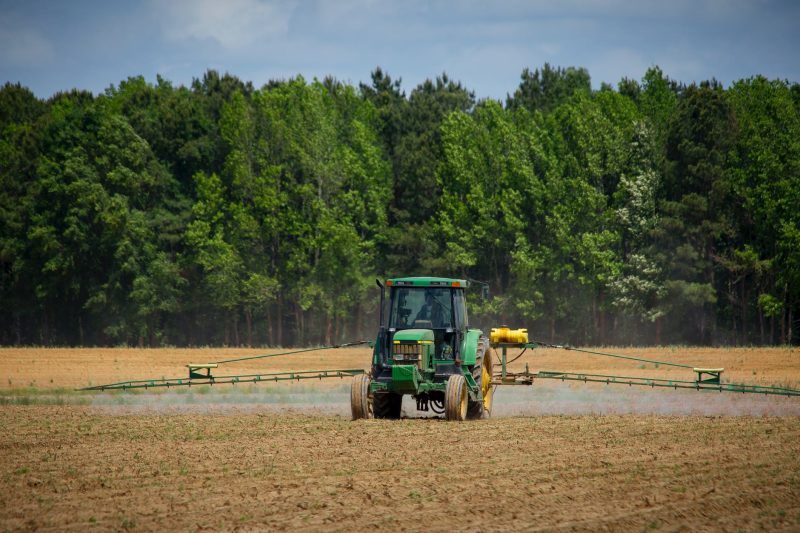
The European Commission has approved a €41 million Greek State aid scheme designed to help agricultural companies cope with the increase in fertiliser costs caused by the crisis in the Middle East.
The measure falls under the Middle East Crisis State Aid Temporary Framework (METSAF), adopted by the Commission on 29 April 2026.
Direct grants for fertiliser purchases
The scheme is aimed at companies engaged in the primary production of agricultural products in Greece. This aid will take the form of direct grants covering 15% of the total cost of fertilisers purchased between 15 March 2026 and 31 August 2026.
The maximum amount of aid is capped at €50,000 per beneficiary.
Commission assessment
The Commission assessed the scheme under EU State aid rules, in particular Article 107(3)(c) of the Treaty on the Functioning of the European Union, which allows Member States to support the development of certain economic activities under specific conditions, as well as sections 1 and 2.1 of the METSAF.
Brussels concluded that the Greek scheme is necessary, appropriate and proportionate to facilitate the development of an economic activity, and that it does not adversely affect trading conditions to an extent contrary to the common interest.
A temporary framework for exposed sectors
The METSAF is a temporary and specific framework adopted by the Commission to address the impact of the Middle East crisis on the sectors considered most exposed, including agriculture, fisheries, transport and energy-intensive industries.
RELATED NEWS: EU mobilises €540m for farmers hit by fertiliser crisis
The framework will remain in force until 31 December 2026. During this period, the Commission will review its content, scope and duration depending on the evolution of the situation in the Middle East and the broader economic context.
Support linked to fuel and fertiliser costs
Under the METSAF, aid for companies in the agricultural, fisheries and transport sectors may take several forms. These include grants based on actual consumption to cover part of the increase in fuel or fertiliser prices, as well as a simplified approach for smaller amounts of aid.
The framework also includes a temporary adjustment to the Clean Industrial Deal State Aid Framework (CISAF), allowing greater flexibility and higher aid intensities to respond to sharp increases in electricity prices.
Decision to be published
The non-confidential version of the Commission’s decision on the Greek scheme will be published under case number SA.123889 in the State aid register on the Commission’s competition website, once any confidentiality issues have been resolved.