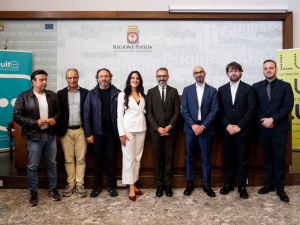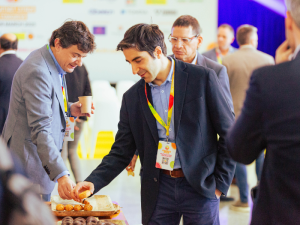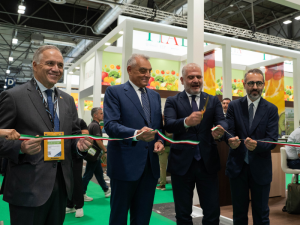






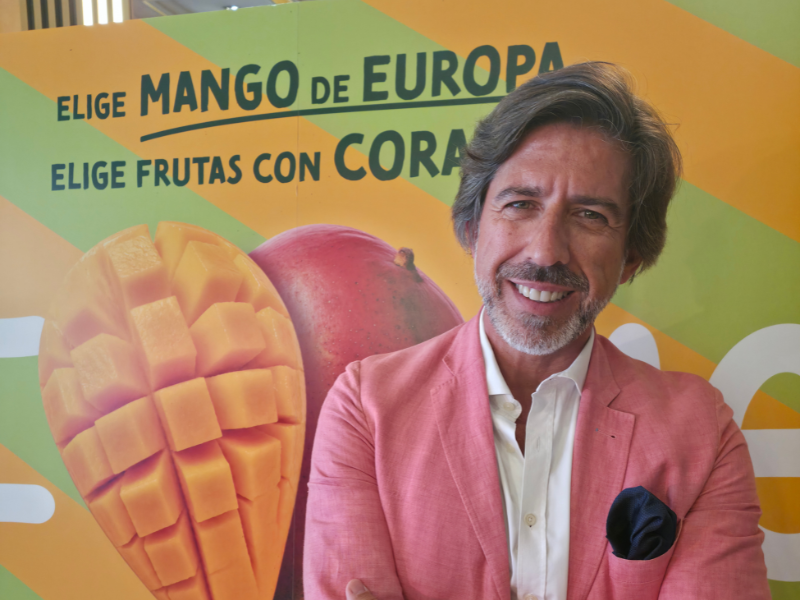
The Spanish Avocado and Mango Interprofessional Organisation (Intertropic) held the opening event for the mango season on 8 September in Madrid. The campaign concentrates a large share of European mango production and marketing into just a few weeks.
The event also marked the presentation of the promotional programme “Frutas con Corazón”, under the slogan “You look after yourself, it looks after you. Make a deal with yourself”. Through this initiative, the sector aims to bring mango closer to consumers, improve awareness of its origin and encourage more frequent inclusion in the shopping basket.
Antonio Carpintero, Managing Director of Intertropic, clearly summarises the challenge: “Our challenge is not simply to produce more. Our challenge is to sell more and better.” In the case of mangoes, this statement is particularly relevant, as the season is highly concentrated, with only six to eight key weeks between September and October.
A unique mango in Europe
Spain accounts for practically all commercial mango production in the European Union. Its main production area is located in Málaga and Granada’s Costa Tropical, with the La Axarquía region standing out as the leading production hub.
The latest provisional data from the interprofessional organisation puts Spanish mango acreage at 6,148 hectares. Last season, around 55,500 tonnes were declared, although a certain reduction is expected this year.
These figures reflect the scale the crop has reached, but they also highlight one of its main challenges: placing a significant volume of fruit on the market within a relatively short period without destroying value.
This is where Carpintero believes promotion stops being an accessory element and becomes a genuine economic tool.
“Consumers need to know exactly when the mango season takes place in Spain and Europe,” he explains. The aim is to increase demand precisely during those weeks when the product reaches its natural marketing period.
€9.2 million to increase presence
The campaign forms part of a major three-year European promotion programme covering Spain, France, Italy and the United Kingdom.
Together, these markets represent an investment of approximately €9.2 million, of which around €6.8 million comes from European funds and approximately €2.4 million is contributed by the sector itself through Intertropic.
For Carpintero, the collective dimension of the project is one of its main strengths. “There are many things that cannot be achieved individually but can be achieved collectively,” he says.
Promotion is also one of the interprofessional organisation’s main areas of activity, alongside information, communication and research and development initiatives.
From the tree to the consumer in 48 hours
Intertropic wants to build the differentiation of European mangoes on more than just flavour. One of its main arguments is proximity. Compared with fruit arriving from overseas origins, mangoes grown in southern Spain can be available to European consumers approximately 48 hours after harvesting.
RELATED NEWS: Europe promotes avocados and mangoes to gain market share
The organisation also highlights the carbon footprint benefits associated with this proximity: the shorter the distance travelled by the fruit before reaching consumers, the lower the logistical requirements linked to transport.
For this reason, the campaign aims to go beyond conventional product promotion. “You look after yourself, it looks after you” seeks to associate European mangoes and avocados with everyday choices related to food and wellbeing, without presenting them as a sacrifice in terms of enjoyment.
Lower volumes, but better sizes
The new campaign begins with positive prospects in terms of quality and fruit size, although with lower production, according to the main operators.
Intertropic points out that some companies in the sector have reported declines of between 20% and 30% compared with the previous season. “But quantity should not overshadow the main objective: ensuring that anyone who tries a European mango genuinely experiences a differentiated product,” the executive says.
Quality starts before reaching the shelf
The interprofessional organisation also wants to address another key factor in building the category: the harvest timing.
Harvesting fruit excessively early in order to take advantage of periods of lower supply can lead to a poor eating experience and damage not only that specific batch, but also the overall image of Spanish mangoes.
“That damages the entire category,” warns Carpintero.
For this reason, Intertropic is currently working on a standard extension proposal specifically focused on quality which, if approved, would establish common minimum parameters for Spanish-origin fresh-market mangoes.