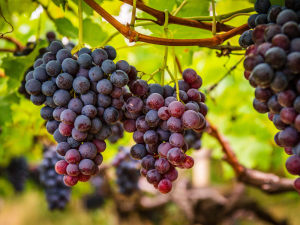









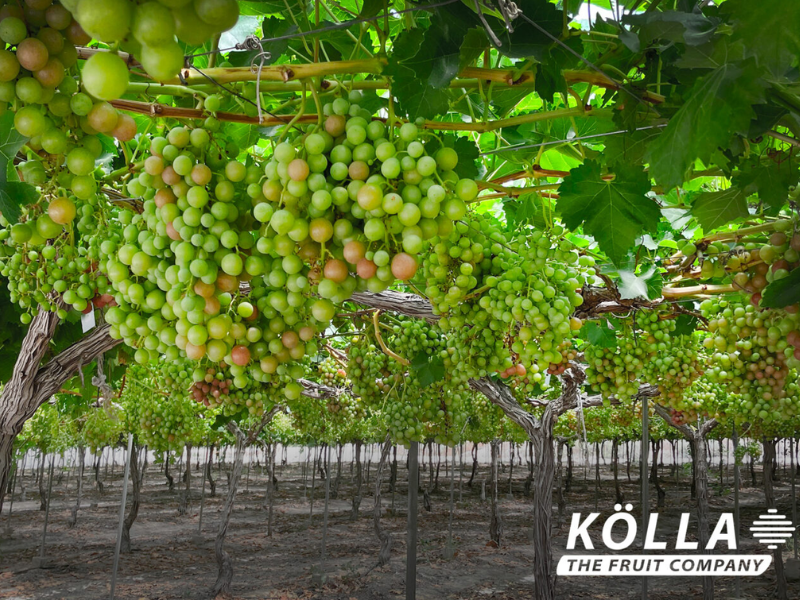
Kölla says the slight delay in table grape volumes from Italy should not detract from what is expected to be a very positive European season, after stable growing conditions laid the foundations for good quality and a stable market.
“We currently see a slight shift in timing, but no fundamental issues in development,” explained Nicola Melillo, Quality Manager at Kölla Italia. “What really matters is that the plants are healthy, and they are.”
Although slight reductions are being observed in some regions — especially in early varieties in Italy — overall supply is considered well balanced.
Spain and Greece are broadly in line with last year’s levels, while Turkey is expected to offer good availability, particularly in the later part of the season.
According to the company, the first shipments are showing good quality levels. Fruit development is uniform, and rising summer temperatures are expected to further support ripening, flavour and sugar levels.
“Fruit development is currently very consistent, especially because the stable conditions during flowering have been key to the quality we are now seeing,” said Jorge Martínez Cañamás, the group’s import sales manager for Germany, based in Valencia.
Focus on high-performing varieties
According to Kölla, one of the defining features of the current season will be the continued shift in the varietal mix available on the market.
After years of diversification, during which seedless grapes have come to dominate supply, producers are increasingly focusing on a smaller number of high-performing, more marketable varieties grown and sold under licence.
The Italian table grape industry is regarded as central to this process. For Kölla, varieties such as Autumn Crisp continue to gain relevance, while new red varieties are gradually replacing older standard types.
Spain, meanwhile, has further strengthened its position in licensed varieties, while Greece is also gradually modernising its varietal portfolio and closing the gap with more established origins.
“From Kölla’s perspective, this trend clearly leads to higher quality, more stable programmes and greater differentiation within the European market.”
Slight delay in Italy
In Italy, the company describes the overall situation as positive, although with regional differences.
In Puglia, cooler spring conditions and higher rainfall have led to a slight delay in development, equivalent to only a few days, while in Sicily conditions have been “more dynamic”.
“A pronounced cold spell during the transition into spring, combined with strong winds and heavy rainfall, significantly slowed vine development,” the group stated.
RELATED NEWS: Italy secures access to the South African market for its table grapes
“Continued unstable weather conditions have contributed to a slight delay in coloration and sugar accumulation. At the same time, these events have not caused any lasting damage to the vineyards.”
“Vine health remains strong and, with rising temperatures, the current delays are expected to largely level out over the course of the season.”