








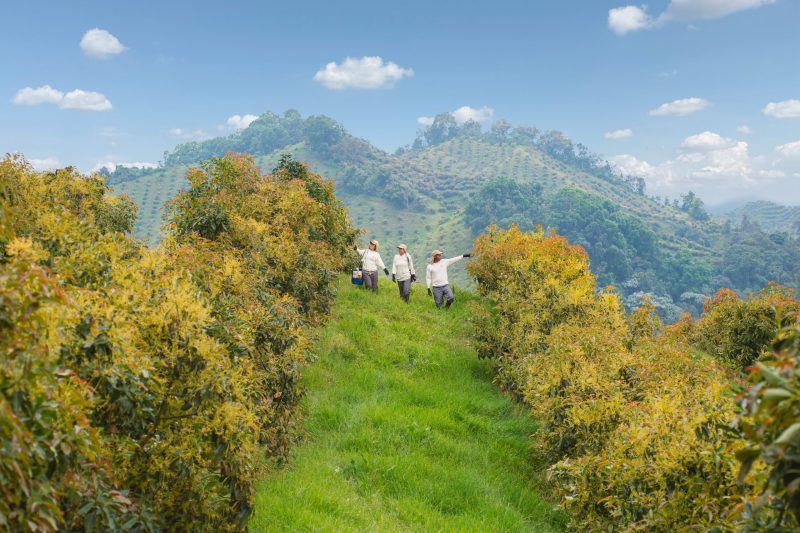
The company has incorporated this measurement into its sustainability strategy for the first time, reflecting a growing trend in the agri-food sector to assess not only crop productivity but also the ecosystem services associated with agricultural activity.
These include the ability of trees to capture carbon through photosynthesis and store it in their biomass and in the soil. The contribution of these processes to climate change mitigation, when accompanied by sustainable farming practices, has been recognised by organisations such as the FAO and the Intergovernmental Panel on Climate Change (IPCC).
Carbon capture becomes an agricultural indicator
Greenplus has incorporated carbon capture among the environmental indicators used to assess its activities. The company integrates agricultural operations, logistics solutions, plant health and industrial processes within its business model.
Its agro-industrial operations in Colombia are carried out through Grupo GreenLand, with activities in Urabá and Caldas and production of bananas, Hass avocados and Tahiti limes, alongside logistics and industrial services linked to the agri-export supply chain.
Its products currently reach more than 20 international markets, including Spain, Germany, the Netherlands, the United Kingdom and Belgium.
Measuring carbon to assess environmental impact
Quantifying the carbon absorbed by crops is beginning to emerge as a new variable within agri-food sustainability strategies. These measurements provide data on the ecosystem services associated with agriculture and enable companies to incorporate verifiable environmental indicators into decision-making.
RELATED NEWS: The avocado industry seeks Its ‘SuperHass’
Until now, much of the environmental assessment of agriculture has focused on factors such as efficient water use, biodiversity conservation and waste reduction. Measuring carbon capture adds another indicator for evaluating the environmental performance of production systems.
Against a backdrop in which the sector needs to combine food production, climate change adaptation and emissions reduction, GreenLand is incorporating these metrics into its environmental management and monitoring model.