





In this interview, the executive focuses on rising production costs and the quiet shift already visible on European retail shelves towards mini formats, as well as a local production project that is reviving cultivation methods from half a century ago.
What is the current melon and watermelon season revealing so far?
I see a difficult season ahead. I think production will be almost the same as last year, but temperatures need to support us, although consumers’ purchasing power is being affected by the war.
You mention temperatures and purchasing power. Which weighs more this year?
The two are closely linked: purchasing power is lower and production costs are higher because when oil prices rise, everything else rises too.
Looking ahead to June and July, when all production areas are active, what scenario do you expect?
Production will be the same. If the weather cooperates, we will be able to carry out the campaign; if it does not, I would rather not remember what happened last year, when growers stopped harvesting product in the field. It was truly devastating.
In Europe, piel de sapo melon still carries the stereotype of being a “green melon”. Does it have growth potential or will it remain a niche product?
European consumers have often viewed it as “green, not fully ripe” because the fruit they received lacked quality. Today, however, we can work with mini varieties that do offer quality. Once consumers taste them, the category will earn its place on the shelf, although for now yellow melon remains the dominant type.
Is watermelon continuing to gain consumption share compared with melon?
Yes. Partly because of its price, as it is very affordable, but also because of its quality: generally speaking, 90% of watermelons are good. In melon, unfortunately, varieties change every 15 days and it is difficult to maintain the same flavour profile consistently.
How is the mini melon and watermelon project progressing?
Very well, exactly as planned. We believe the future is there: in smaller fruits. Families are smaller, not everyone likes the same fruit, and mini formats are much easier to store in the refrigerator. They offer many advantages and we believe this is the direction both melon and watermelon are heading.
Beyond mini formats, there is also the local production project. What stage is it at and where is production located?
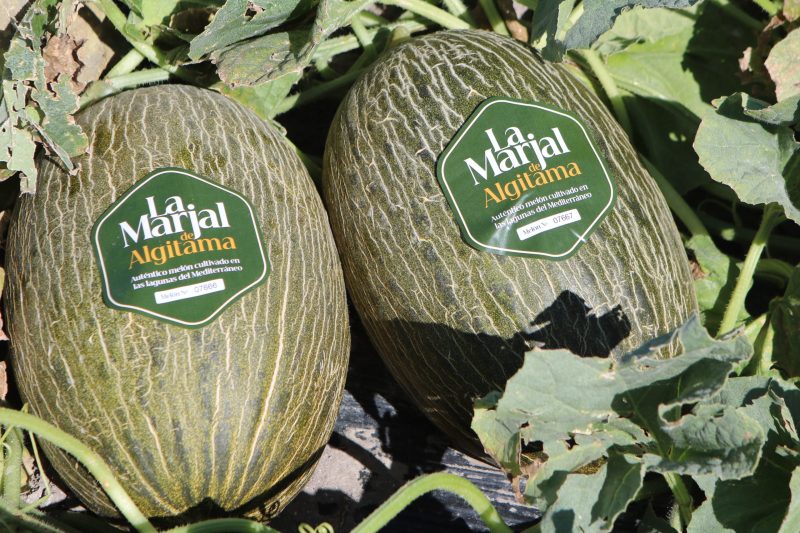
It is progressing “like the wind”, with great enthusiasm. We started with 5 hectares in the first year, increased to 20 in the second, and now, in the third year, we have reached 32 hectares, with a forecast of 70 hectares next year. Production comes from nearby municipalities such as La Llosa, Almenara and other areas within La Marjal.
When you say you want to grow melons “as they were grown in the 1970s and 1980s”, what exactly does that mean?
It means growing them using groundwater irrigation, rather than flood irrigation or drip irrigation. The quality achieved through this method is very difficult to match and depends heavily on water levels and salinity. It is true that yields are lower, but we are making it work: this year alone we are already producing one million kilos.
In this move towards local and traditional production, is there anyone you would particularly like to acknowledge?
Yes. I would like to mention José Aleixandre, the father of my business partner, who taught me how melons were cultivated in the 1970s and 1980s.
And to sustain all of this, investment is required. What form has this “revolution” of projects taken?
We want to become a benchmark in the sector and be recognised as such. Our investments have included warehouse expansion, the purchase of farmland and the introduction of cutting-edge technology specifically aimed at cultivating the melons we have been discussing.