





“For many countries, this is the future.” Russia, the United States, Mexico, Canada, Uzbekistan… the list of countries increasingly investing in high-tech greenhouses is long. And in this field, the Netherlands is the nerve centre of the global high-tech horticultural industry, attracting growers and marketers from around the world to compare varieties.
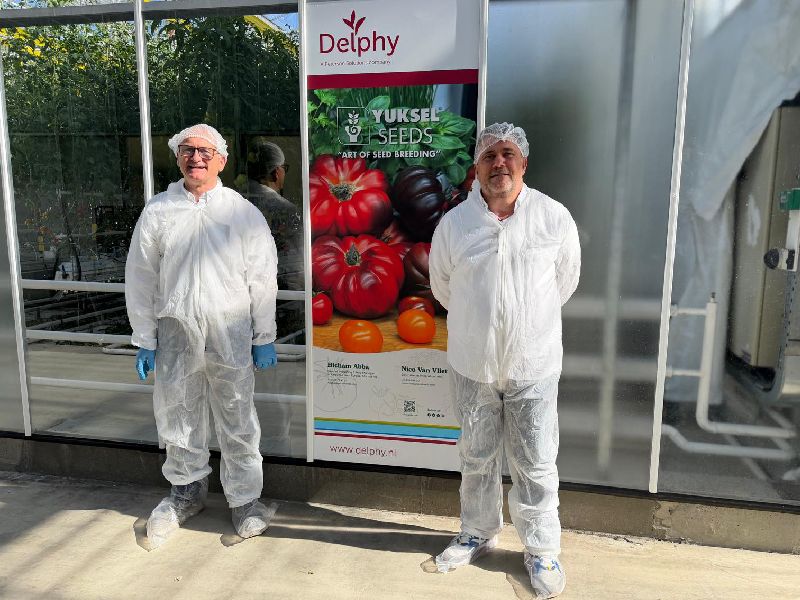
In mid-April, Turkish seed company Yuksel Seeds formalised its commitment to this agricultural model with the inauguration of its Yuksel Experience Showcase (YES). The space is located at the Delphy Improvement Centre in Bleiswijk, the Netherlands, next to Wageningen University & Research, one of the world’s leading agri-food research centres. Fruit Today had the opportunity to see the project first-hand during a press trip organised by the seed company.
Tomato as the starting point in high tech
Yuksel Seeds has a strong presence in low- and mid-tech markets, such as Spain and Turkey, and now aims to broaden its scope and position itself in high-tech greenhouses. To achieve this, it has created YES at Delphy: a 150 m² space where 21 tomato varieties from its portfolio are independently evaluated, 16 of them with resistance to Tomato Brown Rugose Fruit Virus (ToBRFV), under controlled conditions of temperature, CO₂, radiation and irrigation, generating objective data on yield, quality and shelf life.
YES also serves as a demonstration space where growers, distributors, supermarkets and other supply chain players can observe the real performance of the varieties under high-tech conditions.
The objective is to use independent data to demonstrate the yield, quality and commercial potential of its tomato varieties and, in the future, other references from its portfolio.
Behind the launch of the Yuksel Experience Showcase there is also a clear market reading: high-tech greenhouse horticulture is growing in very diverse regions, and Yuksel Seeds wants to be well positioned as this growth consolidates demand for specialised seeds.
Francisco Sabio, Country Manager of Yuksel Seeds Iberia, explained it clearly: “For many countries, this is the future. Russia has greatly increased its high-tech greenhouse area to supply its own products. The same is happening in other countries.”
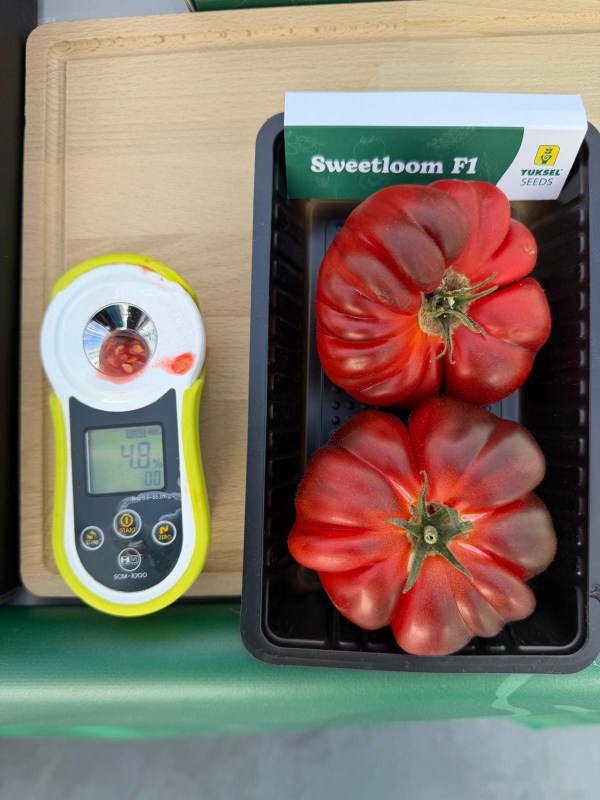 The choice of Delphy is no coincidence. “In high-tech greenhouses, we can control everything: light, humidity, temperature, CO₂… A trial like this in the Netherlands produces results that can be extrapolated worldwide, because the conditions in this type of greenhouse are the same in every country. And what do we achieve with these trials? Certainty that some of our varieties can perform in high tech,” Sabio said. The most tangible example is Sweetloom, which is already being marketed for high-tech production in Canada.
A knowledge platform for the entire chain
According to Nico Van Vliet, Downstream Integration Lead at Yuksel Seeds, YES was born from a strategic conviction: seed companies know how to produce, but they need to communicate the value of their varieties more effectively to the final links in the chain. He defined his mission as “creating demand” among supermarkets and preferred suppliers.
“Our breeders work for ten years on a new variety. If we do not help the grower and the marketer tell the right story, we lose many opportunities,” he said.
YES welcomes international consultants, growers, marketers and retail buyers in an environment where they can observe the agronomic performance of the varieties, taste them and access data on production, Brix, acidity and shelf life, collected systematically from week 13 of each season.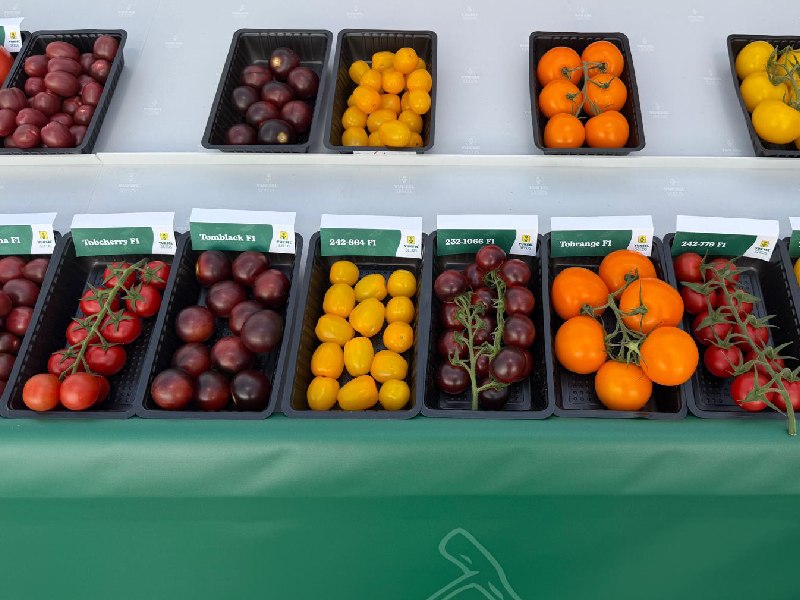
RELATED NEWS: Yuksel Seeds launches Yuksel Experience Showcase at Delphy Bleiswjk
The space also serves as a tool for building year-round supply programmes for retailers and foodservice operators. Yuksel Seeds is working on protocols that make it possible to maintain the same flavour and quality profile throughout the year by alternating production origins: Morocco in winter, Spain in spring and the Netherlands in summer and autumn.
“The goal is for consumers to see the same product on the shelf every week, even if it is not exactly the same variety,” Van Vliet summarised.
Why Delphy: independence and international benchmarking
Eric Poot, director of the Delphy Improvement Centre, stressed that the institution’s main added value lies in its independence. Delphy is a fully private organisation, with more than 200 professionals and a presence across several continents.
“Delphy is independent. Our consultants can recommend what is best for the grower without any link to input suppliers,” Poot said.
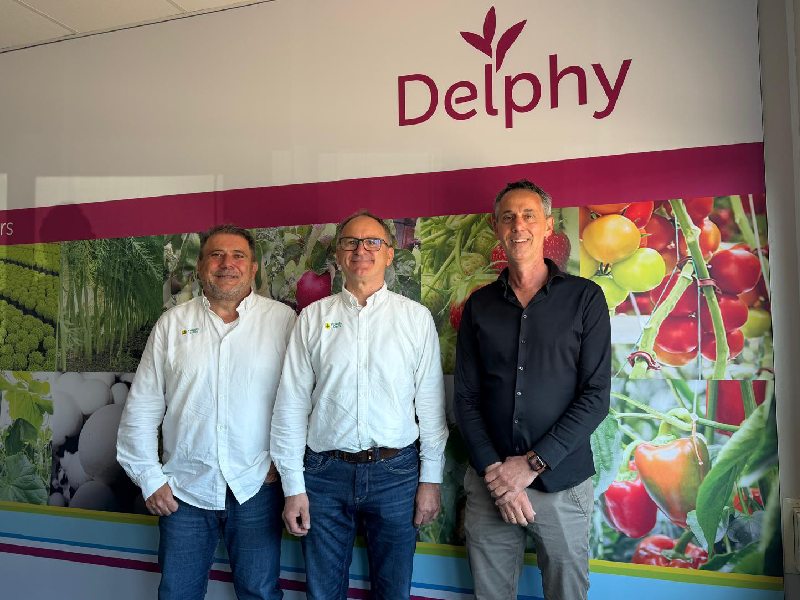 For Yuksel Seeds, this independence is commercially decisive. In a high-tech greenhouse, variables such as temperature, CO₂, radiation and irrigation are controlled, meaning that results obtained in Bleiswijk can be directly compared with those from similar facilities in Canada, the United States, China or Australia. This allows major operators, such as the Canadian group Mastronardi, which also works with Delphy, to evaluate new varieties without having to wait two years for their own trials.
“When you have data from Delphy, it is easier to compare because everyone knows it is independent and that the conditions are homogeneous,” Van Vliet said.
21 varieties, 8 segments and rugose virus resistance
The Yuksel Experience Showcase displays 21 tomato varieties in seven colours, eight market segments and 15 combinations of colour and shape. Of these, 16 have resistance to ToBRFV, one of the most sought-after traits among growers and distributors today.