









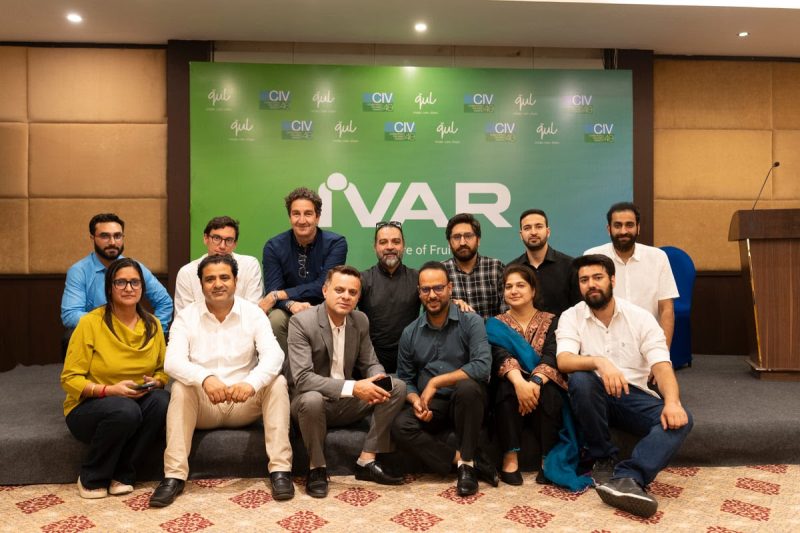
The joint venture was formally announced at a launch event held on 19 May in Srinagar, Kashmir, bringing together growers, scientists, nursery operators, policymakers and institutional representatives from across India’s temperate horticulture sector.
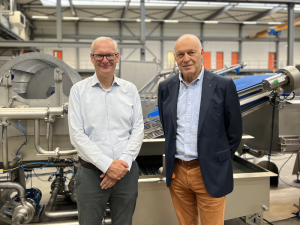
CIV was represented at the event by Managing Director Federico Stanzani and Vice-President Pier Filippo Tagliani.
A response to a long-standing gap in Indian horticulture
Despite the Himalayan region’s exceptional agro-climatic conditions for temperate fruit production, Indian horticulture has long lacked a trusted and legally aligned institutional framework capable of connecting growers with advanced global genetics.
For decades, fragmented access to varieties, limited breeder rights protection and unregulated propagation systems have restricted the sector’s development potential.
IVAR has been created to address these challenges. Initially operating across Jammu & Kashmir and the wider Himalayan belt, the platform will support the lawful introduction of protected fruit varieties through internationally aligned systems covering licensing, traceability, quality assurance and varietal governance.
Two partners with complementary strengths
The strength of IVAR lies in the complementarity of its two founding partners.
CIV brings its internationally protected genetics portfolio, decades of breeding experience and established intellectual property frameworks. Qul Fruits, a full-stack horticulture enterprise with deep roots across the Indian Himalayan value chain, contributes local integration, nursery development expertise, post-harvest logistics capabilities and strong relationships with growers.
RELATED NEWS: CIV strengthens its presence in the UK and Northern Europe
Together, the two companies aim to provide breeders with the institutional confidence needed to engage with the Indian market, while giving growers access to high-performance, scientifically evaluated varieties.
A platform built around five core functions
IVAR’s mandate goes beyond the introduction of new fruit varieties. The platform is structured around five core functions: variety evaluation and introduction, structured licensing, intellectual property protection, end-to-end traceability and farmer commitment.
Its long-term ambition is to position the Himalayas as a credible geography for global breeders and R&D institutions, while building a replicable model for variety management across wider South Asia.
Bringing advanced genetics to new growers
For CIV, the partnership reflects its continued commitment to bringing the value of advanced fruit genetics to new production regions in a responsible and transparent way.
By placing breeders, legal frameworks and growers at the centre of the model, IVAR seeks to support a more structured, reliable and innovation-driven future for fruit variety management in South Asia.