








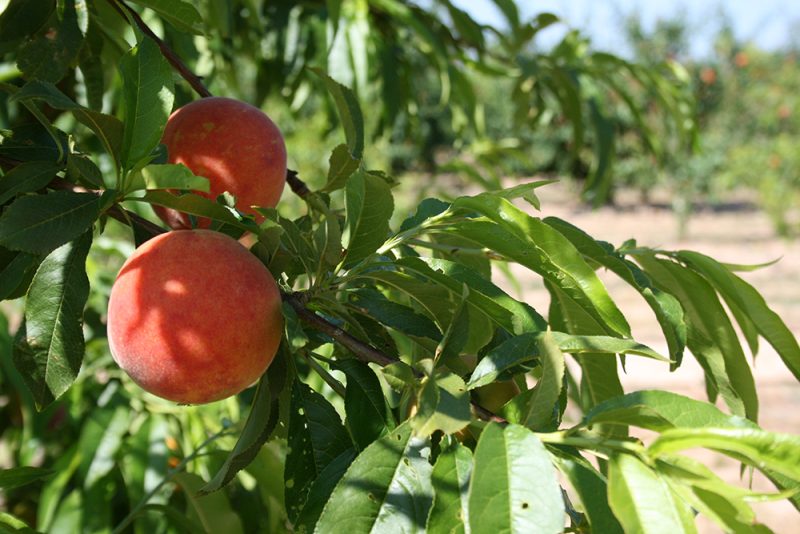
Not everything that starts well ends well. The Valencian Farmers’ Association AVA-ASAJA has warned that the stone fruit season “started quite well, with higher production and acceptable farmgate prices, but as the days went by it has ended with losses, as demand has collapsed —especially for smaller sizes— and many prices are now below the high production costs”.
Rainfall in May, followed by days of high temperatures and even westerly winds, marked a turning point in the middle of the harvest of peaches, nectarines, apricots and plums in the Valencian Community.
Initial forecasts pointed to a 15% increase in the crop compared with last year, exceeding 40 million kilos, despite the reduction in cultivated area after several years of losses. The winter accumulated enough chill hours and the only significant weather damage was recorded in plots in La Vall d’Albaida due to hail.
In addition to the production increase, early varieties also benefited from fluid demand and reasonable farmgate prices, although these did not reach the levels of the previous season and were more in line with those recorded two years ago.
However, after the combination of rainfall and unusually high temperatures for mid-May, much of the fruit that had not yet been harvested suffered rapid over-ripening. This coincided with fruit from other regions and sharply increased supply on the markets.
RELATED NEWS: Stone fruit harvesting begins in early production areas
As a result, growers stopped receiving offers from commercial operators. Farmgate prices consequently collapsed, especially for smaller sizes which, due to the excess crop, often failed to find a commercial outlet.
Rising costs put further pressure on margins
Another factor that has weighed on growers’ profitability has been the rise in input costs, especially fertilisers, as well as energy and transport. According to AVA-ASAJA, this situation has been aggravated by the European Union’s agri-environmental policies and the armed conflict in the Middle East.
The organisation also points to the systematic withdrawal of active substances for plant protection products, which has limited the tools available to combat pests and diseases.
RELATED NEWS: Europe increases its stone fruit production
One of the most concerning examples is the flat-headed root borer, a pest affecting apricot trees that attacks the roots and eventually kills the tree. According to AVA-ASAJA members, if effective solutions are not authorised in the short term, the crop could be driven towards disappearance in just a few years.
Competition from third countries
Finally, the farmers’ organisation denounces what it considers unfair competition from stone fruit originating in third countries such as Morocco, Algeria and Egypt.
AVA-ASAJA argues that these countries face fewer phytosanitary and environmental restrictions, are increasing their production and are gaining access to the European market under more competitive conditions.
For Valencian stone fruit growers, the campaign has therefore shifted from an initially positive outlook to a difficult final stretch, marked by falling demand, excess supply, lower prices and rising production costs.