








If the world’s 500 largest family-owned businesses formed a single economy, they would rank as the third-largest economic power globally, behind only the United States and China.
Family businesses represent 89% of all companies worldwide, generate more than 50% of global GDP and are the largest employers on the planet, accounting for 65% of total employment.
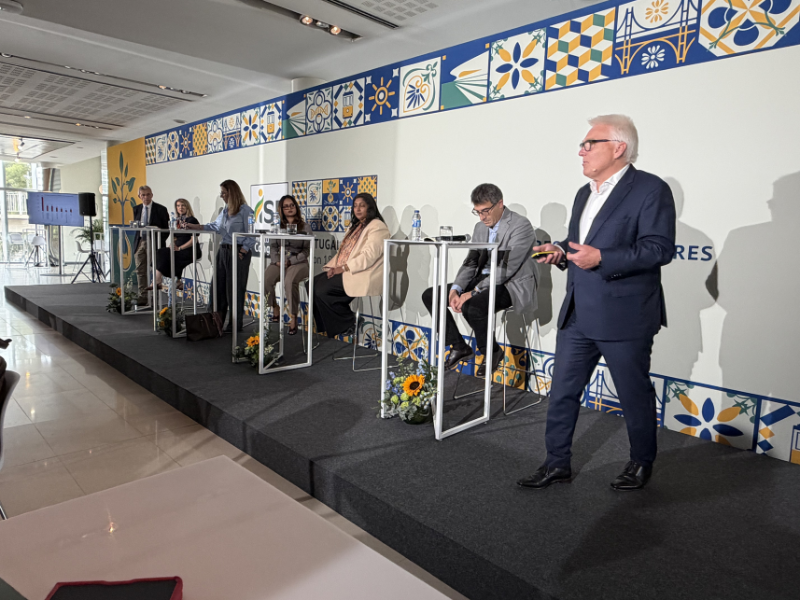
The panel The Future of Family Business in the Seed Sector: Key Success Factors, held during the World Seed Congress, brought together four seed industry families to discuss the keys to long-term survival.
All participants agreed that attracting and retaining talent is now the sector’s greatest challenge, surpassing even technological pressure. Operational freedom in relation to patented technologies and varieties emerged as the second major concern, particularly among European companies.
The three main challenges facing family-owned seed businesses are therefore clear: attracting talent, maintaining competitiveness and managing generational succession without creating family conflict.
Fitó: separating ownership from management
Eduard Fitó, from Semillas Fitó (Spain), was unequivocal: “If the company you own wants to survive, you have to change the CEOs, change the music you are playing.”
Fitó explained that the company’s governance model is built around two executive committees, a cross-functional committee and an external advisory board that meets up to ten times a year.
Basso: the centenary milestone as a strategic compass
Lorena Basso, Co-Managing Director of Basso Semillas (Argentina), emphasised intergenerational responsibility “My dream is to continue growing while thinking about the next generation.”
She was equally direct when discussing consultants: “Advising an executive is not the same as advising the owner of a company shaped by the culture of many previous generations.”
Gautier: from a symbolic board to a real governance body
Jacques Gautier, from Gautier Semences (France), summarised his company’s evolution: “In the past, the advisory board was cosmetic; now it is more demanding and more open.”
His daughter Jeanne, a fourth-generation CEO, added: “Speaking to your father as if he were a colleague feels strange. It is good to have someone else in the room who can help moderate things.”
Indam: open doors as a competitive advantage
Rashmi and Angela Attavar, from Indam Seeds (India), contributed the perspective of an emerging market: “In family businesses, almost any employee can meet with the CEO. They feel seen and heard far more than they would in a large corporation.”
The moderator concluded the session by identifying four critical success factors: a clear strategy, strong governance, effective succession management and the ability to act as the best possible owner.