







Kairoh, the new courgette variety from Sakata Seed Ibérica, has been specifically developed for later spring transplants and summer cycles, where high-temperature conditions become a limiting factor for many varieties currently on the market.
With this launch, Sakata is not aiming to replace its Kai variety but rather to complement it strategically, offering growers a “varietal duo” capable of covering different production windows with greater precision. While Kai is positioned as a benchmark variety for August transplants and those from late winter through March, Kairoh extends that range into situations where heat pressure is more intense and additional adaptability is required.
“Kairoh was developed to respond to these extra-early transplants, where rising temperatures require a plant that is better prepared to maintain both yield and quality,” explains Cecilio Fernández, Courgette Development Manager. “It does not replace Kai; it complements it. Together, they allow growers to cover the cycle with greater security and production continuity, ensuring the product reaches consumers in the best possible condition.”
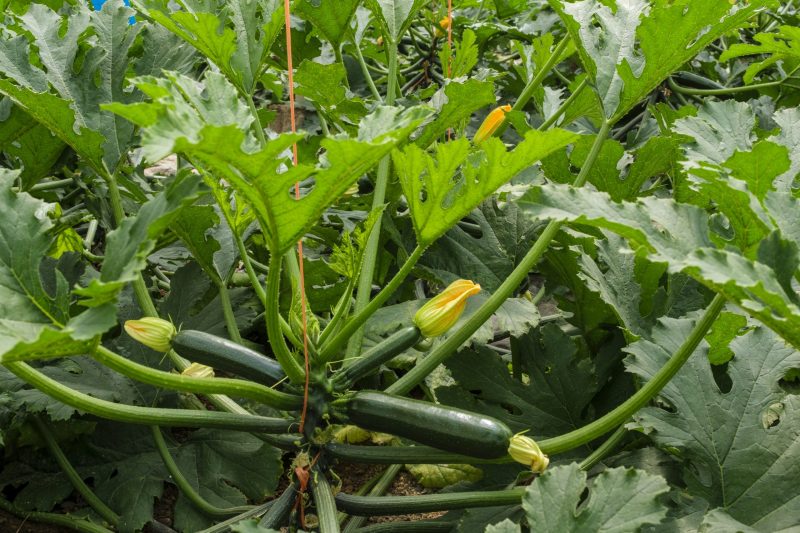
At the agronomic level, and in line with Sakata Seed Ibérica’s commitment to maximising grower profitability, Kairoh features an open, compact plant with short internodes.
RELATED NEWS: KAI, the Sakata zucchini that delivers profitability
This architecture facilitates harvesting, reduces labour costs and improves light penetration into the crop, favouring fruit quality. In addition, its structure contributes to better plant health and greater efficiency of crop protection applications.
Kairoh fruits stand out for their strong commercial appeal: cylindrical and straight courgettes with a very dark, glossy green colour and excellent uniformity throughout the crop cycle.
The blossom-end scar and pistil scar are very small, reinforcing their suitability for both the domestic market and export programmes.
The flower detaches easily, and harvesting can even be carried out using a simple pinch technique, without removing the peduncle, thereby helping to prevent the mechanical transmission of aphid-borne viruses.