





The report outlines the company’s progress across climate action, water stewardship, regenerative agriculture, responsible sourcing, employee engagement and community impact, guided by its purpose of “Sustainably Feeding a Growing World”.
According to the company, the latest report reflects a shift from building the foundations of its sustainability strategy to implementing them at scale across its operations and value chain.
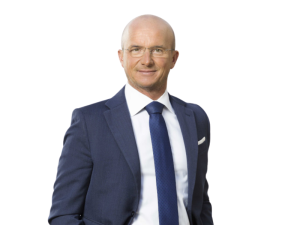
Arnoud van den Berg, Group CEO at Al Dahra, said sustainability is central to long-term value creation at a time when food systems, climate and natural resources are under growing pressure.
“In 2025, we progressed from building foundations to delivering at scale – advancing resilient farming systems, strengthening governance and data capabilities, and driving measurable action to reduce risk and emissions across our operations and value chain. We are encouraged by our progress, and we remain focused on the work ahead,” he said.
Stronger governance and digital reporting
Prepared with reference to the Global Reporting Initiative (GRI) Standards, the report covers a year of significant progress for the company, which aims to become the world’s largest irrigated, digitally enabled farming platform by 2030.
During 2025, Al Dahra operationalised its Sustainability Committee, reinforced its accountability frameworks and advanced the transition towards more sophisticated digital platforms designed to improve data quality, transparency and usability.
Growing more with less
One of the main areas of progress highlighted in the report is the expansion of regenerative and reduced-disturbance farming practices.
In Romania, around 76% of cultivated land is now managed under reduced tillage, which the company describes as one of the largest deployments of this type in Europe. In Egypt, the rollout of no-till farming is already showing measurable improvements in soil health and water efficiency under arid conditions.
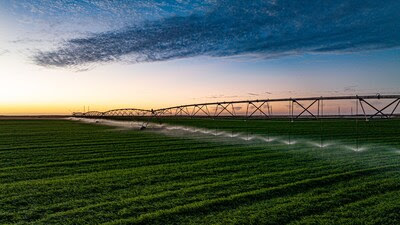
Across its operating regions, irrigation modernisation, precision scheduling and soil health initiatives have helped increase water productivity without compromising yields. To support this work, Al Dahra appointed a full-time ecologist in 2025 to guide the development of nature-positive practices and embed biodiversity considerations across its operations.
Climate data and emissions baseline
The company also completed a comprehensive greenhouse gas inventory covering Scope 1, 2 and 3 emissions, including both FLAG and non-FLAG categories, establishing 2025 as a new baseline year.
Al Dahra has started to shift its focus towards carbon intensity per crop and per hectare, an approach that better reflects agricultural realities and enables more targeted interventions. To support this process, the company has begun transitioning to Sandy by Trinity AgTech, a carbon and natural capital reporting platform designed specifically for agriculture.
Responsible sourcing and logistics
Beyond its direct operations, Al Dahra completed an ESG risk mapping exercise across its supply chain and selected Sedex as its supplier ESG assessment platform, creating a scalable framework for responsible sourcing.
In logistics, the company expanded its biofuel-powered shipping routes more than fourfold. In Romania, modal shifts towards inland barge transport helped reduce around 200 truck movements per week.
Employee engagement and workplace safety
The report also highlights progress in people management. In 2025, Al Dahra introduced a new Inclusion & Engagement framework, supported by its first Global Employee Engagement Survey.
The survey achieved an 80% participation rate and an engagement score of 76%, six percentage points above the industry benchmark. In addition, 82% of employees said they were proud to work for Al Dahra, while 81% said they would recommend it as a great place to work.
In health and safety, the company strengthened governance through the rollout of digital incident reporting systems. During 2025, Al Dahra recorded zero fatalities, reduced Lost Time Injuries from 48 to 44, and increased training compliance from 38% to 65%. Total training hours also rose from 41,000 to 59,000.
Community investment and 2030 ambition
Al Dahra invested more than AED 2 million in communities where it operates during 2025, supporting education, community development, health, culture and social wellbeing.
The company has also established a more focused, impact-driven model aligned with its ambition to positively impact 100,000 lives by 2030.
Looking ahead, Al Dahra says its priority will be to scale what works, strengthen accountability and continue embedding sustainability into the way it operates, invests and grows.
By 2030, the company aims to operate a global, irrigated, sustainable and digitally driven farming platform spanning 500,000 hectares, contributing positively to food systems, supporting the communities and environments in which it operates, and delivering long-term value for all stakeholders.