








Production remains stable, the crop is expanding into new growing areas and the product continues to enjoy a very positive image among consumers.
For Pedro Herrera, President of Alcachofa de España, this stability is particularly significant at a time when growers are simultaneously facing rising input costs, an increasing regulatory burden, fewer crop protection tools and the structural challenge of generational renewal. “Remaining stable in times like these is an achievement,” Herrera sums up.
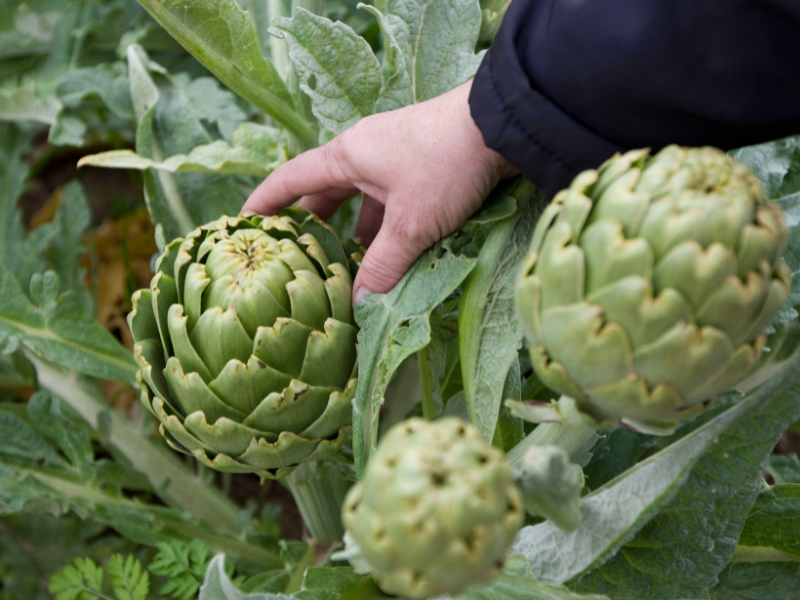
Much of the explanation lies in the product itself. Artichokes have strengthened their position thanks to a combination of attributes that make them easily recognisable to consumers: they are a natural food, versatile in the kitchen and valued for their nutritional qualities.
Herrera also highlights their versatility both at home and in foodservice, as well as across different consumption formats. “We are working with a product that is delicious, flavoursome, nutritious and healthy,” he says.
Volumes and production areas
Alcachofa de España puts national production at around 200,000 tonnes, within a context of relative stability.
One of the factors helping to sustain the crop has been the gradual introduction of seed-grown artichokes, complementing traditional production systems and opening up new production opportunities.
The main traditional growing areas remain strong. Murcia and Alicante continue to record solid production, while Zafarraya, in Granada, also maintains its importance.
Navarra, with its Blanca de Tudela artichoke, remains one of Spain’s major production areas and enjoys recognition at European level.
The new development is Seville, an area Herrera still considers relatively recent but which has been consolidating its position and progressively expanding its acreage over the past four or five years.
The situation in Catalonia is evolving differently. The proximity of certain production areas to the Barcelona metropolitan area is leading to some relocation of the crop to other regions, including Castellón. Overall, however, the national picture remains stable.
Stability in a challenging environment
This stability becomes even more significant when viewed against the current operating environment for growers. The first major challenge is economic. Raw materials, inputs and ancillary products have all seen significant cost increases, squeezing farm margins.
Added to this is what Herrera describes as the over-regulation of the primary sector, affecting numerous areas of agricultural activity.
Crop protection is a particular concern for Alcachofa de España. Herrera believes that medium-sized crops such as artichokes have less capacity to defend their needs in the face of European regulatory decisions than crops with greater economic weight.
The withdrawal of active substances also means losing control tools for which equally effective alternatives are not always available.
RELATED NEWS: Murcia to exceed 105,000 tonnes of artichokes this year
For the association’s president, the issue should not be viewed solely in terms of any one active substance, but rather as a progressive reduction in the options available to growers to control pests and diseases.
The other major challenge is one shared by virtually the entire Spanish agricultural sector: the lack of generational renewal.
Consumers continue to respond positively
The product’s positive image provides a counterweight to these difficulties.
Artichokes remain strongly associated with the Mediterranean diet and offer considerable culinary versatility, both fresh and in minimally processed preparations.
In the fresh market, approximately 80% of production is destined for domestic consumption, while around 20% is exported.
France and Italy are the main export destinations, alongside Germany and other European markets.
Fruit Attraction to keep the category alive
With this objective in mind, the association will once again be present at Fruit Attraction.
Its participation is not solely about promoting the product. For Alcachofa de España, the trade fair is a meeting point for growers, marketers and partners and, above all, an opportunity to keep communication around the category active. “The aim is to keep the product category vibrant,” Herrera explains.
The association currently has 29 members and continues to welcome new operators, with at least two new members joining this year. Its presence extends across Spain’s main production areas, including Navarra, La Rioja, Castellón, Valencia, Alicante, Murcia, Catalonia and Andalusia.