




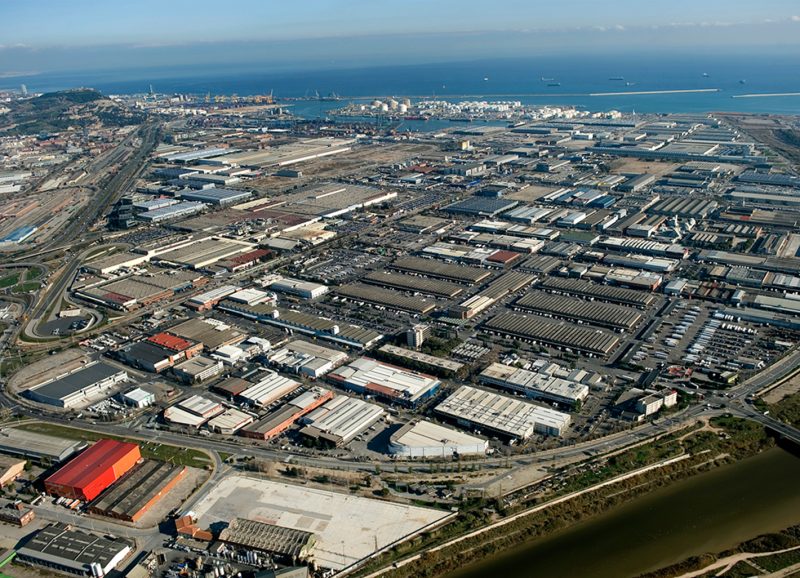
Mercabarna’s president and Barcelona Deputy Mayor for Economic Promotion, Trade, Markets, Employment, Social Rights, Feminisms and Democratic Memory, Raquel Gil, stressed that the company has achieved solid economic results while continuing to increase resources for social and environmental improvement.
According to Gil, Mercabarna has also maintained its support for the companies located within its food hub through training, waste recovery, the promotion of green energy, healthy eating and local products, and the reduction of food waste.
“Consolidating economic profit while also achieving social benefits and improvements for the environment is possible, and Mercabarna has once again demonstrated this,” she said.
Net profit of €10.6 million
In 2025, Mercabarna recorded operating income of €37.2 million, up 5.8% compared with 2024. Investment reached €6 million, while operating expenses amounted to €25.6 million, representing a 6.9% increase on the previous year.
This rise in expenditure was mainly due to the awarding of two of the most important service contracts in the food hub: security and surveillance, and cleaning, waste collection and recycling. The new contracts included price updates, service optimisation and investments in new vehicles and machinery.
Investments were mainly allocated to new infrastructure, asset maintenance and digitalisation. Overall, Mercabarna posted a net profit of €10.6 million, 9.3% lower than in 2024.
Fresh produce drives commercial growth
In 2025, companies operating in Mercabarna reached a sales volume of 2,589,987 tonnes, 1.1% more than in 2024.
The wholesalers of the Central Fruit and Vegetable Market marketed 1,140,033 tonnes, up 5.6% year-on-year. When adding the fruit and vegetable companies located in Mercabarna’s Food Activities Area, total fresh produce sales reached 2,349,541 tonnes, 1.6% more than in the previous year.
This volume consolidates Mercabarna as Spain’s leading fruit and vegetable market.
Meat sector companies also increased their sales volume, reaching 26,789 tonnes, up 5.1% compared with 2024. By contrast, fish and seafood companies recorded 213,657 tonnes, down 4.6%, while Mercabarna-flor marketed 7,354,430 units of flowers, plants and accessories, 5.3% less than in 2024.
Local products increase by 5%
Mercabarna continued to promote local products throughout 2025. The company carried out the “De Proximidad Mercabarna” communication campaign to promote market areas where Catalan products can be found, and organised the second edition of networking sessions between wholesalers and local producers.
It also completed the comprehensive refurbishment of the Agricultural Cooperatives Area and the second phase of the Producers’ Area, with the aim of modernising and giving greater visibility to spaces where farmers sell their products directly.
By the end of the year, 179,676 tonnes of local products had been marketed through the Central Fruit and Vegetable Market and the Central Fish Market, 5% more than in 2024.
In addition, when Catalan fruit and vegetables sold in the market are added to those distributed from the Complementary Activities Area, the figure reaches 320,000 tonnes. This represents almost half of the Catalan production that is not exported directly from production areas.
76% of commercial waste recovered
During 2025, Mercabarna managed 24,669 tonnes of waste generated by the commercial activity of wholesale companies operating within its premises and by retailers purchasing at the market.
Of this total, 76% was recovered, 0.8% more than in 2024, through selective collection and the integrated waste management system of the food hub. This system includes containers for different waste fractions, smart organic matter compactors, the Green Point and Foodback.
Almost 900 tonnes of food recovered
Mercabarna’s food recovery centre, Foodback, recovered 869 tonnes of fruit and vegetables in 2025, 4% more than in the previous year.
These products were donated by 88 wholesale companies in the food hub, selected by 10 participants in the training and social-labour insertion programme run by Fundació Formació i Treball, and distributed through the Barcelona Food Bank Foundation to 300 organisations and social canteens.
The initiative reached around 100,000 people experiencing food insecurity. Food recovery also avoided the emission of 314 tonnes of CO₂ that would have been generated if the fruit and vegetables had been transformed into compost or biogas.
Foodback is considered a pioneering European project with high environmental and social impact, made available by Mercabarna to wholesale distribution companies as part of the joint fight against food waste.
Training and generational renewal
Since 1987, Mercabarna’s Training Services have worked to keep the workforce of companies in the food hub up to date, facilitate the incorporation of qualified staff and promote training, particularly among unemployed people.
In 2025, Mercabarna organised 64 courses, totalling 4,926 teaching hours. Of these, 44 were professional retraining courses for 26 agri-food companies and 20 were occupational training courses.
A total of 489 people took part, including 244 workers from Mercabarna companies and 287 unemployed people. These participants received training in areas such as butchery, fishmongery, meat and fish product processing, floristry, warehouse assistance, hygiene and food handling.
Among unemployed students, 87% completed their training and obtained a qualification to work in the agri-food sector, helping to support generational renewal in professions where it is increasingly difficult to find workers.
Mercabarna also promoted dual vocational training through the Integrated Centre between Mercabarna and the Food Institute located within the food hub. In 2025, Mercabarna’s Training Services signed 93 training internship agreements with 39 companies.
Healthy eating programmes reach almost 10,000 participants
A total of 9,483 schoolchildren and educators from 187 schools in Catalonia and other educational organisations took part in Mercabarna’s children’s campaigns during the 2024-2025 school year and summer 2025.
Promoting healthy eating among children through the “5 a day” and “Grow with fish” campaigns has been a consolidated line of action for Mercabarna for more than 25 years, carried out in collaboration with the wholesale associations of the large market.
Water consumption reduced by 14%
Mercabarna also achieved a 14% reduction in the company’s water consumption. This was made possible by prioritising the use of groundwater for street and central market cleaning, as well as by increasing control and maintenance work on the network systems.
100% renewable electricity
In recent years, Mercabarna has consolidated a downward trend in overall energy consumption, in line with its commitment to efficiency and sustainability. In 2025, total energy consumption was 4% lower than the previous year.
Contracted electricity fell by 15%, while energy generated through its own photovoltaic installations increased by 177%, reinforcing the role of renewable generation within the organisation’s energy mix.
Currently, 100% of the electricity consumed by Mercabarna is certified as renewable.
Spain’s largest shared self-consumption photovoltaic plant
During 2025, as part of the REPower-Mercabarna-Energía project, Mercabarna completed the installation of photovoltaic panels on the roofs of buildings owned by the company. These include the seven warehouses of the Central Fruit and Vegetable Market, the Central Fish Market pavilion, Mercabarna-flor, Biomarket, a multi-storey car park and two multi-service buildings.
This represents a total installed capacity of 6.4 MWp.
RELATED NEWS: Mercabarna to shift freight to rail
Mercabarna has also continued to promote the installation of photovoltaic panels on the roofs of buildings owned by companies operating within the food hub, through lease contract incentives linked to participation in the green photovoltaic energy plan.
By the end of 2025, 76% of the initial 13 MWp target had been achieved, with 9.9 MWp installed overall. In total, photovoltaic capacity installed at Mercabarna and Mercabarna-flor now reaches 16.3 MWp.
This will make it Spain’s largest shared self-consumption photovoltaic plant, generating savings of around 4,000 tonnes of CO₂.