






Consumption is 1.98% above the 2023 average but still well below the minimum daily goal of 400 g per capita recommended by the WHO. Looking at the long-term trends, the consumption levels have been stagnating, and the sector has failed to capitalise on the short-lived increase that started during the coronavirus pandemic, which has been curbed by the economic crisis that impacted the purchasing power of consumers. Freshfel Europe underlines the essential features of fresh fruit and vegetables based on their strong and undisputed health benefits and their low environmental impacts. Fruit and vegetables are part of the solutions to societal concerns, and consumption should be stimulated to benefit both the health of EU citizens and the planet.
Consumption trends
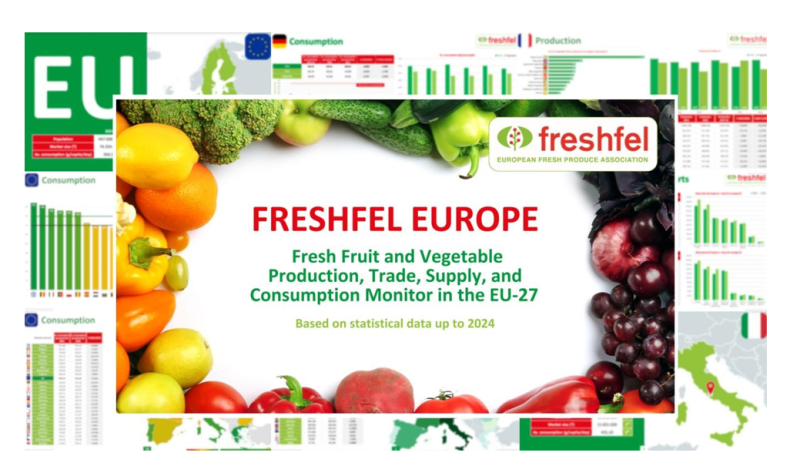
Freshfel Europe has released its latest edition of the European Fresh Produce Consumption Monitor. The report provides a comparison of consumption trends in the EU-27 as a whole and in each Member State based on official statistics from EUROSTAT and FAOSTAT. In the past two decades, the Freshfel Europe Consumption Monitor has become increasingly important in evaluating the trends of fresh fruit and vegetable production, trade, and consumption in Europe. The report has used a consistent methodology throughout the years and has become a unique reference document for the sector and decision-makers looking at the business development and the evolution of the daily diet of fresh produce in Europe.
This year’s edition shows that the 2024 average fruit and vegetable consumption in the EU slightly increased to 355.71 grams per day per person, which is 1.98% above the 2023 average but still well below the minimum daily goal of 400 g per capita/day recommended by the WHO. The Freshfel Europe Consumption Monitor shows that only 5 countries in the EU reach the recommended goal of at least 400g of fresh fruits and vegetables/day/capita, leaving a great margin for improvement to stimulate consumption.
The report was presented during Freshfel’s annual Consumption Trends Webinar, which highlighted the urgent need to reverse the stagnation of fruit and vegetable consumption across Europe. Despite growing awareness of the health and sustainability benefits of fresh produce, average consumption remains well below both WHO recommendations and the different national dietary targets. Increasing consumption will require a comprehensive strategy addressing education, communication, accessibility, and changing consumer lifestyles.
Engagement strategies
The webinar also emphasised the growing influence of ultra-processed foods, which benefit from powerful marketing, branding, and consumer engagement strategies, and often appropriate the assets of fresh fruit and vegetables. Freshfel Europe called for a stronger consumer-focused approach for fresh produce, including improved promotion, better retail visibility, greater convenience, and more effective storytelling around the sector’s health, taste, and the importance of the sustainability benefits of fresh fruit and vegetables.
Sustainability is generally viewed positively and associated with fresh produce, but it is rarely a primary purchase driver: consumers are increasingly motivated by health, taste, quality, and value for money, while convenience has become a major driver of purchasing decisions, boosting demand for ready-to-use, easy-to-prepare, and meal-solution products.
RELATED NEWS: A healthy lifestyle, key to living longer and better
Looking ahead, Freshfel Europe reiterated the priorities of its 2026–2030 Manifesto, advocating a “Fresh First” approach that places fruit and vegetables at the centre of food, health, and sustainability policies. The fruit and vegetable sector and public authorities should join forces to build a sustainable consumption attitude based on the benefits of fresh fruit and vegetables for the planet, the climate, and the health of consumers themselves. There can be no compromise on the urgency of actions needed to address the consumption challenge, most specifically among the youngest generation.